Liu Fang-Fang, Liu Chao-Ying, Li Xiao-Ping, Zheng Sheng-Zhe, Li Qing-Quan, Liu Qun, Song Lei
Department of Neurology, First Hospital of Jilin University, Changchun, Jilin Province, China.
Department of Respiratory Medicine, First Hospital of Jilin University, Changchun, Jilin Province, China.
Neural Regen Res. 2015 Mar;10(3):438-44. doi: 10.4103/1673-5374.153693.
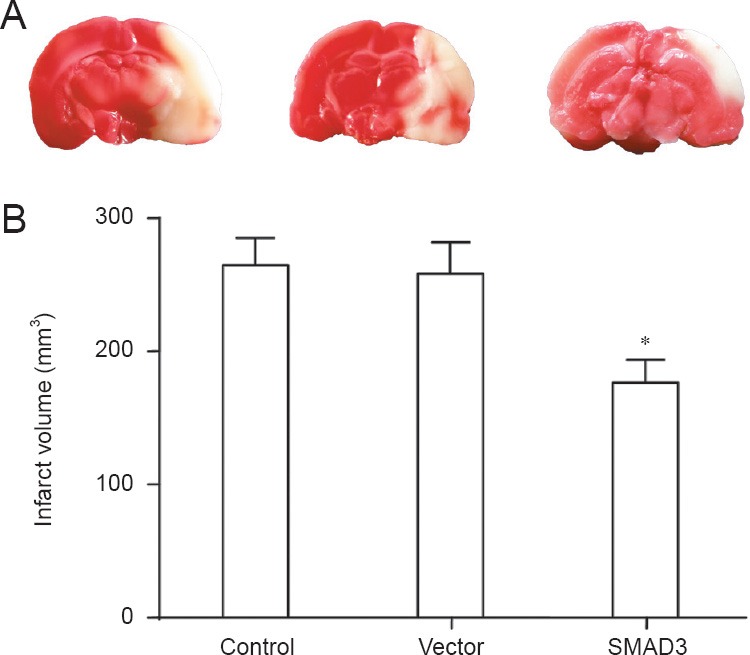
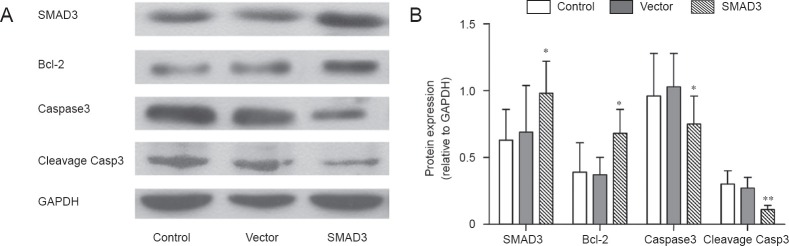
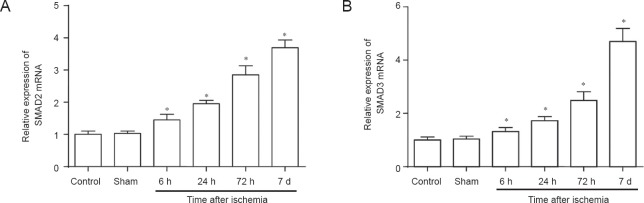
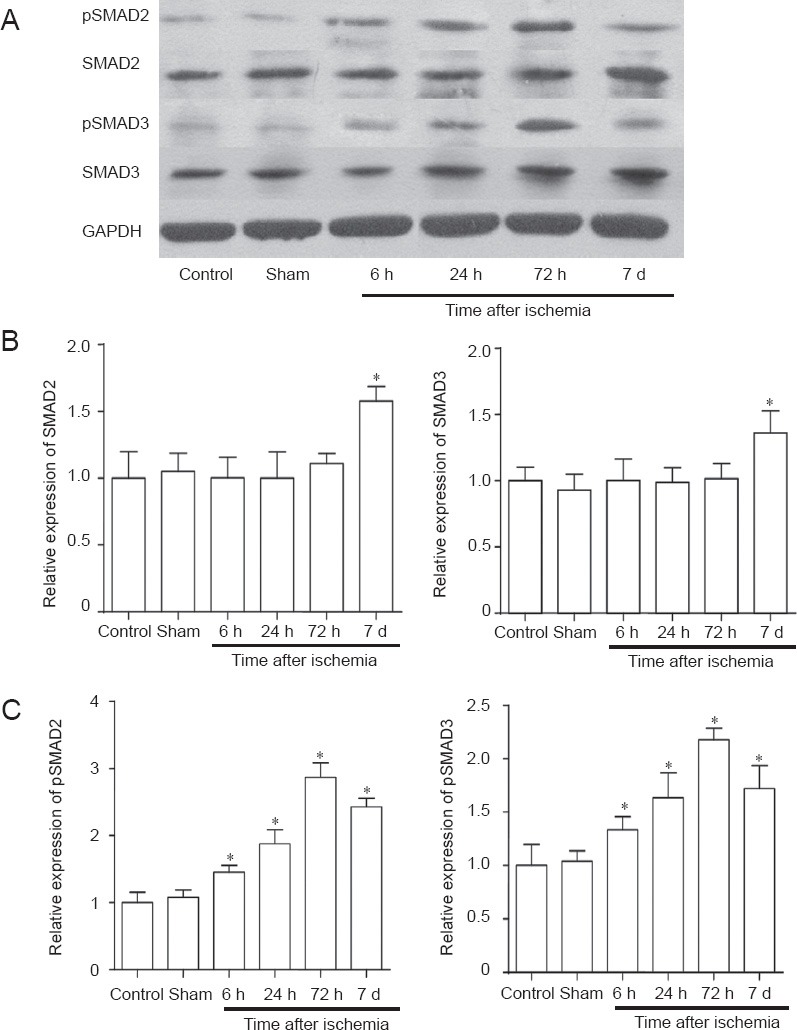
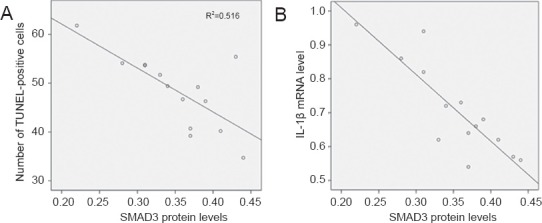
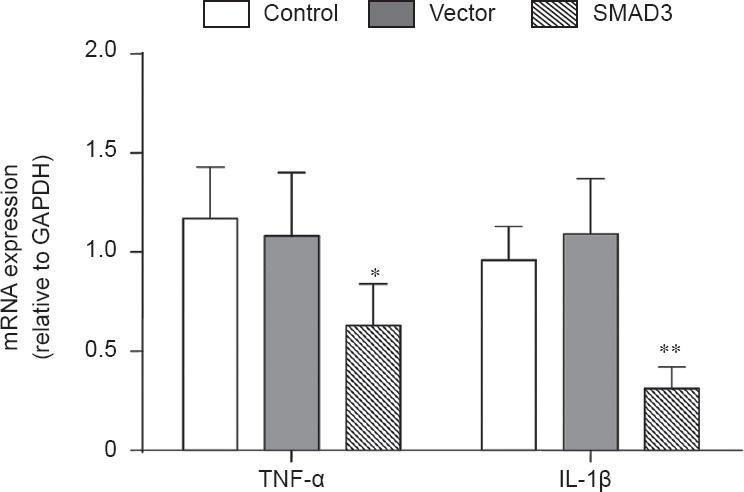
Previous studies have shown that up-regulation of transforming growth factor β1 results in neuroprotective effects. However, the role of the transforming growth factor β1 downstream molecule, SMAD2/3, following ischemia/reperfusion remains unclear. Here, we investigated the neuroprotective effects of SMAD2/3 by analyzing the relationships between SMAD2/3 expression and cell apoptosis and inflammation in the brain of a rat model of cerebral ischemia/reperfusion. Levels of SMAD2/3 mRNA were up-regulated in the ischemic penumbra 6 hours after cerebral ischemia/reperfusion, reached a peak after 72 hours and were then decreased at 7 days. Phosphorylated SMAD2/3 protein levels at the aforementioned time points were consistent with the mRNA levels. Over-expression of SMAD3 in the brains of the ischemia/reperfusion model rats via delivery of an adeno-associated virus containing the SMAD3 gene could reduce tumor necrosis factor-α and interleukin-1β mRNA levels, down-regulate expression of the pro-apoptotic gene, capase-3, and up-regulate expression of the anti-apoptotic protein, Bcl-2. The SMAD3 protein level was negatively correlated with cell apoptosis. These findings indicate that SMAD3 exhibits neuroprotective effects on the brain after ischemia/reperfusion through anti-inflammatory and anti-apoptotic pathways.
先前的研究表明,转化生长因子β1的上调具有神经保护作用。然而,转化生长因子β1下游分子SMAD2/3在缺血/再灌注后的作用仍不清楚。在此,我们通过分析SMAD2/3表达与脑缺血/再灌注大鼠模型脑内细胞凋亡和炎症之间的关系,研究了SMAD2/3的神经保护作用。脑缺血/再灌注6小时后,缺血半暗带中SMAD2/3 mRNA水平上调,72小时后达到峰值,然后在7天时下降。上述时间点的磷酸化SMAD2/3蛋白水平与mRNA水平一致。通过递送含SMAD3基因的腺相关病毒,在缺血/再灌注模型大鼠脑内过表达SMAD3可降低肿瘤坏死因子-α和白细胞介素-1β mRNA水平,下调促凋亡基因caspase-3的表达,并上调抗凋亡蛋白Bcl-2的表达。SMAD3蛋白水平与细胞凋亡呈负相关。这些发现表明,SMAD3通过抗炎和抗凋亡途径对缺血/再灌注后的脑具有神经保护作用。