Luo Jian
Palo Alto Veterans Institute for Research, VAPAHCS, Palo Alto, CA 94304, USA.
Biomedicines. 2022 May 23;10(5):1206. doi: 10.3390/biomedicines10051206.
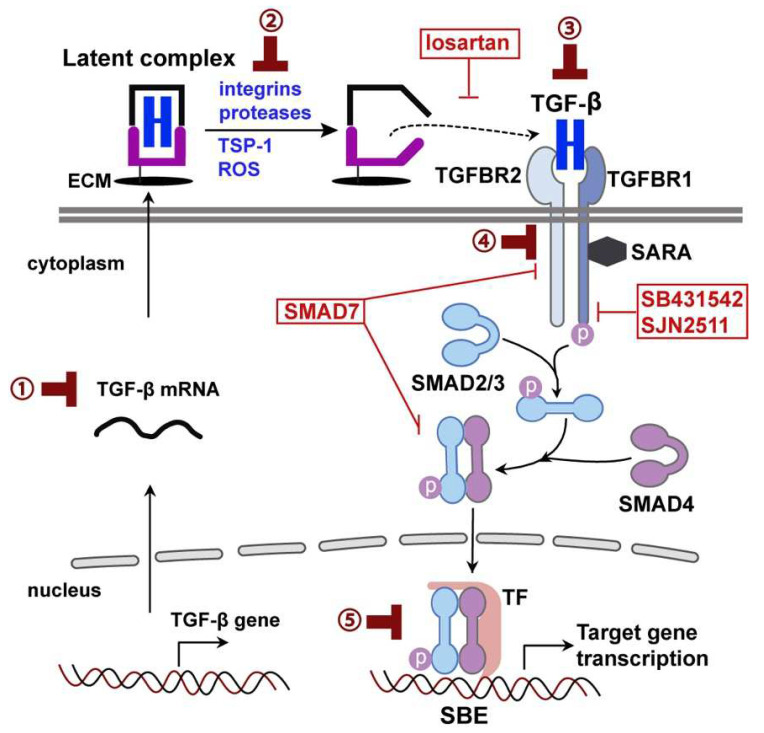
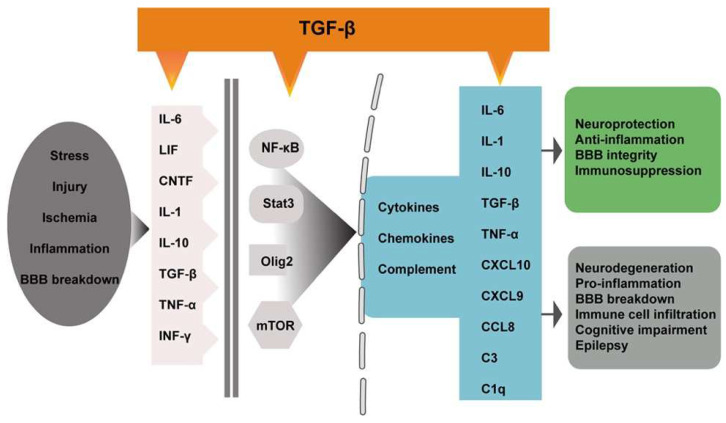
Astrocytes are essential for normal brain development and functioning. They respond to brain injury and disease through a process referred to as reactive astrogliosis, where the reactivity is highly heterogenous and context-dependent. Reactive astrocytes are active contributors to brain pathology and can exert beneficial, detrimental, or mixed effects following brain insults. Transforming growth factor-β (TGF-β) has been identified as one of the key factors regulating astrocyte reactivity. The genetic and pharmacological manipulation of the TGF-β signaling pathway in animal models of central nervous system (CNS) injury and disease alters pathological and functional outcomes. This review aims to provide recent understanding regarding astrocyte reactivity and TGF-β signaling in brain injury, aging, and neurodegeneration. Further, it explores how TGF-β signaling modulates astrocyte reactivity and function in the context of CNS disease and injury.
星形胶质细胞对正常大脑发育和功能至关重要。它们通过一种称为反应性星形胶质细胞增生的过程对脑损伤和疾病做出反应,其中反应具有高度异质性且依赖于背景。反应性星形胶质细胞是脑病理学的积极参与者,在脑损伤后可产生有益、有害或混合效应。转化生长因子-β(TGF-β)已被确定为调节星形胶质细胞反应性的关键因素之一。在中枢神经系统(CNS)损伤和疾病的动物模型中,对TGF-β信号通路进行基因和药理学操作会改变病理和功能结果。本综述旨在提供有关脑损伤、衰老和神经退行性变中星形胶质细胞反应性和TGF-β信号传导的最新认识。此外,它还探讨了在CNS疾病和损伤的背景下,TGF-β信号传导如何调节星形胶质细胞的反应性和功能。