Goldberg Emily L, Dixit Vishwa Deep
Section of Comparative Medicine, Yale School of Medicine, New Haven, CT, USA; Department of Immunobiology, Yale School of Medicine, New Haven, CT, USA.
Immunol Rev. 2015 May;265(1):63-74. doi: 10.1111/imr.12295.
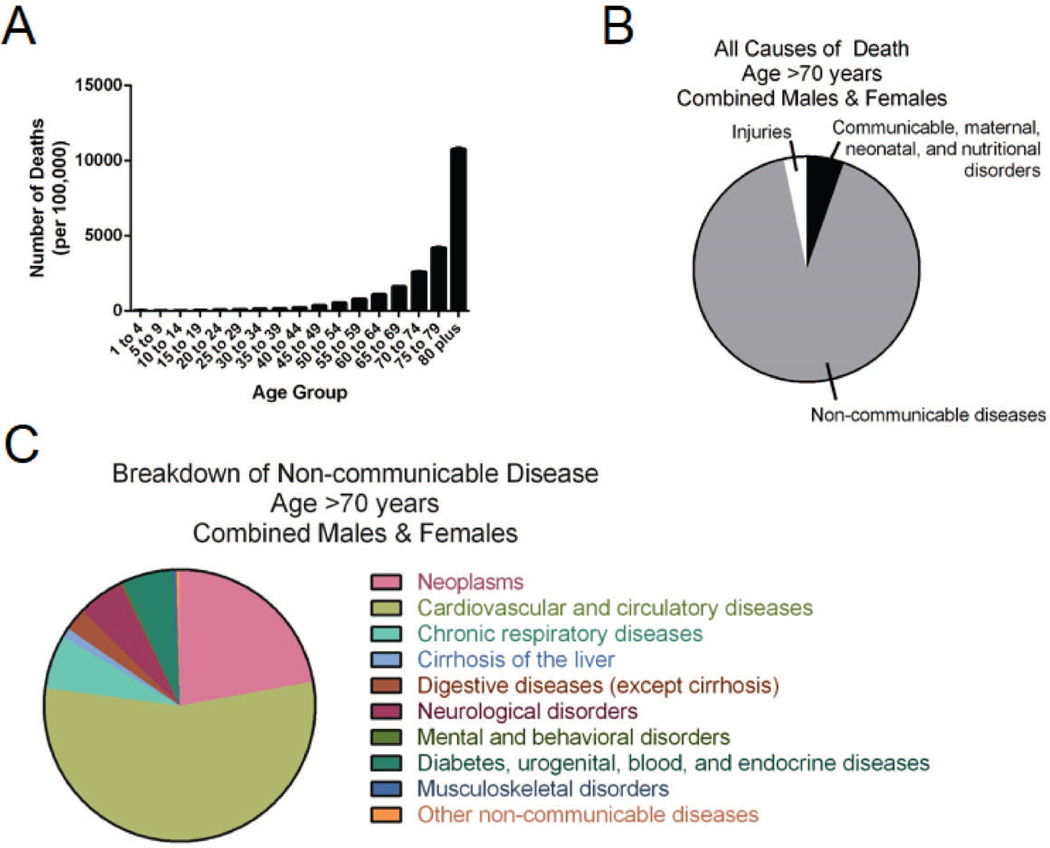
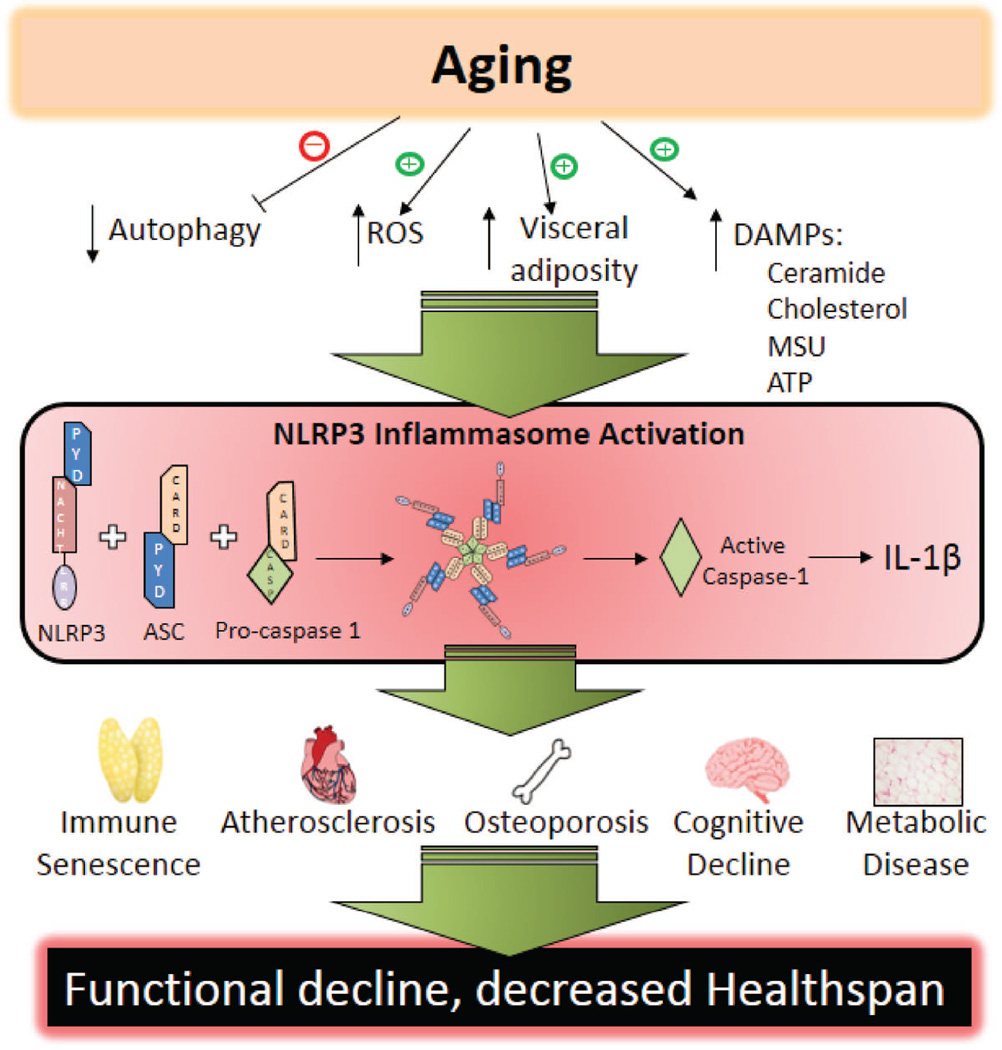
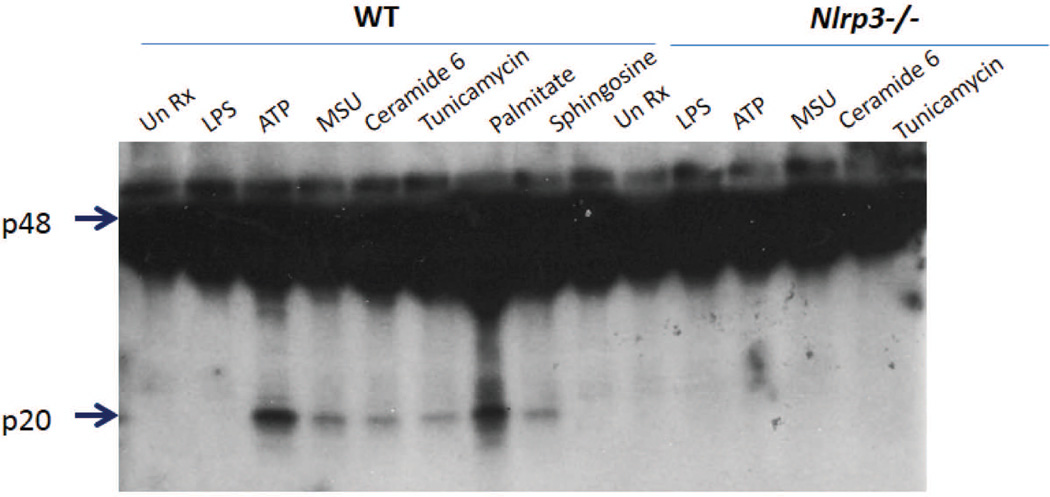
Aging is the greatest risk factor for the development of chronic diseases such as arthritis, type 2 diabetes, cardiovascular disease, kidney disease, Alzheimer's disease, macular degeneration, frailty, and certain forms of cancers. It is widely regarded that chronic inflammation may be a common link in all these age-related diseases. This raises the question, can one alter the course of aging and potentially slow the development of all chronic diseases by manipulating the mechanisms that cause age-related inflammation? Emerging evidence suggests that pro-inflammatory cytokines interleukin-1 (IL-1) and IL-18 show an age-dependent regulation implicating inflammasome-mediated caspase-1 activation in the aging process. The Nod-like receptor (NLR) family of innate immune cell sensors, such as the nucleotide-binding domain, leucine-rich-containing family, pyrin domain-containing-3 (NLRP3) inflammasome controls the caspase-1 activation in myeloid-lineage cells in several organs during aging. The NLRP3 inflammasome is especially relevant to aging as it can get activated in response to structurally diverse damage-associated molecular patterns (DAMPs) such as extracellular ATP, excess glucose, ceramides, amyloids, urate, and cholesterol crystals, all of which increase with age. Interestingly, reduction in NLRP3-mediated inflammation prevents age-related insulin resistance, bone loss, cognitive decline, and frailty. NLRP3 is a major driver of age-related inflammation and therefore dietary or pharmacological approaches to lower aberrant inflammasome activation holds promise in reducing multiple chronic diseases of age and may enhance healthspan.
衰老是关节炎、2型糖尿病、心血管疾病、肾脏疾病、阿尔茨海默病、黄斑变性、身体虚弱以及某些癌症等慢性疾病发生发展的最大风险因素。人们普遍认为,慢性炎症可能是所有这些与年龄相关疾病的共同关联因素。这就引发了一个问题,能否通过操控导致与年龄相关炎症的机制来改变衰老进程,并有可能减缓所有慢性疾病的发展?新出现的证据表明,促炎细胞因子白细胞介素-1(IL-1)和IL-18呈现出年龄依赖性调节,这意味着在衰老过程中炎性小体介导的半胱天冬酶-1激活。天然免疫细胞传感器的Nod样受体(NLR)家族,如含核苷酸结合结构域、富含亮氨酸家族、含pyrin结构域3(NLRP3)炎性小体,在衰老过程中控制着多个器官中髓系细胞的半胱天冬酶-1激活。NLRP3炎性小体与衰老尤其相关,因为它可响应多种结构不同的损伤相关分子模式(DAMPs)而被激活,如细胞外ATP、过量葡萄糖、神经酰胺、淀粉样蛋白、尿酸盐和胆固醇晶体,所有这些都会随着年龄增长而增加。有趣的是,减少NLRP3介导的炎症可预防与年龄相关的胰岛素抵抗、骨质流失、认知衰退和身体虚弱。NLRP3是与年龄相关炎症的主要驱动因素,因此通过饮食或药物手段降低异常炎性小体激活有望减少多种与年龄相关的慢性疾病,并可能延长健康寿命。