Barar Jaleh, Kafil Vala, Majd Mostafa Heidari, Barzegari Abolfazl, Khani Sajjad, Johari-Ahar Mohammad, Asgari Davoud, Coukos George, Omidi Yadollah
Research Center for Pharmaceutical Nanotechnology, Tabriz, Iran.
Faculty of Pharmacy, Tabriz University of Medical Sciences, Tabriz, Iran.
J Nanobiotechnology. 2015 Mar 26;13:26. doi: 10.1186/s12951-015-0083-7.
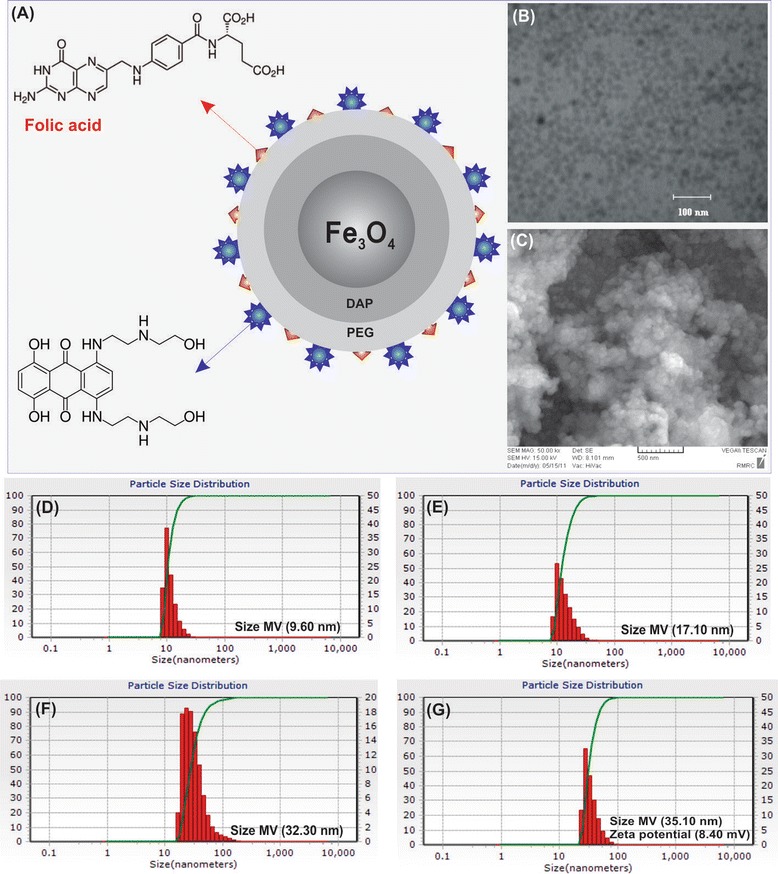
Targeted delivery of anticancer chemotherapeutics such as mitoxantrone (MTX) can significantly intensify their cytotoxic effects selectively in solid tumors such as breast cancer. In the current study, folic acid (FA)-armed and MTX-conjugated magnetic nanoparticles (MNPs) were engineered for targeted eradication of folate receptor (FR)-positive cancerous cells. Polyethylene glycol (PEG), FA and MTX were covalently conjugated onto the MNPs to engineer the PEGylated FA-MTX-MNPs. The internalization studies were performed using fluorescein isothiocyanate (FITC)-labeled FA-decorated MNPs (FA-FITC-MNPs) in both FR-positive MCF-7 cells and FR-negative A549 cells by means of fluorescence microscopy and flow cytometry. The cellular and molecular impacts of FA-MTX-MNPs were examined using trypan blue cell viability and FITC-labeled annexin V apoptosis assays and 4',6-diamidino-2-phenylindole (DAPI) staining, DNA ladder and quantitative polymerase chain reaction (qPCR) assays.
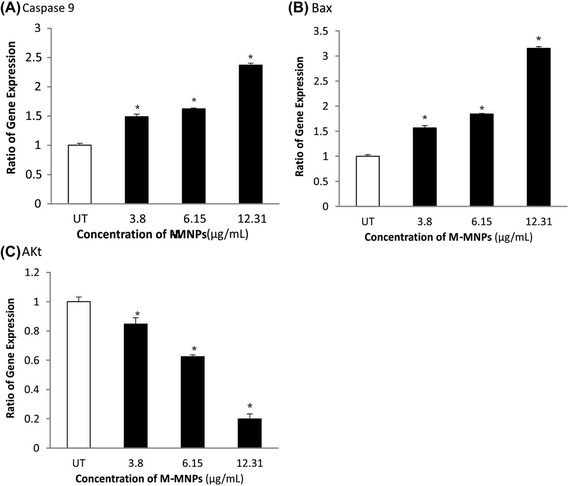
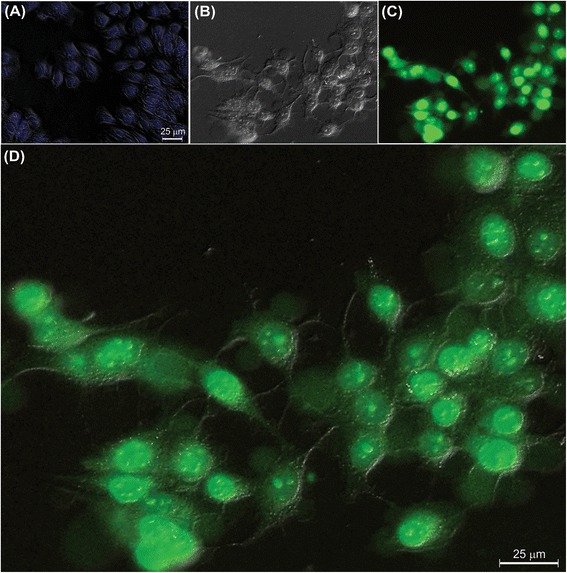
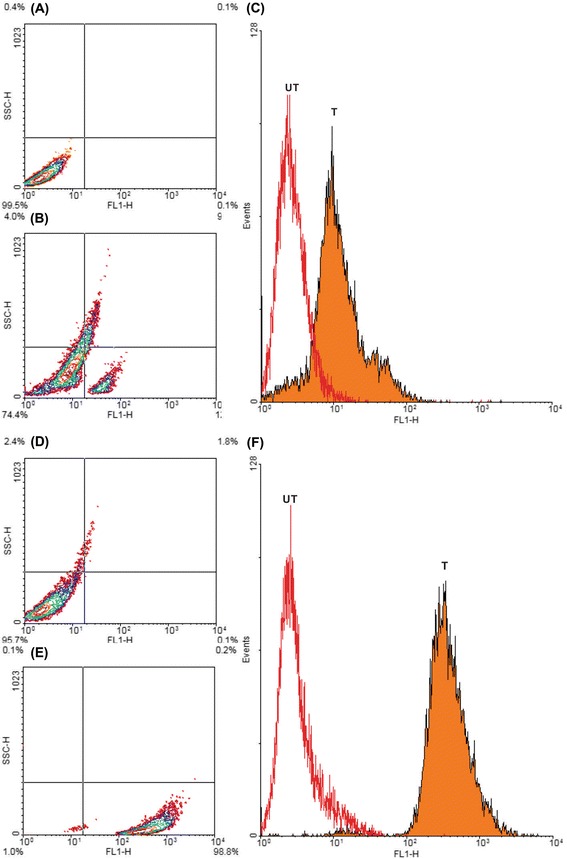
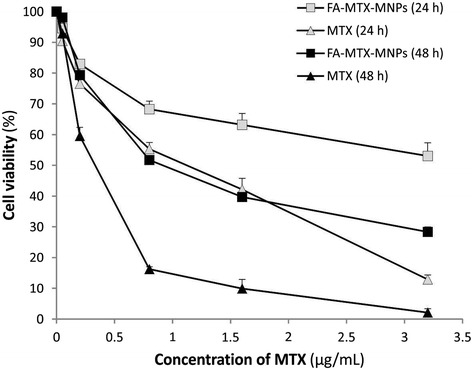
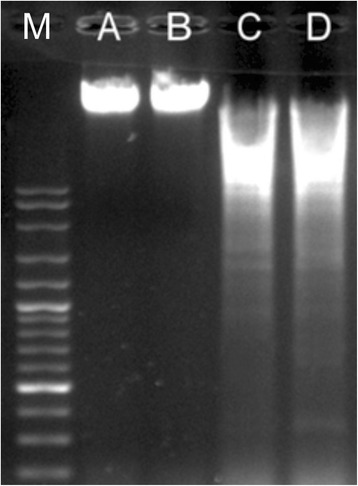
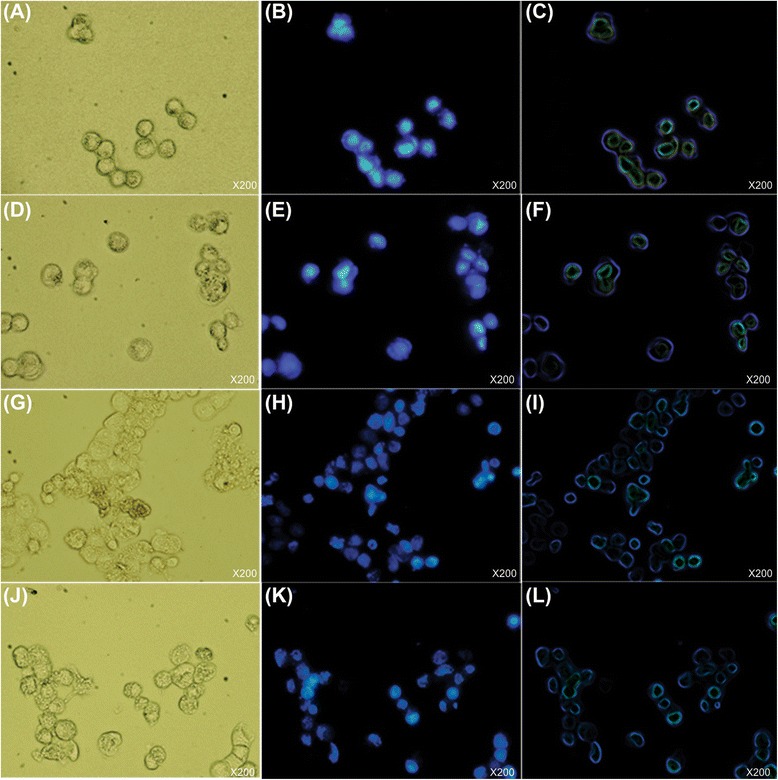
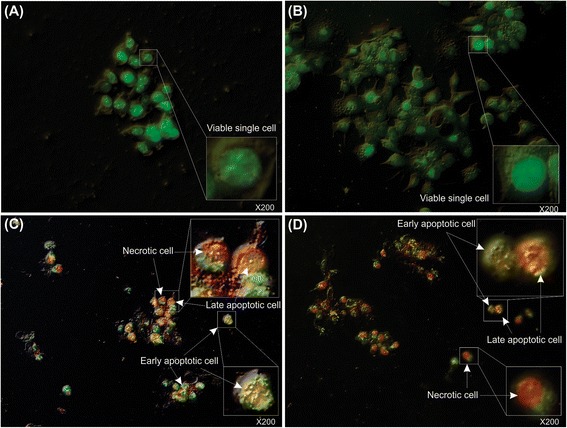
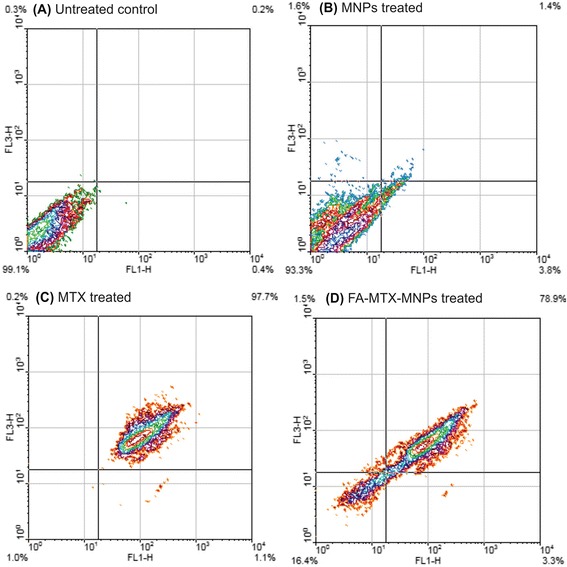
The FR-positive MCF-7 cells showed significant internalization of the FA-FITC-MNPs, but not the FR-negative A549 cells. The FR-positive cells treated with the PEGylated FA-MTX-MNPs exhibited the IC50 values of 3 μg/mL and 1.7 μg/mL, 24 h and 48 h post-treatment, respectively. DAPI staining and DNA ladder assays revealed significant condensation of nucleus and fragmentation of genomic DNA in the FR-positive MCF-7 cells treated with the PEGylated FA-MTX-MNPs as compared to the FR-negative A549 cells. The FITC-labeled annexin V assay confirmed emergence of late apoptosis (>80%) in the FR-positive MCF-7 cells treated with the PEGylated FA-MTX-MNPs, but not in the FR-negative A549 cells. The qPCR analysis confirmed profound cytotoxic impacts via alterations of apoptosis-related genes induced by MTX-FA-MNPs in MCF-7 cells, but not in the A549 cells.
Our findings evince that the engineered PEGylated FA-MTX-MNPs can be specifically taken up by the FR-positive malignant cells and effectively demolish them through up-regulation of Bcl-2-associated X protein (Bax) and Caspase 9 and down-regulation of AKt. Hence, the engineered nanosystem is proposed for simultaneous targeted imaging and therapy of various cancers overexpressing FRs.
诸如米托蒽醌(MTX)等抗癌化疗药物的靶向递送能够显著增强其在乳腺癌等实体瘤中的选择性细胞毒性作用。在本研究中,设计了叶酸(FA)修饰且MTX偶联的磁性纳米颗粒(MNPs),用于靶向根除叶酸受体(FR)阳性癌细胞。将聚乙二醇(PEG)、FA和MTX共价偶联到MNPs上,构建聚乙二醇化的FA-MTX-MNPs。通过荧光显微镜和流式细胞术,使用异硫氰酸荧光素(FITC)标记的FA修饰的MNPs(FA-FITC-MNPs),在FR阳性的MCF-7细胞和FR阴性的A549细胞中进行内化研究。使用台盼蓝细胞活力检测、FITC标记的膜联蛋白V凋亡检测以及4',6-二脒基-2-苯基吲哚(DAPI)染色、DNA梯状条带分析和定量聚合酶链反应(qPCR)检测,研究FA-MTX-MNPs对细胞和分子的影响。
FR阳性的MCF-7细胞对FA-FITC-MNPs有显著内化,而FR阴性的A549细胞则没有。用聚乙二醇化的FA-MTX-MNPs处理的FR阳性细胞在处理后24小时和48小时的IC50值分别为3μg/mL和1.7μg/mL。与FR阴性的A549细胞相比,DAPI染色和DNA梯状条带分析显示,用聚乙二醇化的FA-MTX-MNPs处理的FR阳性MCF-7细胞中细胞核明显凝聚,基因组DNA片段化。FITC标记的膜联蛋白V检测证实,用聚乙二醇化的FA-MTX-MNPs处理的FR阳性MCF-7细胞中出现晚期凋亡(>80%),而FR阴性的A549细胞中未出现。qPCR分析证实,MTX-FA-MNPs诱导的凋亡相关基因改变对MCF-7细胞有显著细胞毒性影响,但对A549细胞没有影响。
我们的研究结果表明,设计的聚乙二醇化FA-MTX-MNPs可被FR阳性恶性细胞特异性摄取,并通过上调Bcl-2相关X蛋白(Bax)和半胱天冬酶9以及下调Akt有效地破坏这些细胞。因此,该设计的纳米系统被提议用于同时对各种过表达FR的癌症进行靶向成像和治疗。