Bornelöv Susanne, Komorowski Jan, Wadelius Claes
Department of Cell and Molecular Biology, Science for Life Laboratory, Uppsala University, Uppsala, SE-751 24, Sweden.
Current affiliation: Science for Life Laboratory, Department of Medical Biochemistry and Microbiology, Uppsala University, Uppsala, SE-751 23, Sweden.
BMC Genomics. 2015 Apr 15;16(1):300. doi: 10.1186/s12864-015-1485-5.
Several post-translational histone modifications are mainly found in gene promoters and are associated with the promoter activity. It has been hypothesized that histone modifications regulate the transcription, as opposed to the traditional view with transcription factors as the key regulators. Promoters of most active genes do not only initiate transcription of the coding sequence, but also a substantial amount of transcription of the antisense strand upstream of the transcription start site (TSS). This promoter feature has generally not been considered in previous studies of histone modifications and transcription factor binding.
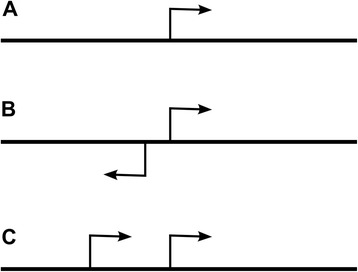
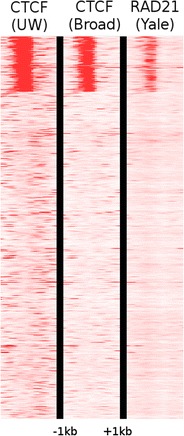
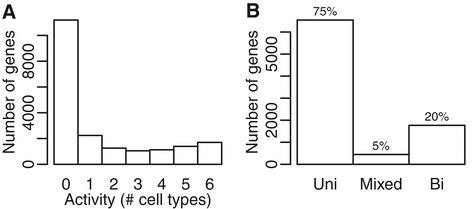
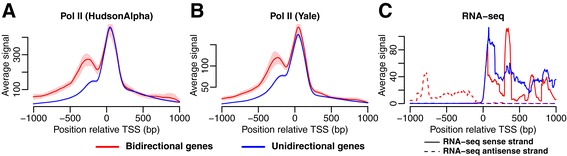
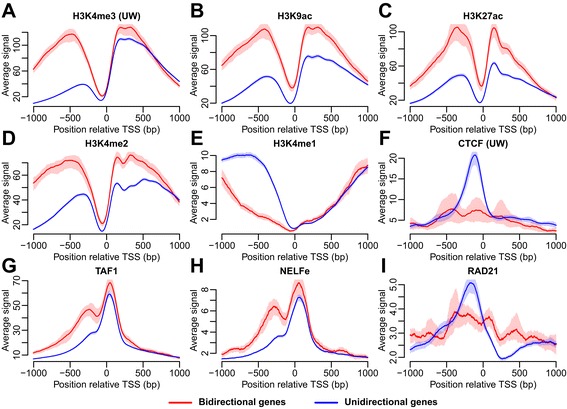
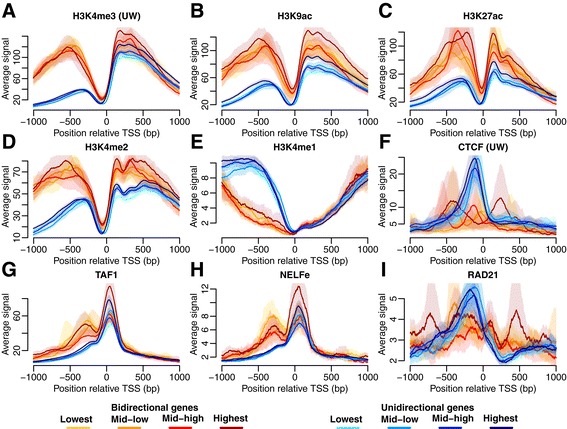
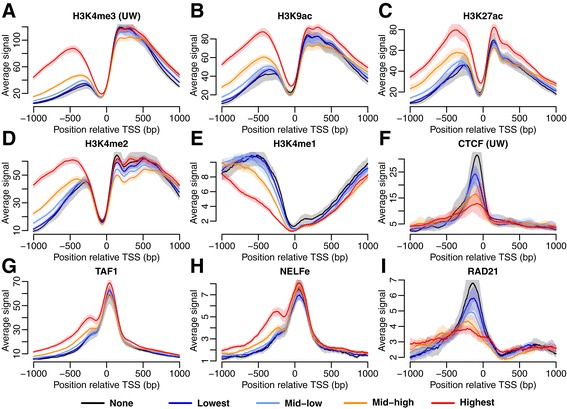
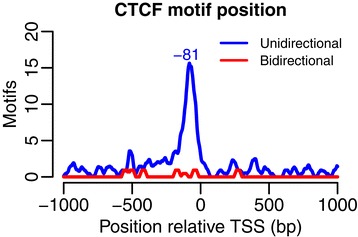
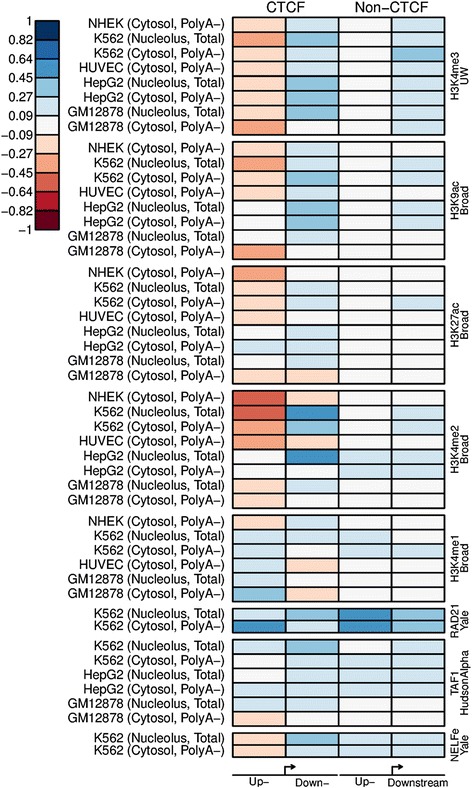
We annotated protein-coding genes as bi- or unidirectional depending on their mode of transcription and compared histone modifications and transcription factor occurrences between them. We found that H3K4me3, H3K9ac, and H3K27ac were significantly more enriched upstream of the TSS in bidirectional genes compared with the unidirectional ones. In contrast, the downstream histone modification signals were similar, suggesting that the upstream histone modifications might be a consequence of transcription rather than a cause. Notably, we found well-positioned CTCF and RAD21 peaks approximately 60-80 bp upstream of the TSS in the unidirectional genes. The peak heights were related to the amount of antisense transcription and we hypothesized that CTCF and cohesin act as a barrier against antisense transcription.
Our results provide insights into the distribution of histone modifications at promoters and suggest a novel role of CTCF and cohesin as regulators of transcriptional direction.
几种翻译后组蛋白修饰主要存在于基因启动子中,并与启动子活性相关。与传统观点认为转录因子是关键调节因子相反,有人提出组蛋白修饰调节转录。大多数活跃基因的启动子不仅启动编码序列的转录,还启动转录起始位点(TSS)上游大量反义链的转录。在先前关于组蛋白修饰和转录因子结合的研究中,这一启动子特征通常未被考虑。
我们根据转录模式将蛋白质编码基因注释为双向或单向,并比较了它们之间的组蛋白修饰和转录因子出现情况。我们发现,与单向基因相比,双向基因中H3K4me3、H3K9ac和H3K27ac在TSS上游显著富集。相比之下,下游组蛋白修饰信号相似,这表明上游组蛋白修饰可能是转录的结果而非原因。值得注意的是,我们在单向基因的TSS上游约60 - 80 bp处发现了定位良好的CTCF和RAD21峰。峰高与反义转录量相关,我们推测CTCF和黏连蛋白作为反义转录的屏障。
我们的结果为启动子处组蛋白修饰的分布提供了见解,并提示CTCF和黏连蛋白作为转录方向调节因子的新作用。