Battulin Nariman, Fishman Veniamin S, Mazur Alexander M, Pomaznoy Mikhail, Khabarova Anna A, Afonnikov Dmitry A, Prokhortchouk Egor B, Serov Oleg L
Institute of Cytology and Genetics, Novosibirsk, 630090, Russia.
Novosibirsk State University, Novosibirsk, 630090, Russia.
Genome Biol. 2015 Apr 14;16(1):77. doi: 10.1186/s13059-015-0642-0.
The three-dimensional organization of the genome is tightly connected to its biological function. The Hi-C approach was recently introduced as a method that can be used to identify higher-order chromatin interactions genome-wide. The aim of this study was to determine genome-wide chromatin interaction frequencies using the Hi-C approach in mouse sperm cells and embryonic fibroblasts.
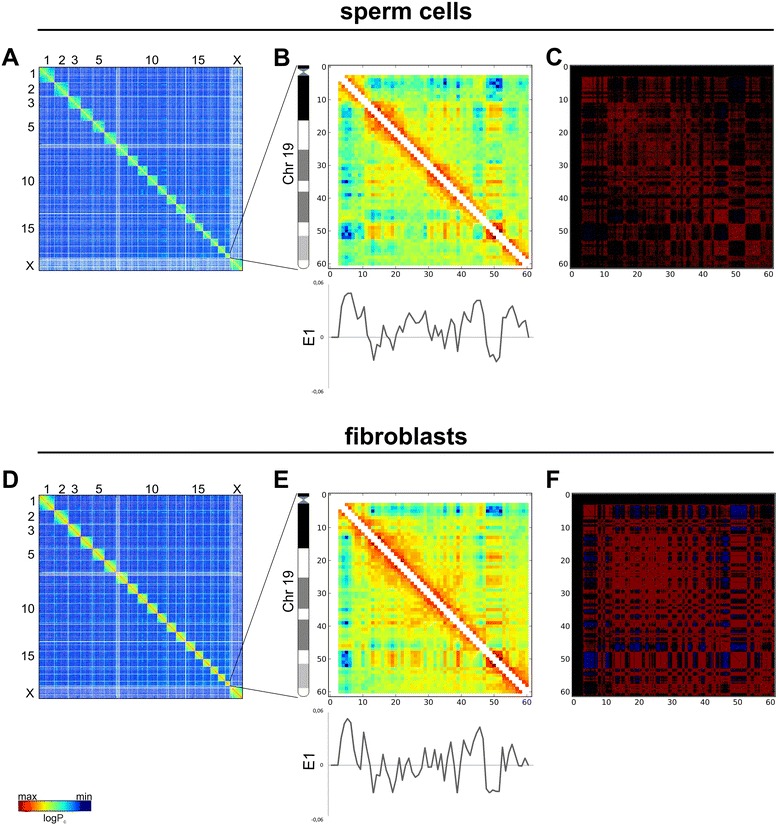
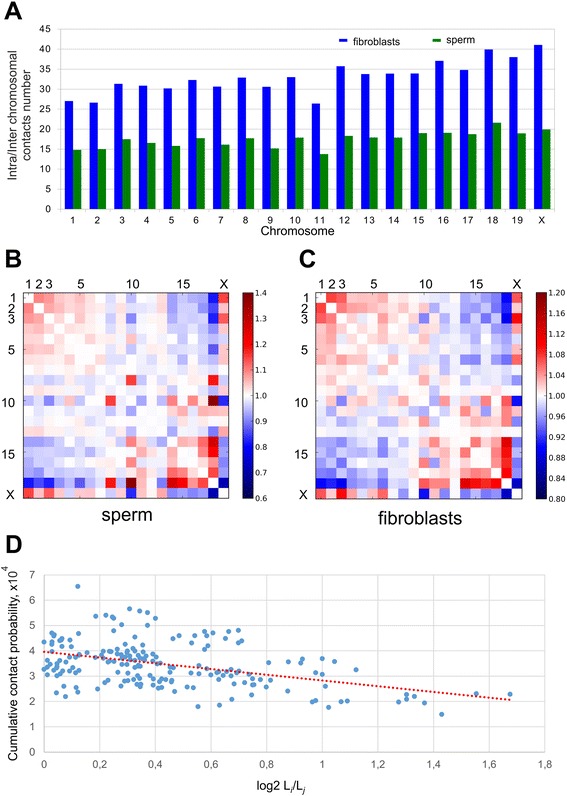
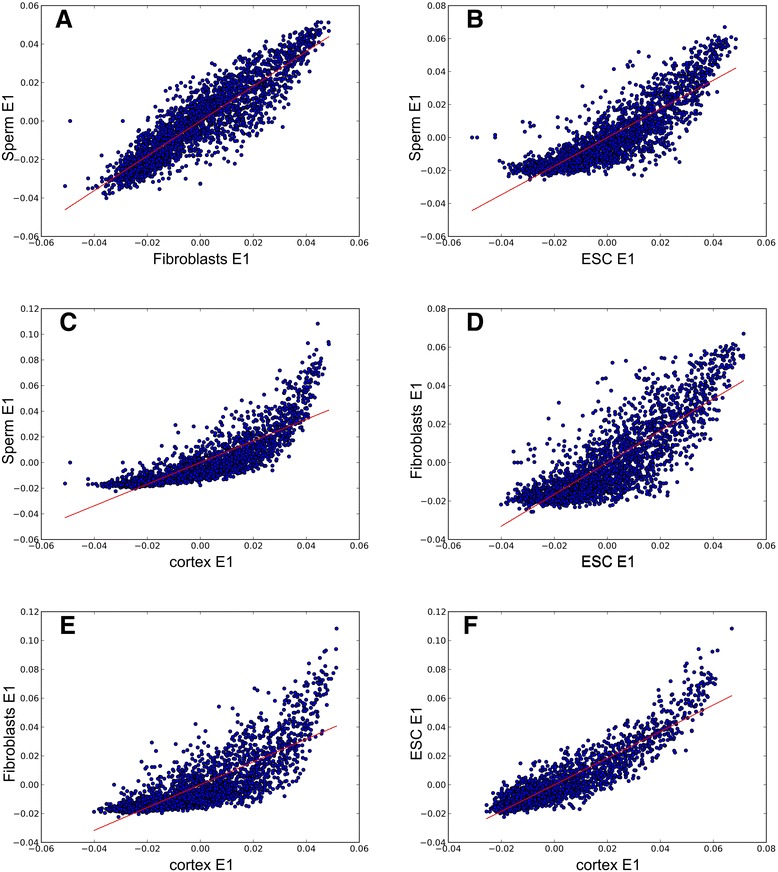
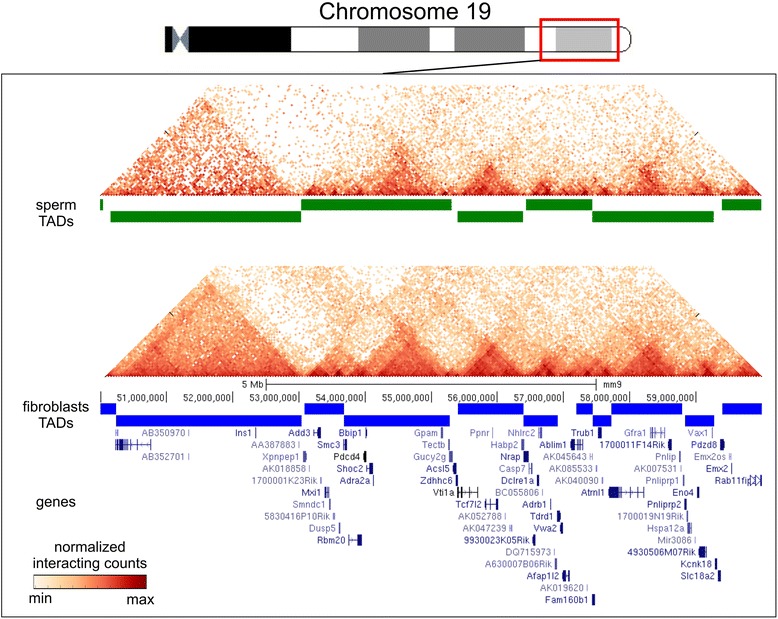
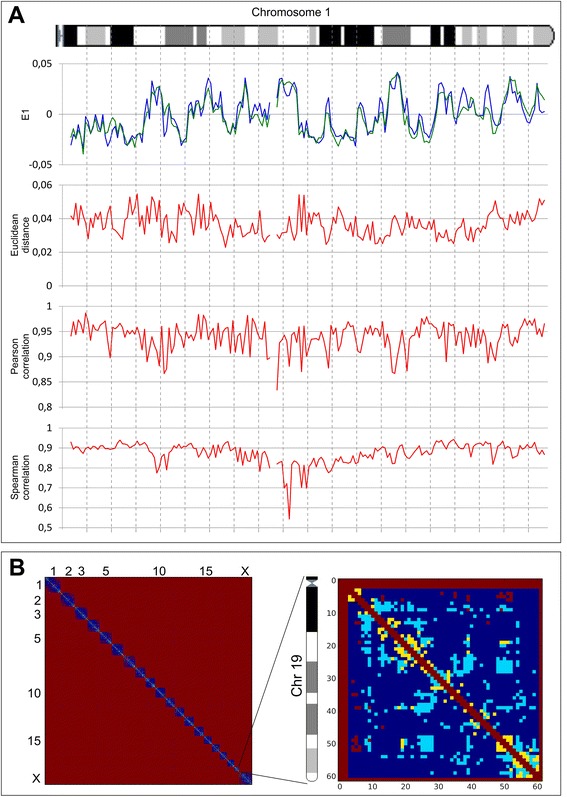
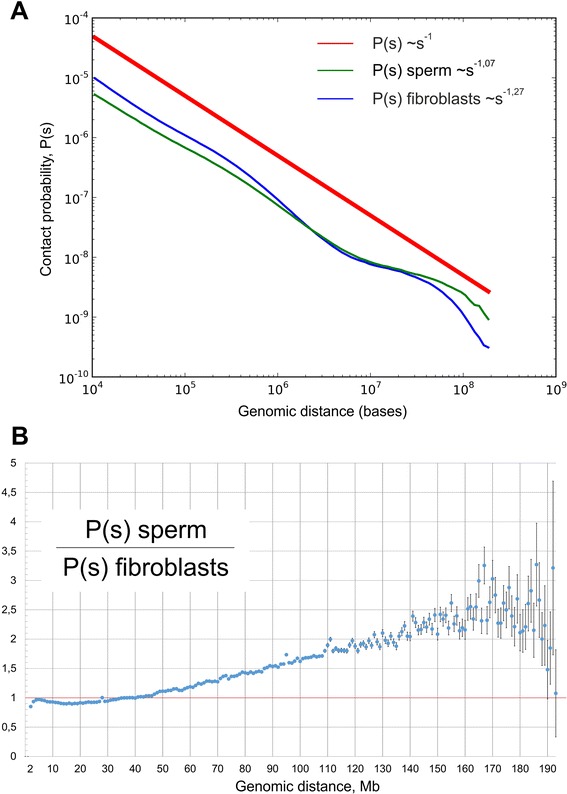
The obtained data demonstrate that the three-dimensional genome organizations of sperm and fibroblast cells show a high degree of similarity both with each other and with the previously described mouse embryonic stem cells. Both A- and B-compartments and topologically associated domains are present in spermatozoa and fibroblasts. Nevertheless, sperm cells and fibroblasts exhibit statistically significant differences between each other in the contact probabilities of defined loci. Tight packaging of the sperm genome results in an enrichment of long-range contacts compared with the fibroblasts. However, only 30% of the differences in the number of contacts are based on differences in the densities of their genome packages; the main source of the differences is the gain or loss of contacts that are specific for defined genome regions. We find that the dependence of the contact probability on genomic distance for sperm is close to the dependence predicted for the fractal globular folding of chromatin.
Overall, we can conclude that the three-dimensional structure of the genome is passed through generations without being dramatically changed in sperm cells.
基因组的三维组织与其生物学功能紧密相连。最近引入了Hi-C方法,作为一种可用于全基因组鉴定高阶染色质相互作用的方法。本研究的目的是使用Hi-C方法确定小鼠精子细胞和胚胎成纤维细胞中的全基因组染色质相互作用频率。
获得的数据表明,精子细胞和成纤维细胞的三维基因组组织彼此之间以及与先前描述的小鼠胚胎干细胞都显示出高度相似性。精子和成纤维细胞中均存在A和B区室以及拓扑相关结构域。然而,精子细胞和成纤维细胞在特定基因座的接触概率上彼此之间存在统计学上的显著差异。与成纤维细胞相比,精子基因组的紧密包装导致长程接触增加。但是,接触数量差异中只有30%是基于其基因组包装密度的差异;差异的主要来源是特定基因组区域特有的接触的增加或减少。我们发现,精子的接触概率对基因组距离的依赖性接近染色质分形球状折叠预测的依赖性。
总体而言,我们可以得出结论,基因组的三维结构在精子细胞中代代相传而没有发生显著变化。