Cooper Ben S, Kotirum Surachai, Kulpeng Wantanee, Praditsitthikorn Naiyana, Chittaganpitch Malinee, Limmathurotsakul Direk, Day Nicholas P J, Coker Richard, Teerawattananon Yot, Meeyai Aronrag
Am J Epidemiol. 2015 Jun 1;181(11):898-907. doi: 10.1093/aje/kwu360. Epub 2015 Apr 20.
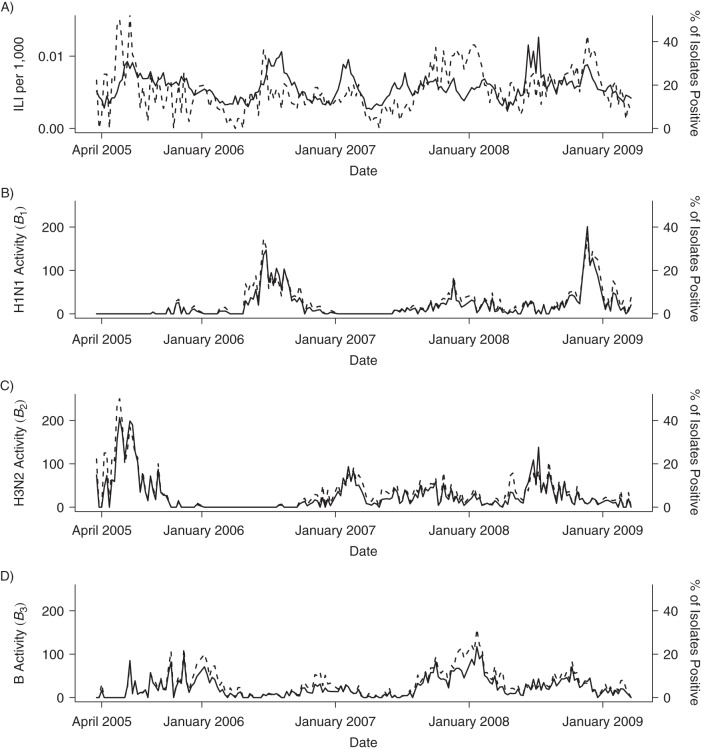
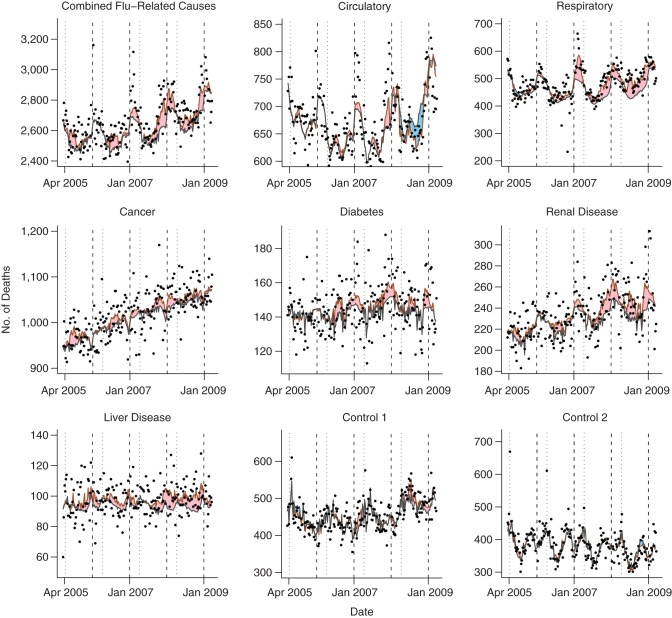
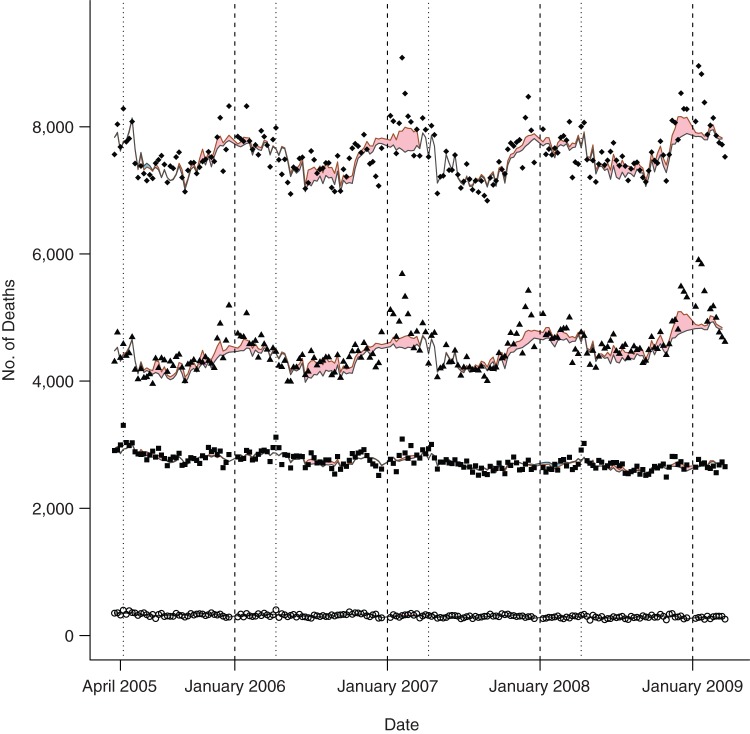
Influenza epidemiology differs substantially in tropical and temperate zones, but estimates of seasonal influenza mortality in developing countries in the tropics are lacking. We aimed to quantify mortality due to seasonal influenza in Thailand, a tropical middle-income country. Time series of polymerase chain reaction-confirmed influenza infections between 2005 and 2009 were constructed from a sentinel surveillance network. These were combined with influenza-like illness data to derive measures of influenza activity and relationships to mortality by using a Bayesian regression framework. We estimated 6.1 (95% credible interval: 0.5, 12.4) annual deaths per 100,000 population attributable to influenza A and B, predominantly in those aged ≥60 years, with the largest contribution from influenza A(H1N1) in 3 out of 4 years. For A(H3N2), the relationship between influenza activity and mortality varied over time. Influenza was associated with increases in deaths classified as resulting from respiratory disease (posterior probability of positive association, 99.8%), cancer (98.6%), renal disease (98.0%), and liver disease (99.2%). No association with circulatory disease mortality was found. Seasonal influenza infections are associated with substantial mortality in Thailand, but evidence for the strong relationship between influenza activity and circulatory disease mortality reported in temperate countries is lacking.
热带和温带地区的流感流行病学存在显著差异,但目前缺乏对热带地区发展中国家季节性流感死亡率的估计。我们旨在量化热带中等收入国家泰国因季节性流感导致的死亡率。通过一个哨点监测网络构建了2005年至2009年聚合酶链反应确诊的流感感染时间序列。利用贝叶斯回归框架,将这些数据与流感样疾病数据相结合,以得出流感活动指标及其与死亡率的关系。我们估计,每10万人口中每年有6.1例(95%可信区间:0.5,12.4)死亡归因于甲型和乙型流感,主要发生在60岁及以上人群中,4年中有3年甲型(H1N1)流感的贡献最大。对于甲型(H3N2)流感,流感活动与死亡率之间的关系随时间变化。流感与归类为呼吸系统疾病(阳性关联的后验概率为99.8%)、癌症(98.6%)、肾脏疾病(98.0%)和肝脏疾病(99.2%)导致的死亡增加有关。未发现与循环系统疾病死亡率有关联。在泰国,季节性流感感染与相当高的死亡率相关,但缺乏温带国家所报告的流感活动与循环系统疾病死亡率之间存在强关联的证据。