Stroedicke Martin, Bounab Yacine, Strempel Nadine, Klockmeier Konrad, Yigit Sargon, Friedrich Ralf P, Chaurasia Gautam, Li Shuang, Hesse Franziska, Riechers Sean-Patrick, Russ Jenny, Nicoletti Cecilia, Boeddrich Annett, Wiglenda Thomas, Haenig Christian, Schnoegl Sigrid, Fournier David, Graham Rona K, Hayden Michael R, Sigrist Stephan, Bates Gillian P, Priller Josef, Andrade-Navarro Miguel A, Futschik Matthias E, Wanker Erich E
Max Delbrueck Center for Molecular Medicine, 13125 Berlin, Germany;
Institute of Theoretical Biology, Humboldt University of Berlin, 10115 Berlin, Germany;
Genome Res. 2015 May;25(5):701-13. doi: 10.1101/gr.182444.114.
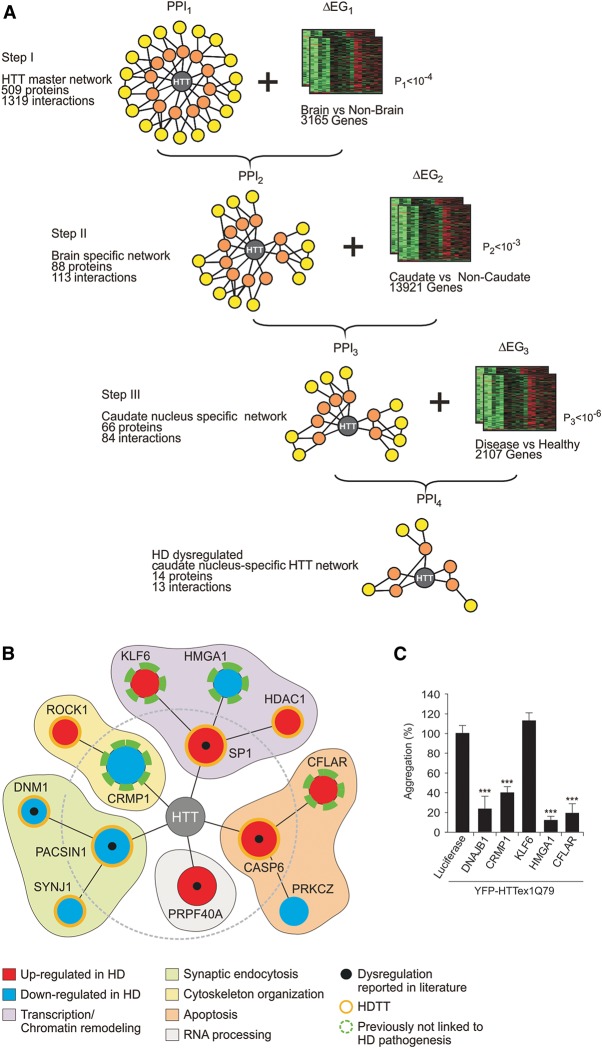
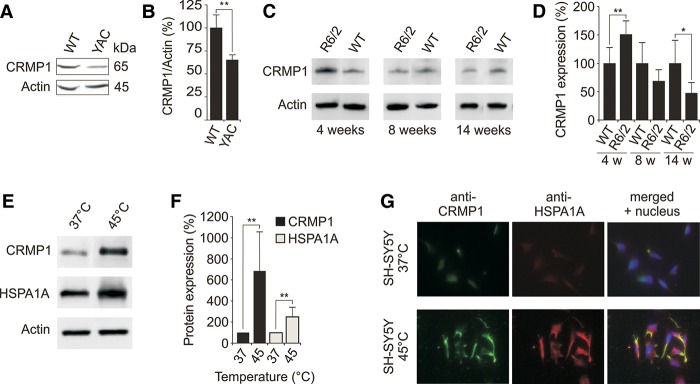
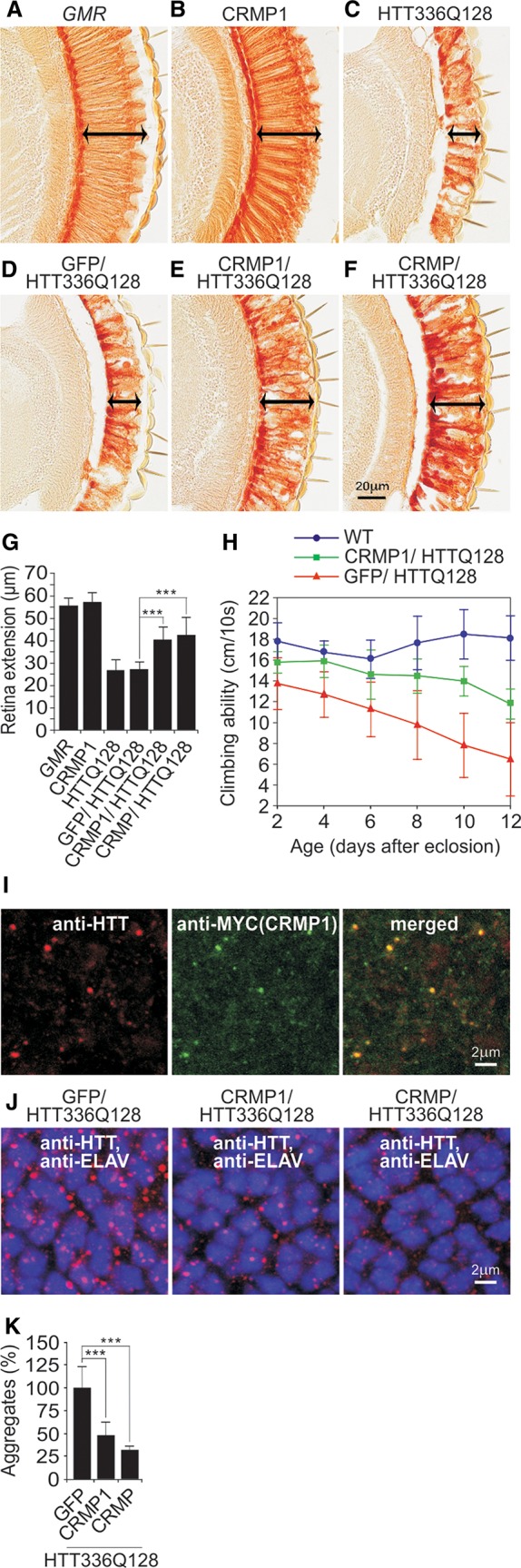
Assemblies of huntingtin (HTT) fragments with expanded polyglutamine (polyQ) tracts are a pathological hallmark of Huntington's disease (HD). The molecular mechanisms by which these structures are formed and cause neuronal dysfunction and toxicity are poorly understood. Here, we utilized available gene expression data sets of selected brain regions of HD patients and controls for systematic interaction network filtering in order to predict disease-relevant, brain region-specific HTT interaction partners. Starting from a large protein-protein interaction (PPI) data set, a step-by-step computational filtering strategy facilitated the generation of a focused PPI network that directly or indirectly connects 13 proteins potentially dysregulated in HD with the disease protein HTT. This network enabled the discovery of the neuron-specific protein CRMP1 that targets aggregation-prone, N-terminal HTT fragments and suppresses their spontaneous self-assembly into proteotoxic structures in various models of HD. Experimental validation indicates that our network filtering procedure provides a simple but powerful strategy to identify disease-relevant proteins that influence misfolding and aggregation of polyQ disease proteins.
具有扩展的聚谷氨酰胺(polyQ) tracts的亨廷顿蛋白(HTT)片段聚集体是亨廷顿舞蹈症(HD)的病理标志。这些结构形成并导致神经元功能障碍和毒性的分子机制尚不清楚。在这里,我们利用HD患者和对照者选定脑区的可用基因表达数据集进行系统的相互作用网络筛选,以预测与疾病相关的、脑区特异性的HTT相互作用伙伴。从一个大的蛋白质-蛋白质相互作用(PPI)数据集开始,逐步的计算筛选策略有助于生成一个聚焦的PPI网络,该网络直接或间接将HD中可能失调的13种蛋白质与疾病蛋白HTT连接起来。该网络使得发现了神经元特异性蛋白CRMP1,它靶向易于聚集的N端HTT片段,并在各种HD模型中抑制它们自发自组装成蛋白毒性结构。实验验证表明,我们的网络筛选程序提供了一种简单但强大的策略,以识别影响多聚谷氨酰胺疾病蛋白错误折叠和聚集的与疾病相关的蛋白质。