Saito Kazuki, Horikawa Wataru, Ito Koichi
Department of Medical Genome Sciences, Graduate School of Frontier Sciences, The University of Tokyo, Kashiwa-city, Chiba, Japan.
PLoS Genet. 2015 Apr 24;11(4):e1005197. doi: 10.1371/journal.pgen.1005197. eCollection 2015 Apr.
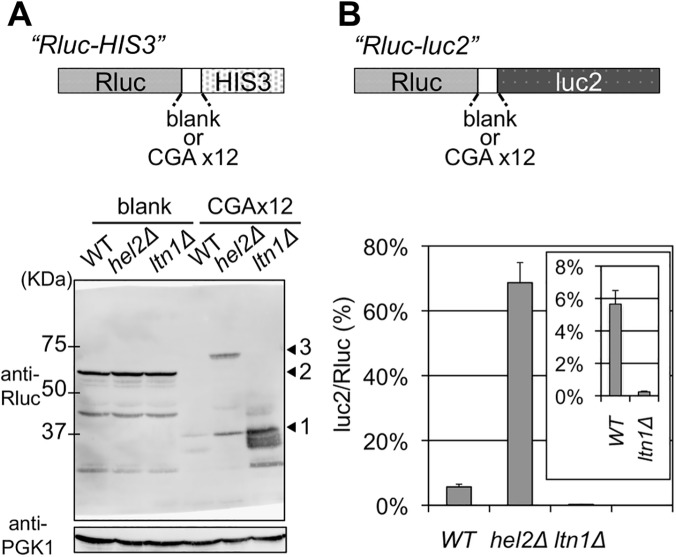
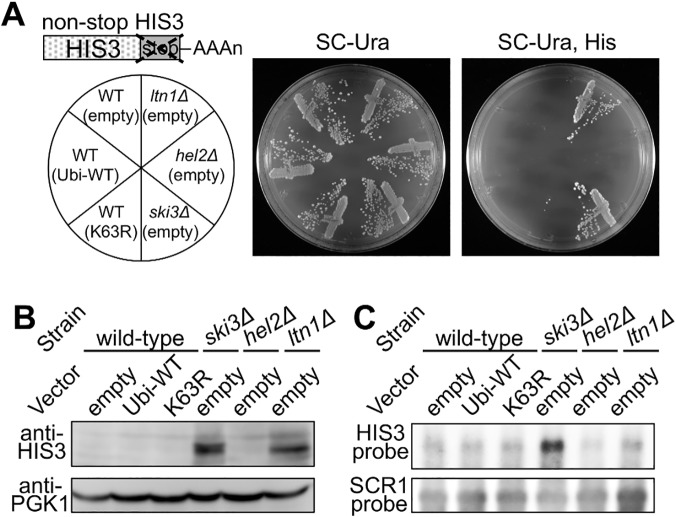
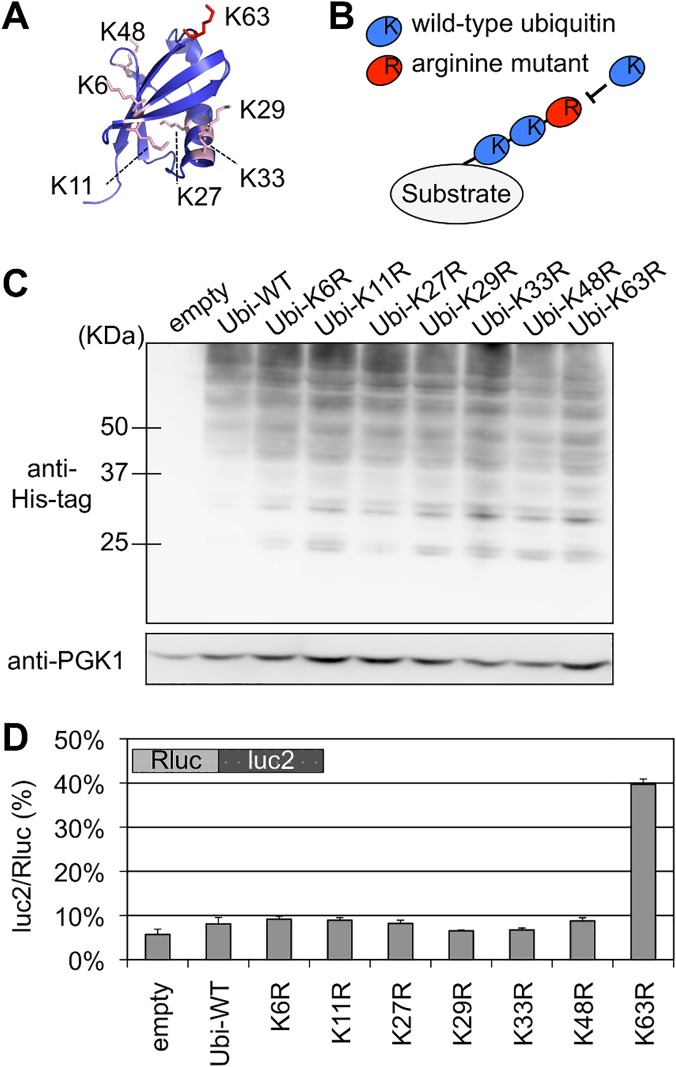
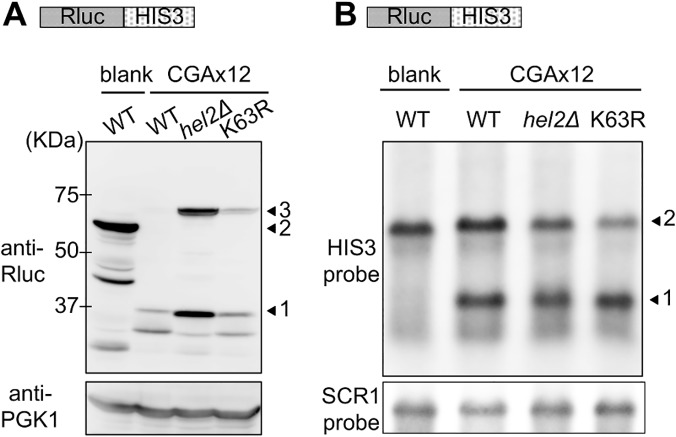
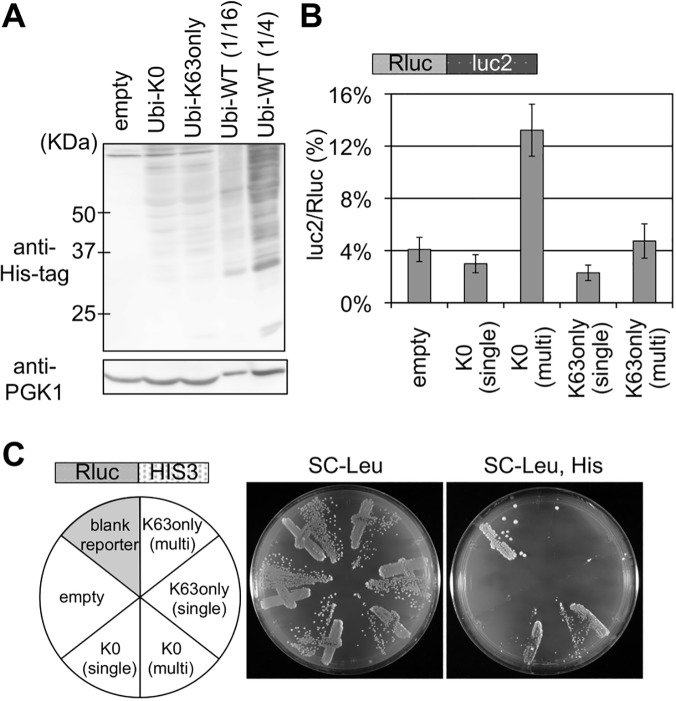
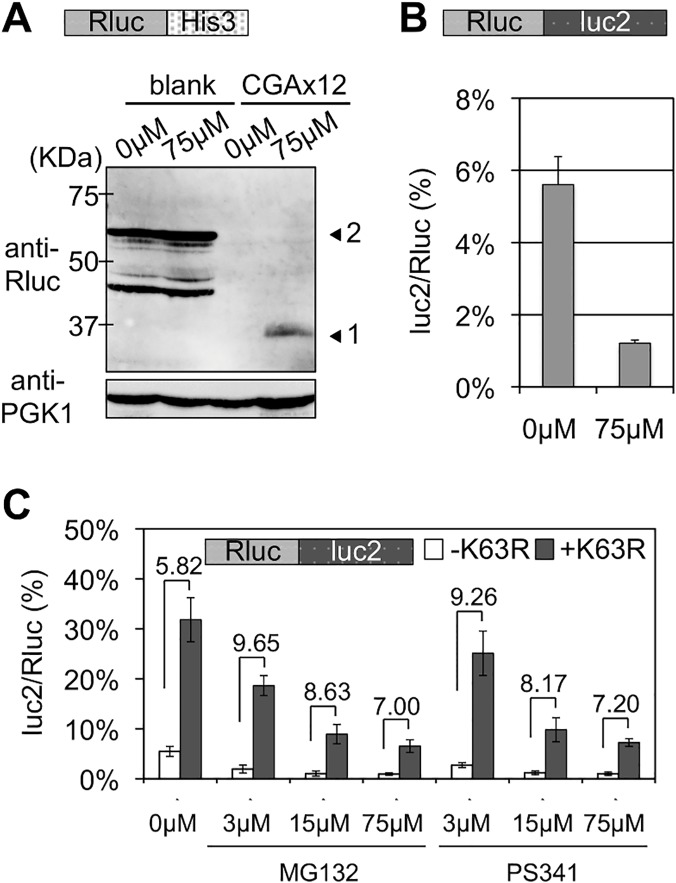
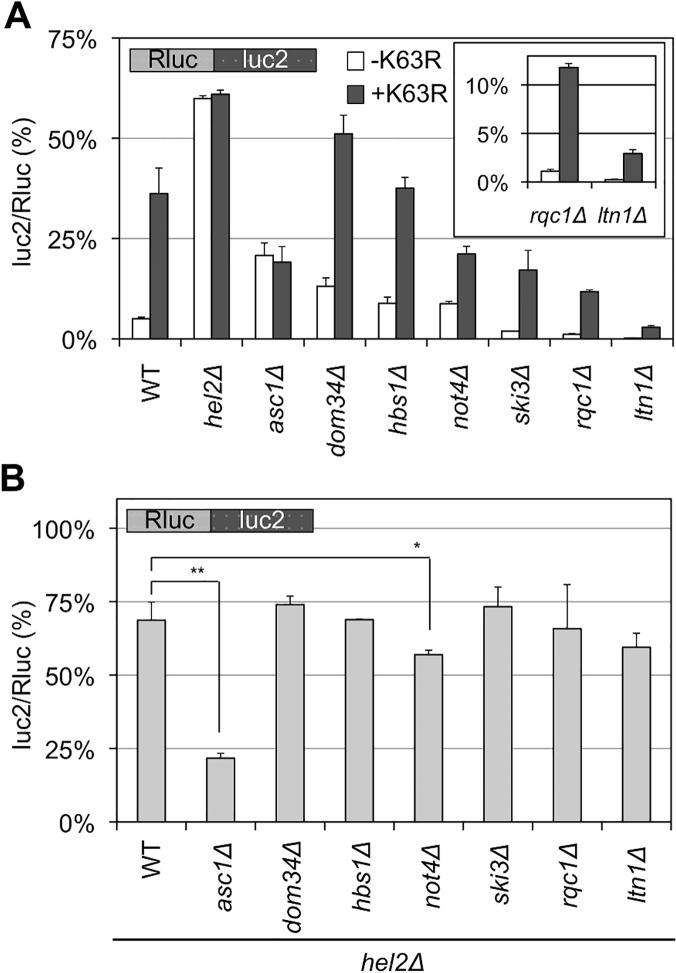
Incidental ribosome stalling during translation elongation is an aberrant phenomenon during protein synthesis and is subjected to quality control by surveillance systems, in which mRNA and a nascent protein are rapidly degraded. Their detailed molecular mechanisms as well as responsible factors for these processes are beginning to be understood. However, the initial processes for detecting stalled translation that result in degradation remain to be determined. Among the factors identified to date, two E3 ubiquitin ligases have been reported to function in distinct manners. Because ubiquitination is one of the most versatile of cellular signals, these distinct functions of E3 ligases suggested diverse ubiquitination pathways during surveillance for stalled translation. In this study, we report experimental evidences for a unique role of non-proteasomal K63 polyubiquitination during quality control for stalled translation. Inhibiting K63 polyubiquitination by expressing a K63R ubiquitin mutation in Saccharomyces cerevisiae cells markedly abolished the quality control responses for stalled translation. More detailed analyses indicated that the effects of K63R mutants were independent of the proteasome and that K63 polyubiquitination is dependent on Hel2, one of the E3 ligases. Moreover, a K63R ubiquitin mutant barely inhibited the quality control pathway for nonstop translation, indicating distinct mechanisms for these highly related quality control pathways. Our results suggest that non-proteasomal K63 polyubiquitination is included in the initial surveillance process of stalled translation and presumably triggers protein degradation steps upon translational stall. These findings provide crucial information regarding the detailed molecular mechanisms for the initial steps involved in quality control systems and their classification.
翻译延伸过程中偶然发生的核糖体停滞是蛋白质合成过程中的一种异常现象,会受到监测系统的质量控制,在此过程中,信使核糖核酸(mRNA)和新生蛋白质会迅速降解。这些过程的详细分子机制以及相关因素正逐渐被人们所了解。然而,导致降解的检测停滞翻译的初始过程仍有待确定。在迄今已确定的因素中,有两种E3泛素连接酶被报道以不同方式发挥作用。由于泛素化是细胞信号中最为多样的一种,E3连接酶的这些不同功能表明在监测停滞翻译过程中存在多种泛素化途径。在本研究中,我们报告了非蛋白酶体K63多聚泛素化在停滞翻译质量控制过程中独特作用的实验证据。在酿酒酵母细胞中表达K63R泛素突变体以抑制K63多聚泛素化,显著消除了对停滞翻译的质量控制反应。更详细的分析表明,K63R突变体的作用独立于蛋白酶体,且K63多聚泛素化依赖于E3连接酶之一的Hel2。此外,K63R泛素突变体几乎不抑制无义密码子介导的翻译质量控制途径,表明这些高度相关的质量控制途径具有不同的机制。我们的结果表明,非蛋白酶体K63多聚泛素化参与了停滞翻译的初始监测过程,并可能在翻译停滞时触发蛋白质降解步骤。这些发现为质量控制系统初始步骤的详细分子机制及其分类提供了关键信息。