Sladitschek Hanna L, Neveu Pierre A
Cell Biology and Biophysics Unit, European Molecular Biology Laboratory, Heidelberg, Baden-Württemberg, Germany.
PLoS One. 2015 Apr 24;10(4):e0124958. doi: 10.1371/journal.pone.0124958. eCollection 2015.
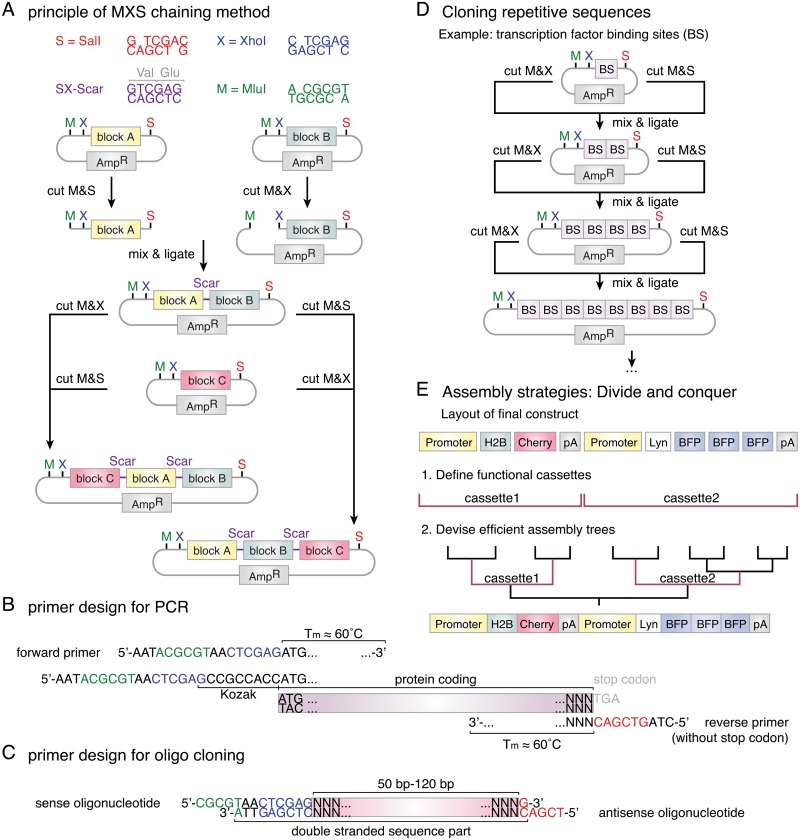
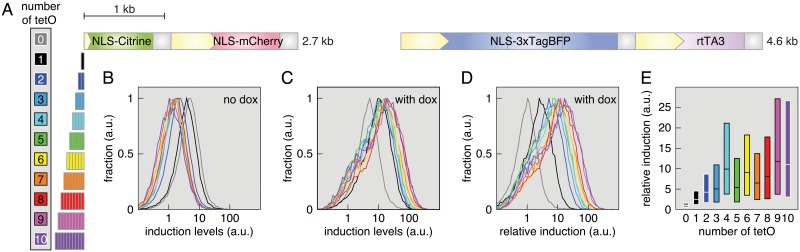
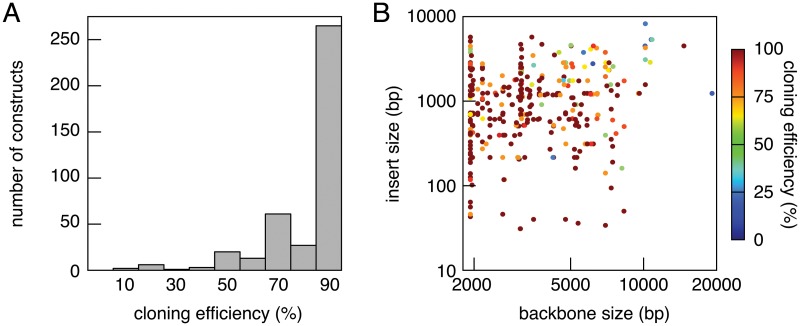
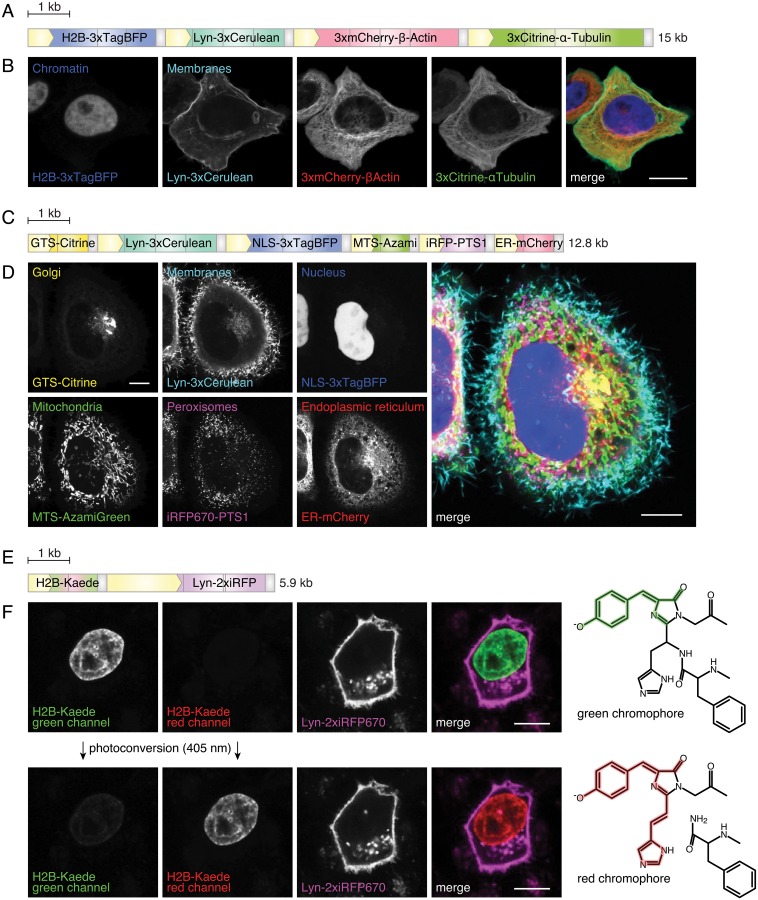
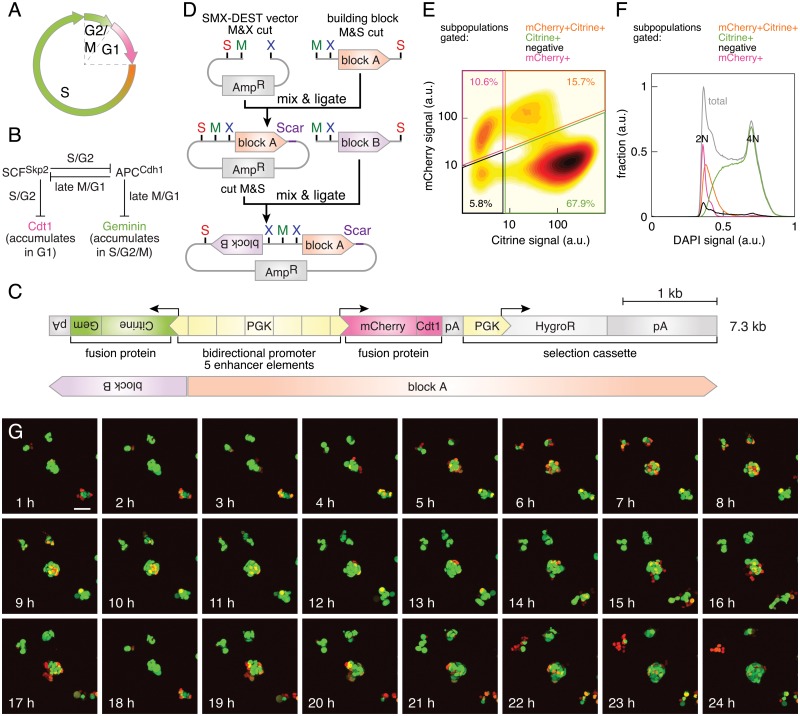
The continuous improvement of imaging technologies has driven the development of sophisticated reporters to monitor biological processes. Such constructs should ideally be assembled in a flexible enough way to allow for their optimization. Here we describe a highly reliable cloning method to efficiently assemble constructs for imaging or flow cytometry applications in mammalian cell culture systems. We bioinformatically identified a list of restriction enzymes whose sites are rarely found in human and mouse cDNA libraries. From the best candidates, we chose an enzyme combination (MluI, XhoI and SalI: MXS) that enables iterative chaining of individual building blocks. The ligation scar resulting from the compatible XhoI- and SalI-sticky ends can be translated and hence enables easy in-frame cloning of coding sequences. The robustness of the MXS-chaining approach was validated by assembling constructs up to 20 kb long and comprising up to 34 individual building blocks. By assessing the success rate of 400 ligation reactions, we determined cloning efficiency to be 90% on average. Large polycistronic constructs for single-cell imaging or flow cytometry applications were generated to demonstrate the versatility of the MXS-chaining approach. We devised several constructs that fluorescently label subcellular structures, an adapted version of FUCCI (fluorescent, ubiquitination-based cell cycle indicator) optimized to visualize cell cycle progression in mouse embryonic stem cells and an array of artificial promoters enabling dosage of doxycyline-inducible transgene expression. We made publicly available through the Addgene repository a comprehensive set of MXS-building blocks comprising custom vectors, a set of fluorescent proteins, constitutive promoters, polyadenylation signals, selection cassettes and tools for inducible gene expression. Finally, detailed guidelines describe how to chain together prebuilt MXS-building blocks and how to generate new customized MXS-building blocks.
成像技术的不断改进推动了用于监测生物过程的精密报告基因的发展。理想情况下,此类构建体应以足够灵活的方式组装,以便进行优化。在此,我们描述了一种高度可靠的克隆方法,可在哺乳动物细胞培养系统中高效组装用于成像或流式细胞术应用的构建体。我们通过生物信息学方法确定了一系列限制性内切酶,其酶切位点在人和小鼠cDNA文库中很少见。从最佳候选酶中,我们选择了一种酶组合(MluI、XhoI和SalI:MXS),该组合能够实现单个构建模块的迭代连接。由兼容的XhoI和SalI粘性末端产生的连接疤痕可以被翻译,因此能够轻松地进行编码序列的读框内克隆。通过组装长达20 kb且包含多达34个单个构建模块的构建体,验证了MXS连接方法的稳健性。通过评估400次连接反应的成功率,我们确定克隆效率平均为90%。生成了用于单细胞成像或流式细胞术应用的大型多顺反子构建体,以证明MXS连接方法的通用性。我们设计了几种构建体,用于荧光标记亚细胞结构,一种经过改良的FUCCI(基于荧光泛素化的细胞周期指示剂)版本,经过优化以可视化小鼠胚胎干细胞中的细胞周期进程,以及一系列人工启动子,可实现强力霉素诱导的转基因表达的剂量控制。我们通过Addgene储存库公开提供了一套全面的MXS构建模块,包括定制载体集、一组荧光蛋白、组成型启动子、聚腺苷酸化信号、选择盒以及用于诱导基因表达的工具。最后,详细指南描述了如何将预先构建的MXS构建模块连接在一起,以及如何生成新的定制MXS构建模块。