Zhan Mei, Crane Matthew M, Entchev Eugeni V, Caballero Antonio, Fernandes de Abreu Diana Andrea, Ch'ng QueeLim, Lu Hang
Interdisciplinary Program in Bioengineering, Georgia Institute of Technology, Atlanta, Georgia, United States of America; Wallace H. Coulter Department of Biomedical Engineering, Georgia Institute of Technology, Atlanta, Georgia, United States of America.
Interdisciplinary Program in Bioengineering, Georgia Institute of Technology, Atlanta, Georgia, United States of America.
PLoS Comput Biol. 2015 Apr 24;11(4):e1004194. doi: 10.1371/journal.pcbi.1004194. eCollection 2015 Apr.
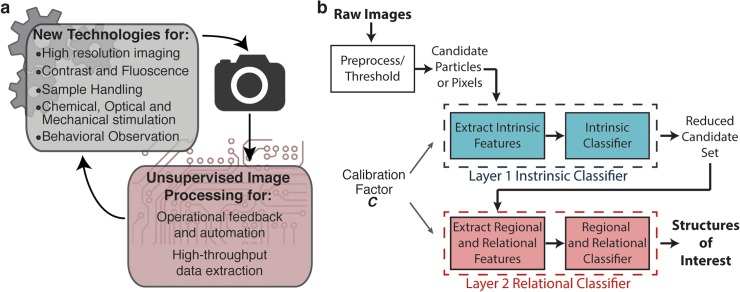
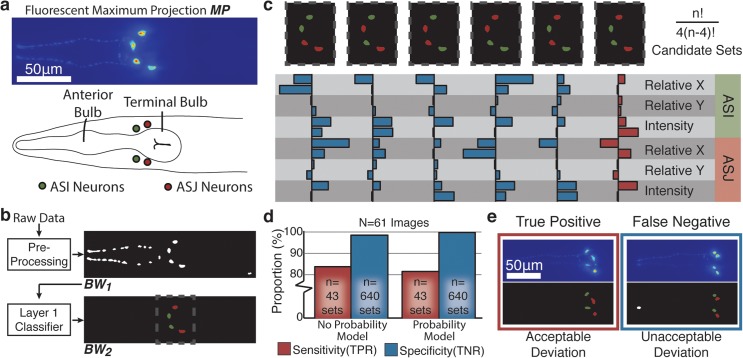
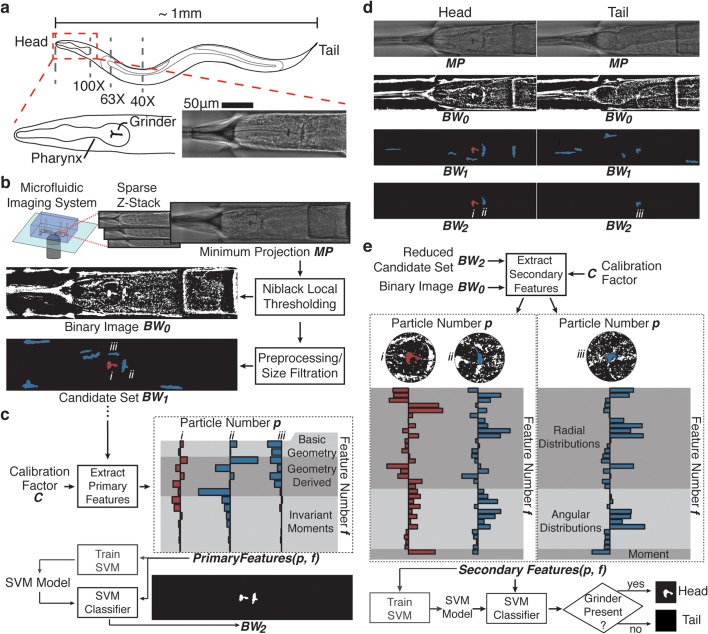
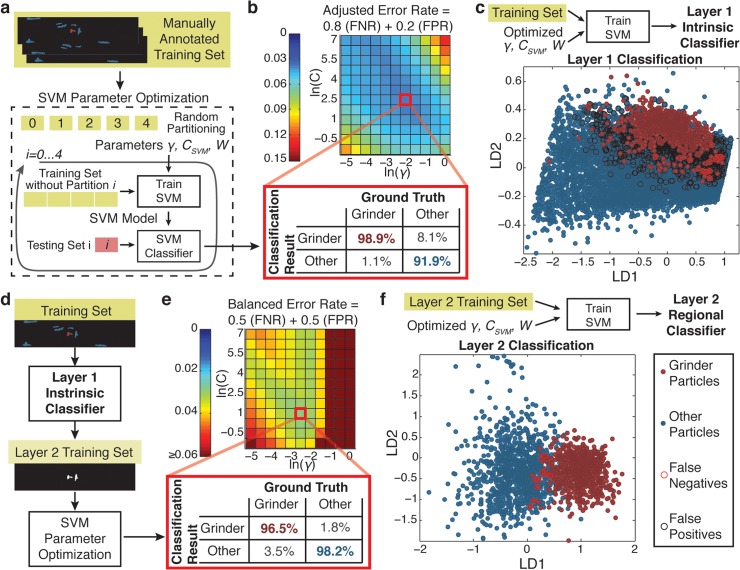
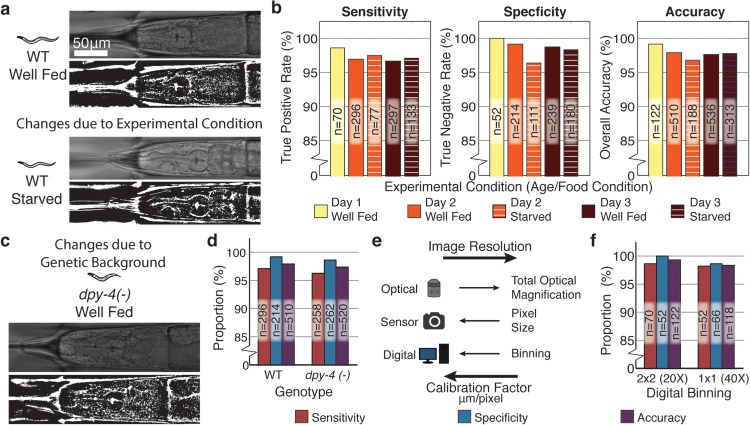
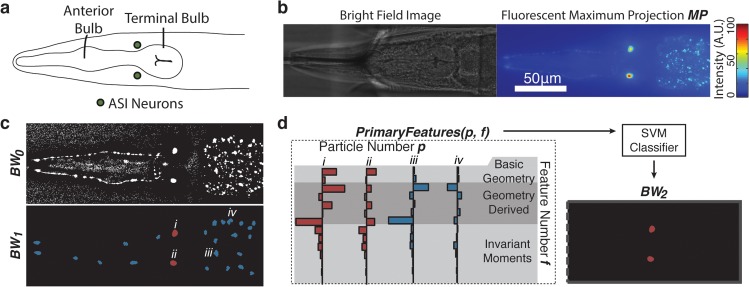
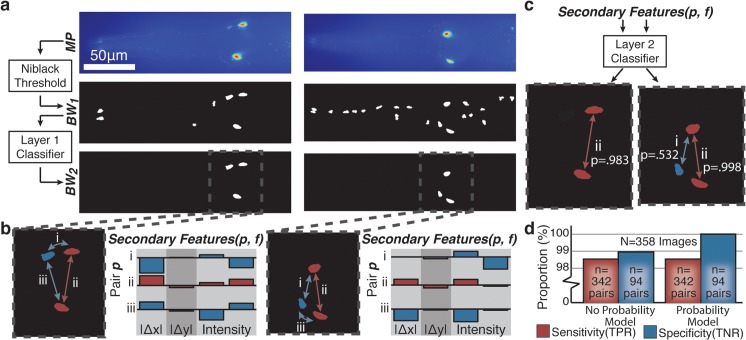
Quantitative imaging has become a vital technique in biological discovery and clinical diagnostics; a plethora of tools have recently been developed to enable new and accelerated forms of biological investigation. Increasingly, the capacity for high-throughput experimentation provided by new imaging modalities, contrast techniques, microscopy tools, microfluidics and computer controlled systems shifts the experimental bottleneck from the level of physical manipulation and raw data collection to automated recognition and data processing. Yet, despite their broad importance, image analysis solutions to address these needs have been narrowly tailored. Here, we present a generalizable formulation for autonomous identification of specific biological structures that is applicable for many problems. The process flow architecture we present here utilizes standard image processing techniques and the multi-tiered application of classification models such as support vector machines (SVM). These low-level functions are readily available in a large array of image processing software packages and programming languages. Our framework is thus both easy to implement at the modular level and provides specific high-level architecture to guide the solution of more complicated image-processing problems. We demonstrate the utility of the classification routine by developing two specific classifiers as a toolset for automation and cell identification in the model organism Caenorhabditis elegans. To serve a common need for automated high-resolution imaging and behavior applications in the C. elegans research community, we contribute a ready-to-use classifier for the identification of the head of the animal under bright field imaging. Furthermore, we extend our framework to address the pervasive problem of cell-specific identification under fluorescent imaging, which is critical for biological investigation in multicellular organisms or tissues. Using these examples as a guide, we envision the broad utility of the framework for diverse problems across different length scales and imaging methods.
定量成像已成为生物学发现和临床诊断中的一项重要技术;最近已开发出大量工具,以实现新的、加速的生物学研究形式。新的成像方式、造影技术、显微镜工具、微流体和计算机控制系统所提供的高通量实验能力,越来越多地将实验瓶颈从物理操作和原始数据收集层面转移到自动识别和数据处理层面。然而,尽管它们具有广泛的重要性,但满足这些需求的图像分析解决方案却针对性过窄。在此,我们提出一种适用于许多问题的可推广公式,用于自主识别特定生物结构。我们在此展示的流程架构利用标准图像处理技术以及分类模型(如支持向量机(SVM))的多层应用。这些低级功能在大量图像处理软件包和编程语言中都很容易获得。因此,我们的框架在模块化层面易于实现,并且提供了特定的高级架构来指导解决更复杂的图像处理问题。我们通过开发两个特定的分类器作为秀丽隐杆线虫模型中自动化和细胞识别的工具集,来证明分类程序的实用性。为满足秀丽隐杆线虫研究社区对自动高分辨率成像和行为应用的共同需求,我们贡献了一个现成的分类器,用于在明场成像下识别动物的头部。此外,我们扩展了我们的框架,以解决荧光成像下细胞特异性识别这一普遍问题,这对于多细胞生物或组织中的生物学研究至关重要。以这些例子为指导,我们设想该框架在不同长度尺度和成像方法的各种问题上具有广泛的实用性。