Bahuguna Jyotika, Aertsen Ad, Kumar Arvind
Bernstein Center Freiburg and Faculty of Biology, University of Freiburg, Freiburg, Germany; Computational Biology, School of Computer Science and Communication, KTH Royal Institute of Technology, Stockholm, Sweden.
Bernstein Center Freiburg and Faculty of Biology, University of Freiburg, Freiburg, Germany.
PLoS Comput Biol. 2015 Apr 24;11(4):e1004233. doi: 10.1371/journal.pcbi.1004233. eCollection 2015 Apr.
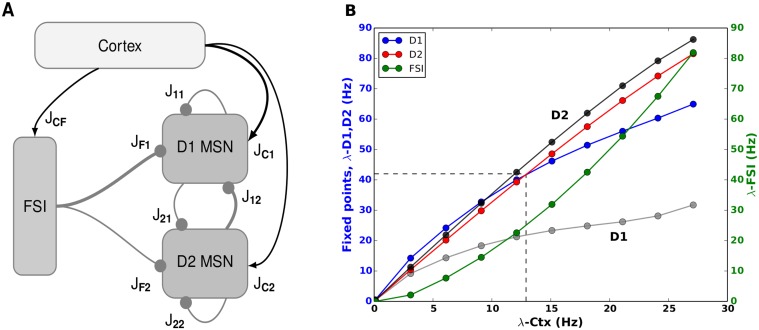
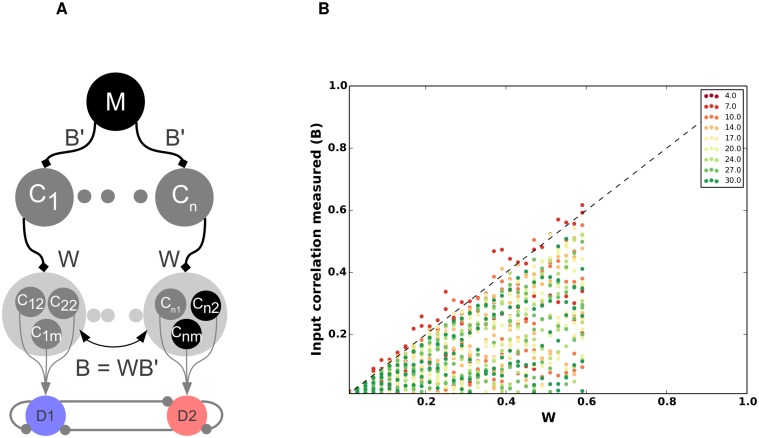
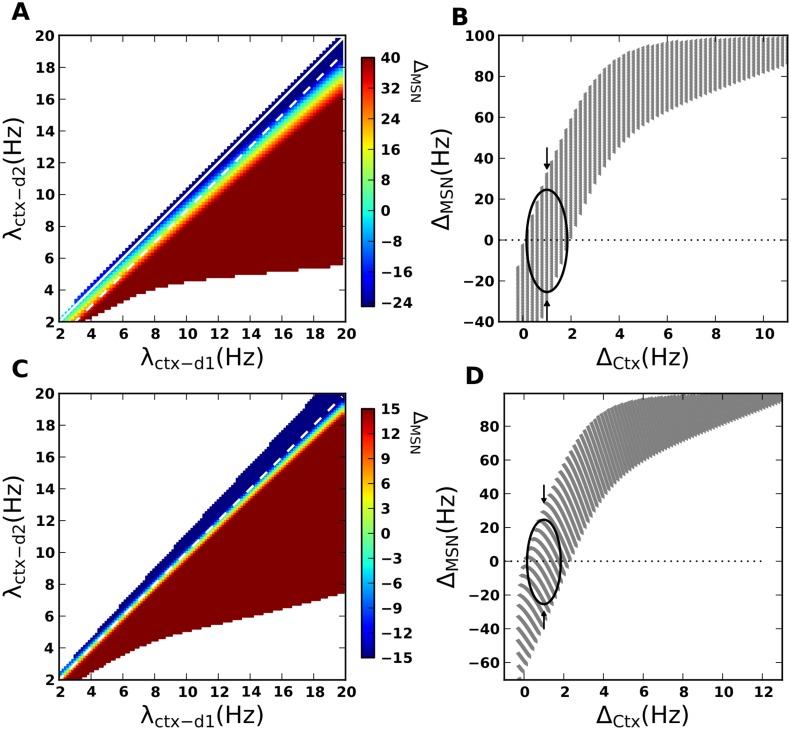
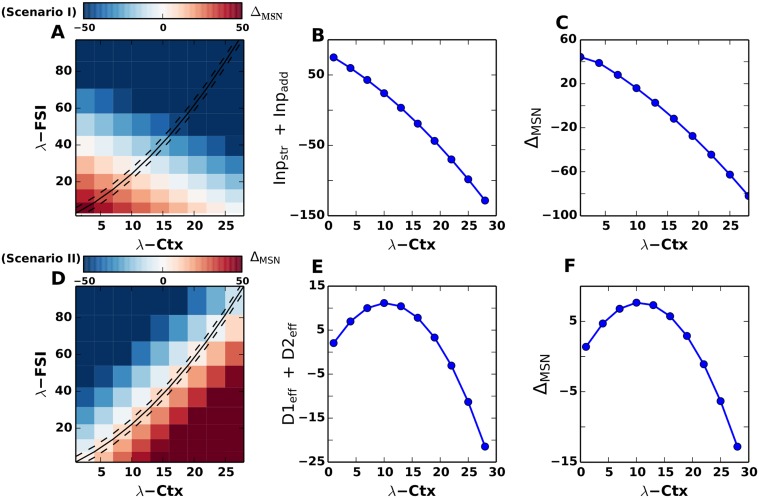
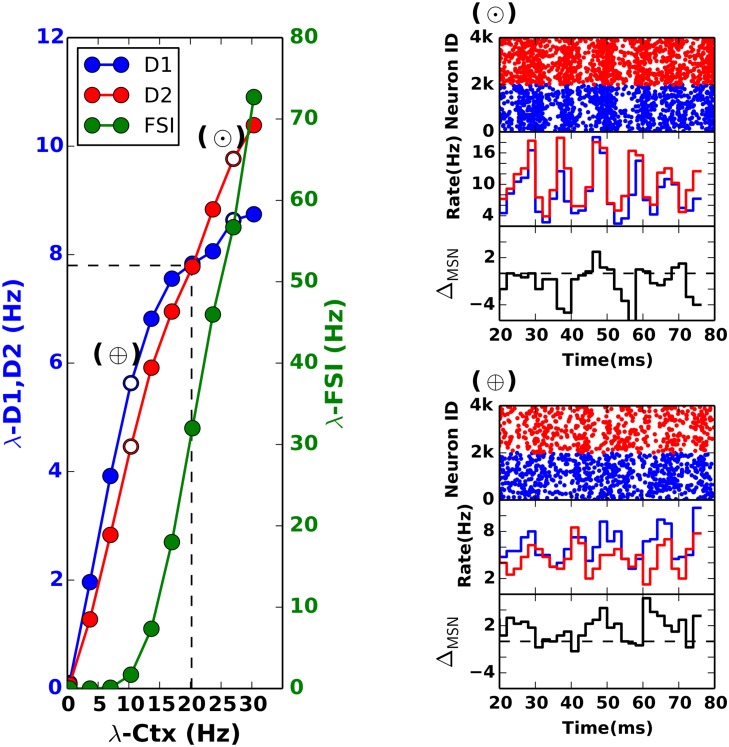
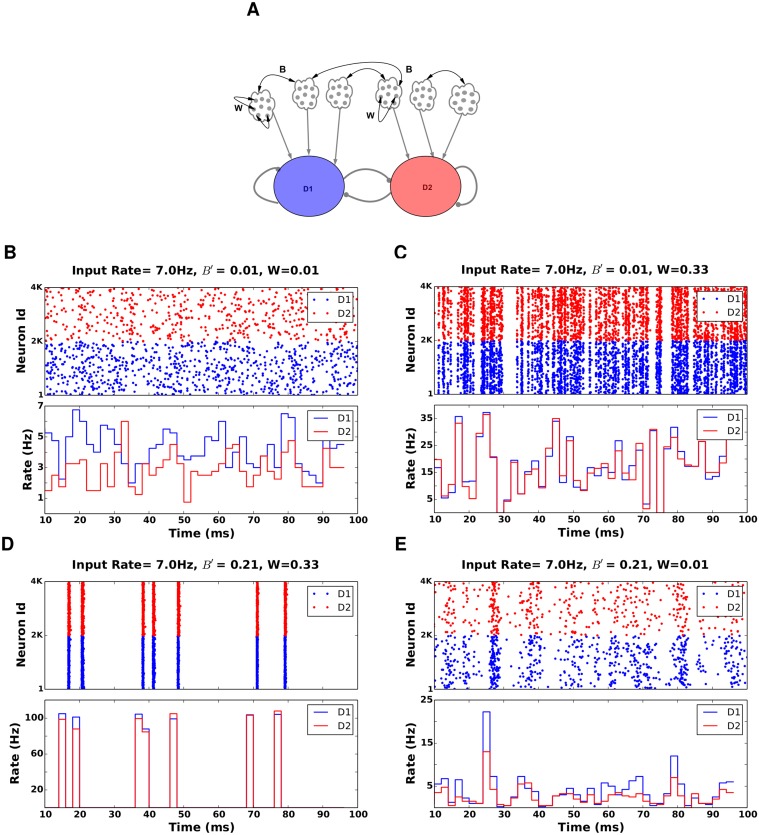
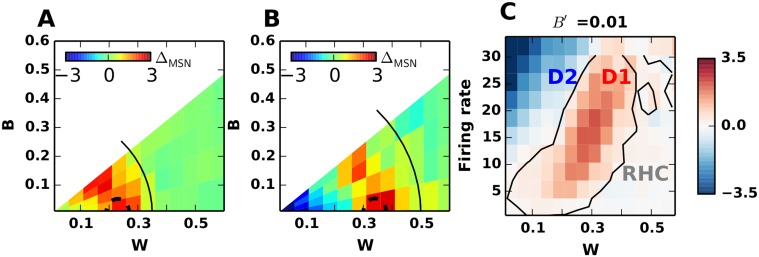
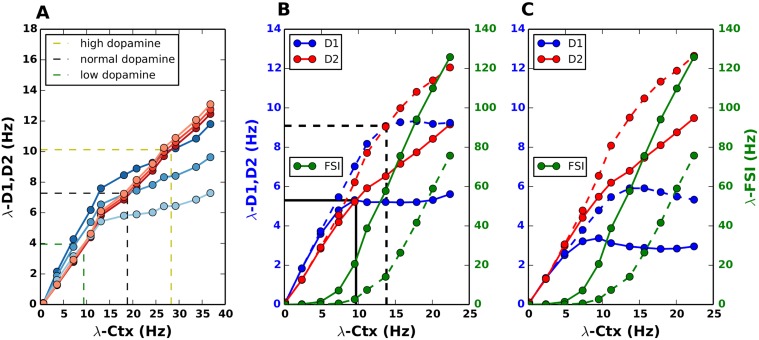
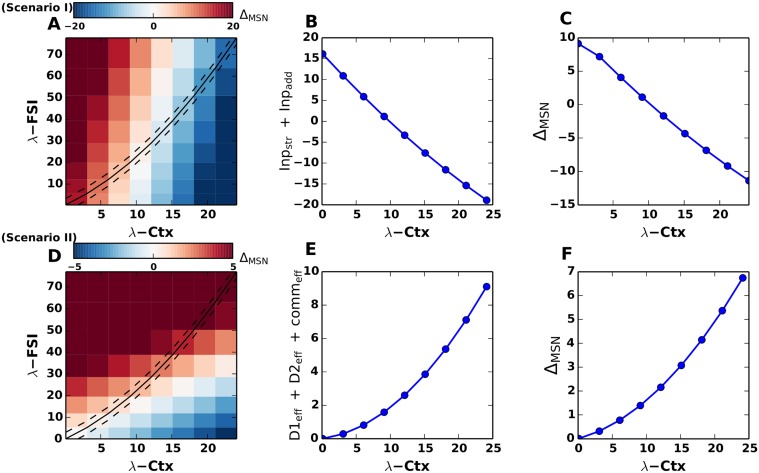
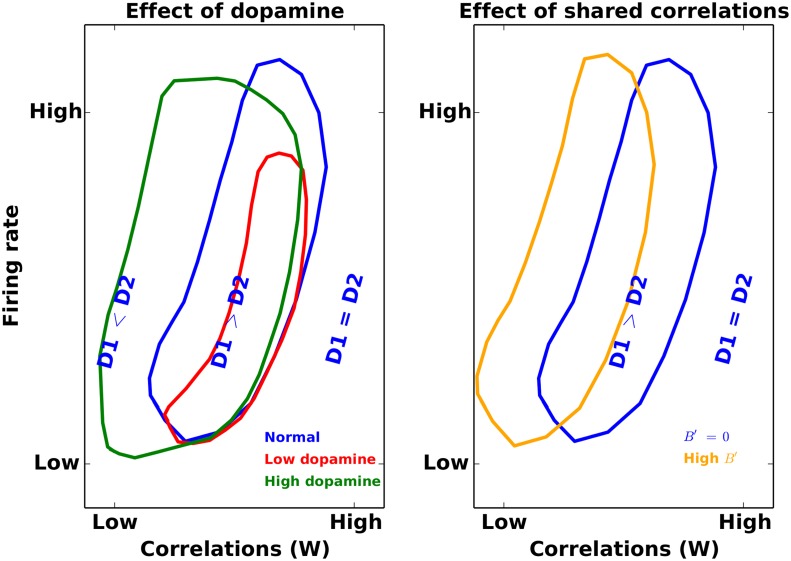
A typical Go/No-Go decision is suggested to be implemented in the brain via the activation of the direct or indirect pathway in the basal ganglia. Medium spiny neurons (MSNs) in the striatum, receiving input from cortex and projecting to the direct and indirect pathways express D1 and D2 type dopamine receptors, respectively. Recently, it has become clear that the two types of MSNs markedly differ in their mutual and recurrent connectivities as well as feedforward inhibition from FSIs. Therefore, to understand striatal function in action selection, it is of key importance to identify the role of the distinct connectivities within and between the two types of MSNs on the balance of their activity. Here, we used both a reduced firing rate model and numerical simulations of a spiking network model of the striatum to analyze the dynamic balance of spiking activities in D1 and D2 MSNs. We show that the asymmetric connectivity of the two types of MSNs renders the striatum into a threshold device, indicating the state of cortical input rates and correlations by the relative activity rates of D1 and D2 MSNs. Next, we describe how this striatal threshold can be effectively modulated by the activity of fast spiking interneurons, by the dopamine level, and by the activity of the GPe via pallidostriatal backprojections. We show that multiple mechanisms exist in the basal ganglia for biasing striatal output in favour of either the Go' or the No-Go' pathway. This new understanding of striatal network dynamics provides novel insights into the putative role of the striatum in various behavioral deficits in patients with Parkinson's disease, including increased reaction times, L-Dopa-induced dyskinesia, and deep brain stimulation-induced impulsivity.
典型的“去/不去”决策被认为是通过基底神经节中直接或间接通路的激活在大脑中实现的。纹状体中的中等棘状神经元(MSN)分别从皮质接收输入并投射到直接和间接通路,它们分别表达D1和D2型多巴胺受体。最近,已经清楚的是,这两种类型的MSN在它们的相互和递归连接以及来自快突触中间神经元(FSI)的前馈抑制方面存在显著差异。因此,为了理解纹状体在动作选择中的功能,确定两种类型的MSN内部和之间不同连接在其活动平衡上的作用至关重要。在这里,我们使用了简化的发放率模型和纹状体脉冲网络模型的数值模拟来分析D1和D2 MSN中脉冲活动的动态平衡。我们表明,两种类型的MSN的不对称连接使纹状体成为一个阈值装置,通过D1和D2 MSN的相对活动率指示皮质输入率和相关性的状态。接下来,我们描述了这种纹状体阈值如何通过快发放中间神经元的活动、多巴胺水平以及通过苍白球-纹状体反馈投射的苍白球外部(GPe)的活动来有效调节。我们表明,基底神经节中存在多种机制来偏向纹状体输出,使其有利于“去”或“不去”通路。对纹状体网络动力学的这种新认识为纹状体在帕金森病患者各种行为缺陷中的假定作用提供了新的见解,这些缺陷包括反应时间增加、左旋多巴诱导的运动障碍以及深部脑刺激诱导的冲动性。