Biewer Matthias, Schlesinger Francisca, Hasselmann Martin
Population Genetics of Social Insects, Institute of Genetics, University of Cologne Cologne, Germany ; Livestock Population Genomics Group, Institute of Animal Science, University of Hohenheim Stuttgart, Germany.
Population Genetics of Social Insects, Institute of Genetics, University of Cologne Cologne, Germany ; Institute of Bee Research Hohen Neuendorf, Germany.
Front Genet. 2015 Apr 10;6:124. doi: 10.3389/fgene.2015.00124. eCollection 2015.
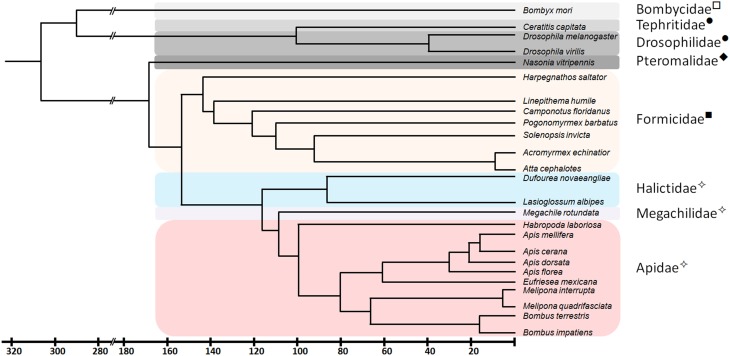
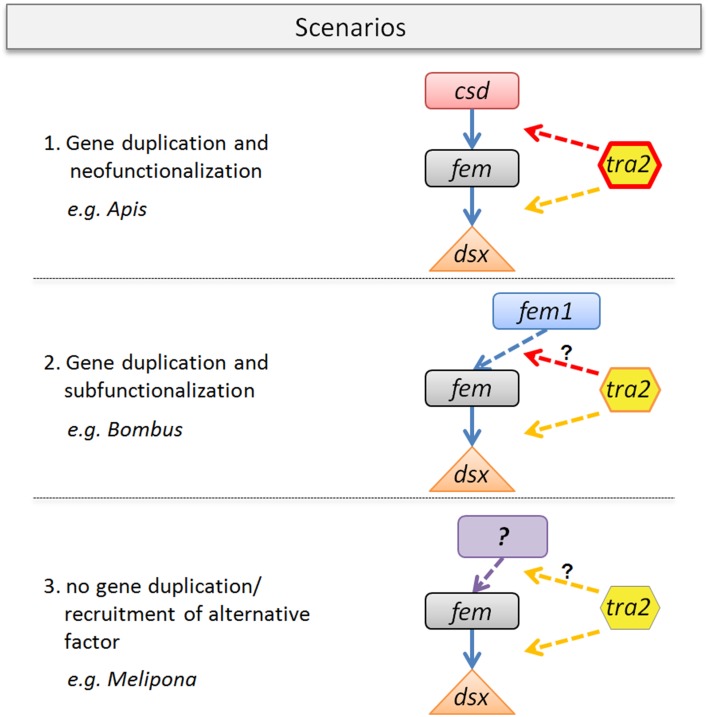
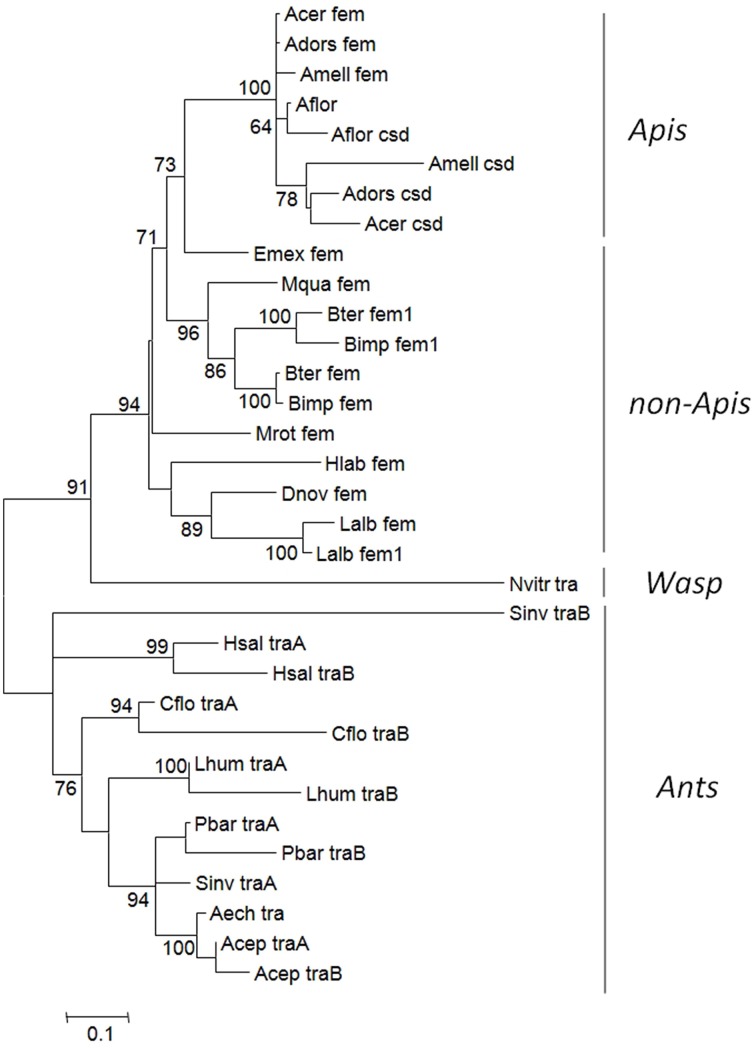
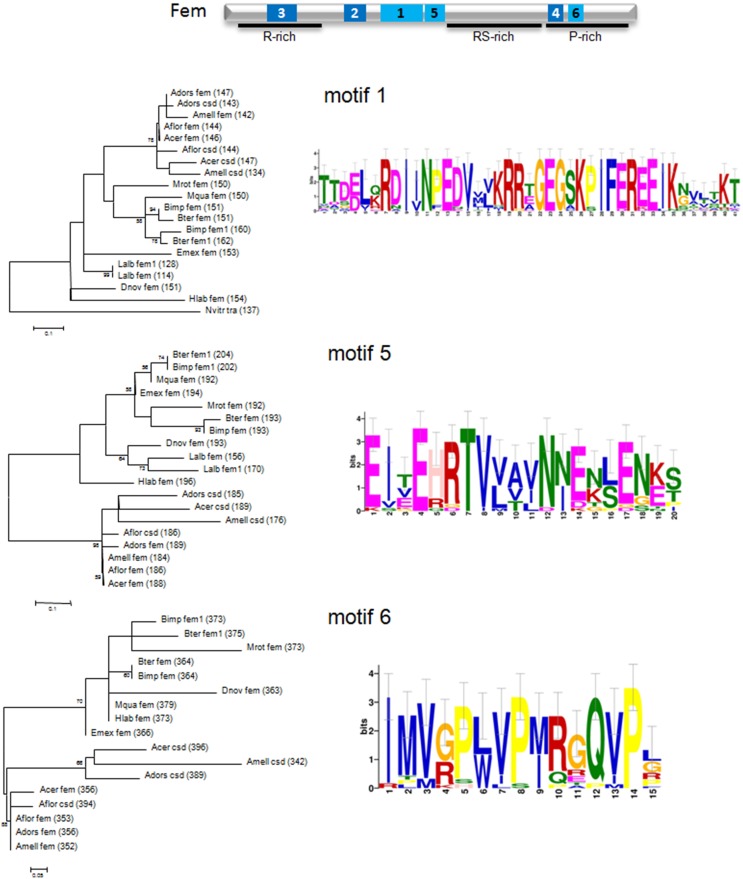
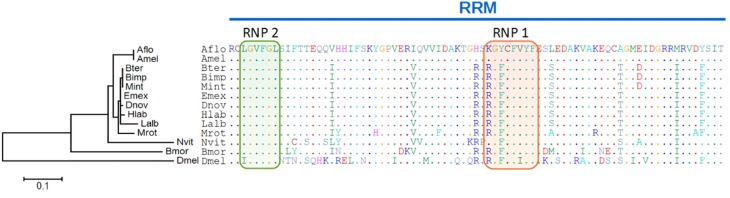
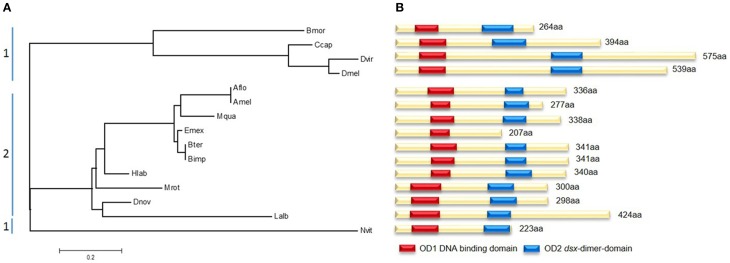
All hymenopteran species, such as bees, wasps and ants, are characterized by the common principle of haplodiploid sex determination in which haploid males arise from unfertilized eggs and females from fertilized eggs. The underlying molecular mechanism has been studied in detail in the western honey bee Apis mellifera, in which the gene complementary sex determiner (csd) acts as primary signal of the sex determining pathway, initiating female development by csd-heterozygotes. Csd arose from gene duplication of the feminizer (fem) gene, a transformer (tra) ortholog, and mediates in conjunction with transformer2 (tra2) sex-specific splicing of fem. Comparative molecular analyses identified fem/tra and its downstream target doublesex (dsx) as conserved unit within the sex determining pathway of holometabolous insects. In this study, we aim to examine evolutionary differences among these key regulators. Our main hypothesis is that sex determining key regulators in Hymenoptera species show signs of coevolution within single phylogenetic lineages. We take advantage of several newly sequenced genomes of bee species to test this hypothesis using bioinformatic approaches. We found evidences that duplications of fem are restricted to certain bee lineages and notable amino acid differences of tra2 between Apis and non-Apis species propose structural changes in Tra2 protein affecting co-regulatory function on target genes. These findings may help to gain deeper insights into the ancestral mode of hymenopteran sex determination and support the common view of the remarkable evolutionary flexibility in this regulatory pathway.
所有膜翅目物种,如蜜蜂、黄蜂和蚂蚁,都具有单倍二倍体性别决定的共同原理,即单倍体雄性由未受精卵发育而来,雌性由受精卵发育而来。其潜在的分子机制已在西方蜜蜂(Apis mellifera)中得到详细研究,其中互补性别决定基因(csd)作为性别决定途径的主要信号,由csd杂合子启动雌性发育。Csd起源于雌性化基因(fem)的基因复制,fem是transformer(tra)的直系同源基因,并与transformer2(tra2)共同介导fem的性别特异性剪接。比较分子分析确定fem/tra及其下游靶标双性基因(dsx)是全变态昆虫性别决定途径中的保守单元。在本研究中,我们旨在研究这些关键调节因子之间的进化差异。我们的主要假设是,膜翅目物种中的性别决定关键调节因子在单个系统发育谱系中显示出协同进化的迹象。我们利用几种新测序的蜜蜂物种基因组,使用生物信息学方法来检验这一假设。我们发现证据表明,fem的复制仅限于某些蜜蜂谱系,并且Apis和非Apis物种之间tra2的显著氨基酸差异表明Tra2蛋白发生了结构变化,影响了对靶基因的共同调节功能。这些发现可能有助于更深入地了解膜翅目性别决定的原始模式,并支持这一调节途径具有显著进化灵活性的普遍观点。