Antony Cecil, Mehto Subhash, Tiwari Brijendra K, Singh Yogendra, Natarajan Krishnamurthy
Infectious Disease Immunology Lab, Dr. B. R. Ambedkar Centre for Biomedical Research, University of Delhi, Delhi, 110007, India.
CSIR-Institute of Genomics and Integrative Biology, Mall Road, Delhi, 110007, India.
PLoS One. 2015 Apr 27;10(4):e0124263. doi: 10.1371/journal.pone.0124263. eCollection 2015.
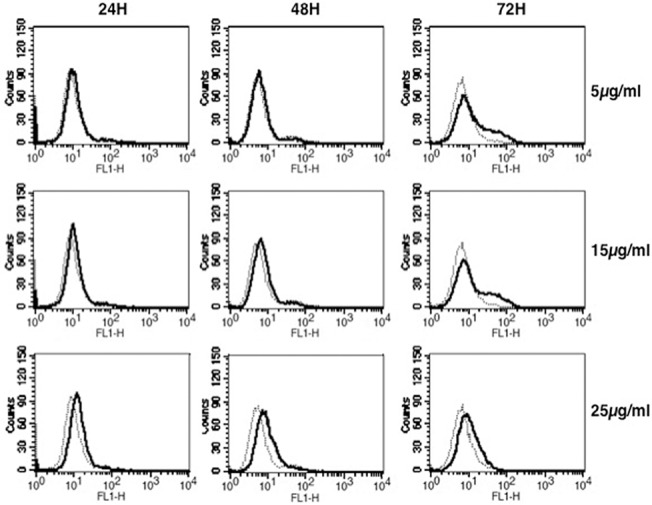
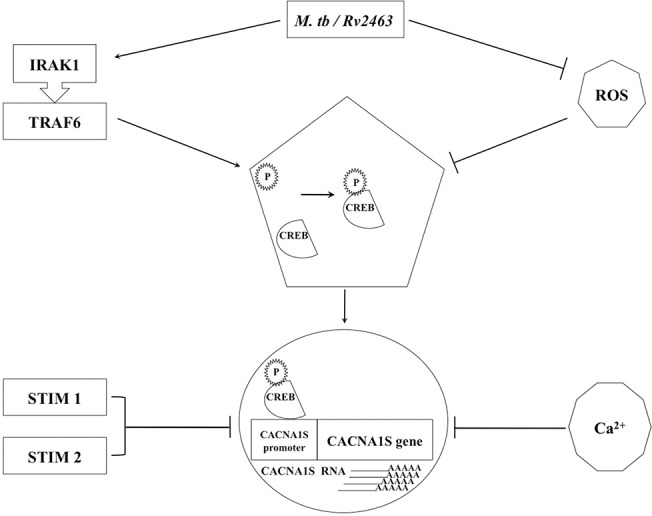
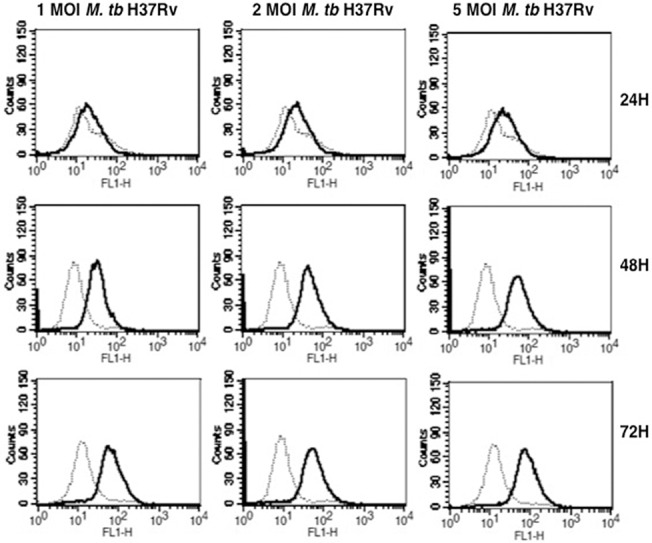
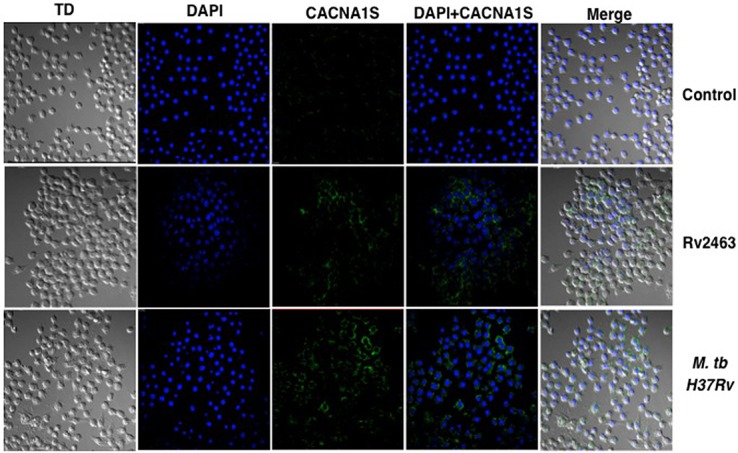
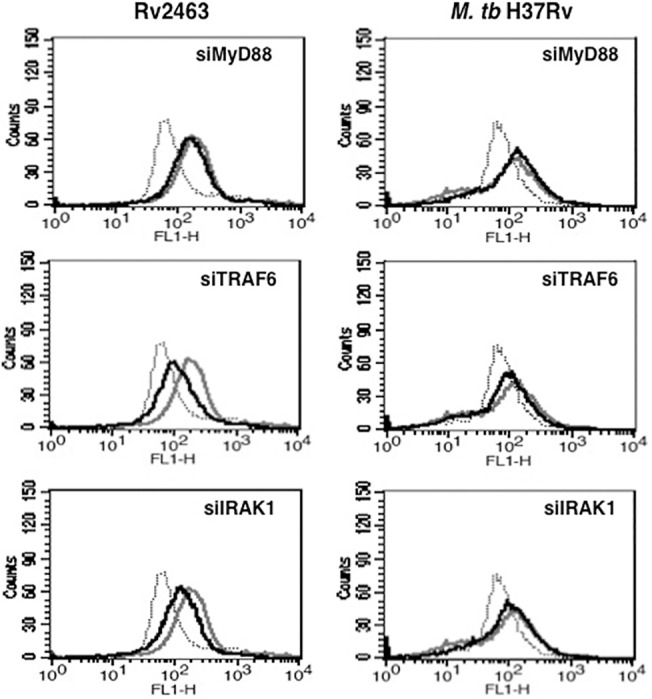
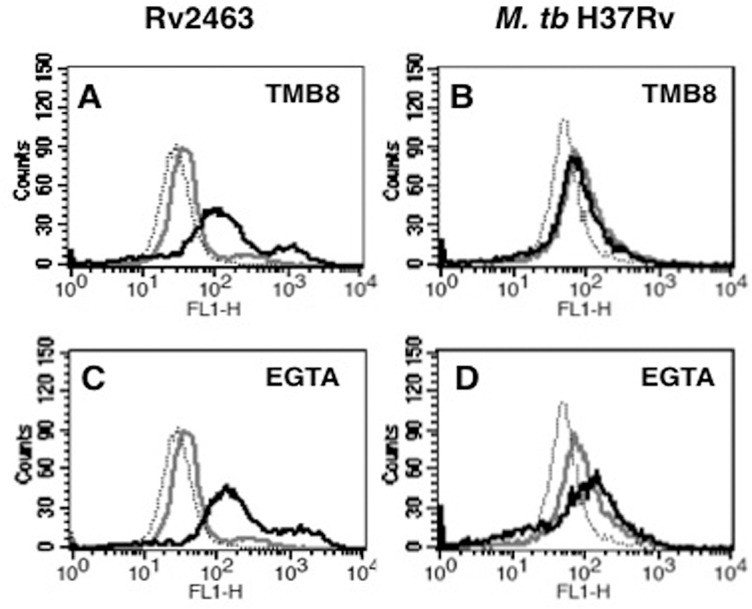
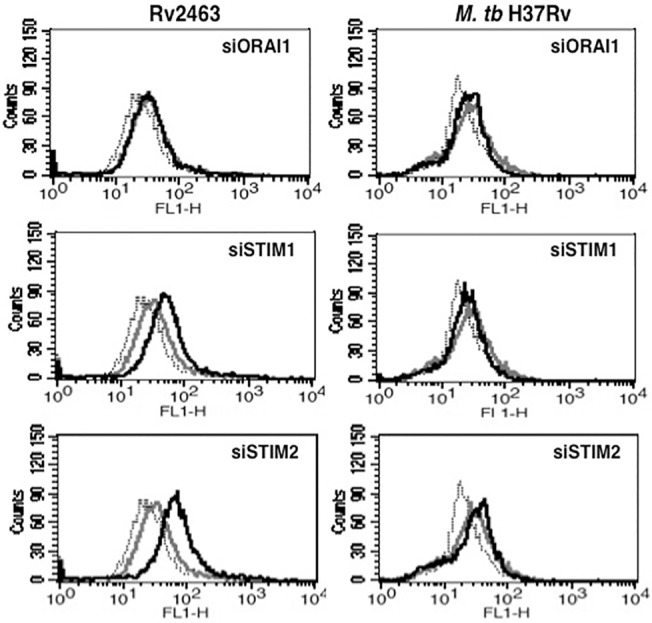
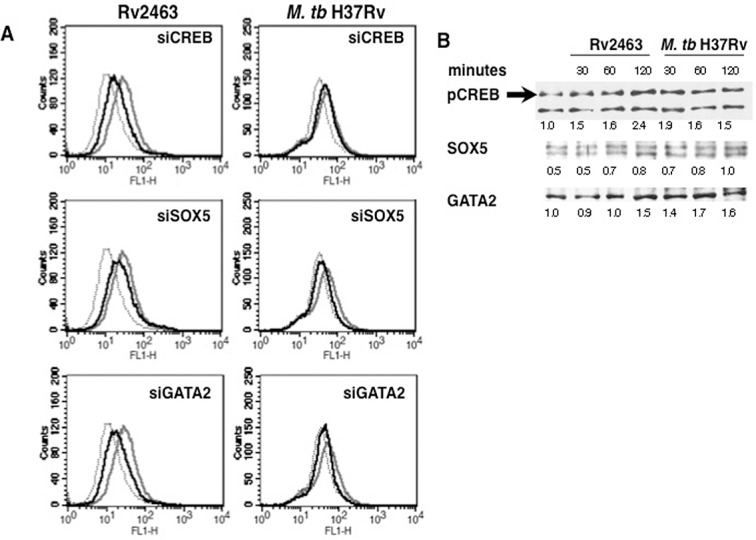
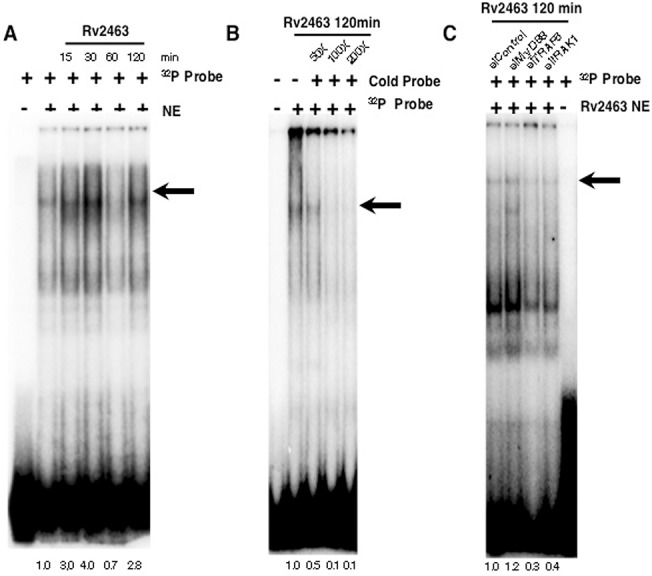
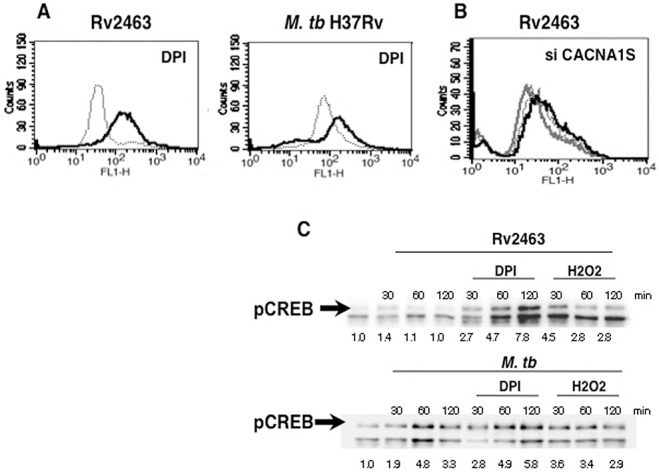
We demonstrated earlier the inhibitory role played by Voltage Gated Calcium Channels (VGCCs) in regulating Mycobacterium tuberculosis (M. tb) survival and pathogenesis. In this report, we investigated mechanisms and key players that regulate the surface expression of VGCC-CACNA1S by Rv2463 and M. tb infection in macrophages. Our earlier work identified Rv2463 to be expressed at early times post infection in macrophages that induced suppressor responses to dendritic cells and macrophages. Our results in this study demonstrate a role of MyD88 independent TLR pathway in mediating CACNA1S expression. Dissecting the role for second messengers, we show that calcium homeostasis plays a key role in CACNA1S expression during M. tb infection. Using siRNAs against molecular sensors of calcium regulation, we show an involvement of ER associated Stromal Interaction Molecules 1 and 2 (STIM1 and STIM2), and transcription factor pCREB, towards CACNA1S expression that also involved the MyD88 independent pathway. Interestingly, reactive oxygen species played a negative role in M. tb mediated CACNA1S expression. Further, a cross-regulation of ROS and pCREB was noted that governed CACNA1S expression. Characterizing the mechanisms governing CACNA1S expression would improve our understanding of the regulation of VGCC expression and its role in M. tb pathogenesis during M. tb infection.
我们之前证明了电压门控钙通道(VGCCs)在调节结核分枝杆菌(M. tb)存活和致病过程中所起的抑制作用。在本报告中,我们研究了巨噬细胞中Rv2463和M. tb感染调节VGCC-CACNA1S表面表达的机制和关键因素。我们早期的研究发现,Rv2463在巨噬细胞感染后的早期表达,可诱导对树突状细胞和巨噬细胞的抑制反应。我们在本研究中的结果表明,MyD88非依赖性Toll样受体途径在介导CACNA1S表达中发挥作用。剖析第二信使的作用时,我们发现钙稳态在M. tb感染期间CACNA1S表达中起关键作用。使用针对钙调节分子传感器的小干扰RNA(siRNAs),我们发现内质网相关的基质相互作用分子1和2(STIM1和STIM2)以及转录因子pCREB参与了CACNA1S的表达,这也涉及MyD88非依赖性途径。有趣的是,活性氧在M. tb介导的CACNA1S表达中起负作用。此外,还发现了ROS和pCREB之间的交叉调节作用控制着CACNA1S的表达。阐明控制CACNA1S表达的机制将增进我们对VGCC表达调控及其在M. tb感染期间M. tb致病过程中作用的理解。