Zarezade Nafise, Saboori Darabi Samane, Ramezanali Fariba, Amirchaghmaghi Elham, Khalili Gholamreza, Moini Ashraf, Aflatoonian Reza
Department of Endocrinology and Female Infertility at Reproductive Biomedicine Research Center, Royan Institute for Reproductive Biomedicine, ACECR, Tehran, Iran ; Department of Biochemistry, Payame Noor University, Tehran, Iran.
Department of Endocrinology and Female Infertility at Reproductive Biomedicine Research Center, Royan Institute for Reproductive Biomedicine, ACECR, Tehran, Iran.
Int J Fertil Steril. 2015 Apr-Jun;9(1):55-64. doi: 10.22074/ijfs.2015.4209. Epub 2015 Apr 21.
Establishment of viable pregnancy requires embryo implantation and placentation. Ectopic pregnancy (EP) is a pregnancy complication which occurs when an embryo implants outside of the uterine cavity, most often in a fallopian tube. On the other hand, an important aspect of successful implantation is angiogenesis. Vascular endothelial growth factor (VEGF) is a potent angiogenic factor responsible for vascular development that acts through its receptors, VEGF receptor 1 (VEGFR1) and VEGFR2. This study aims to investigate mRNA expression of VEGF and its receptors in fallopian tubes of women who have EP compared with fallopian tubes of pseudo-pregnant women. We hypothesize that expression of VEGF and its receptors in human fallopian tubes may change during EP.
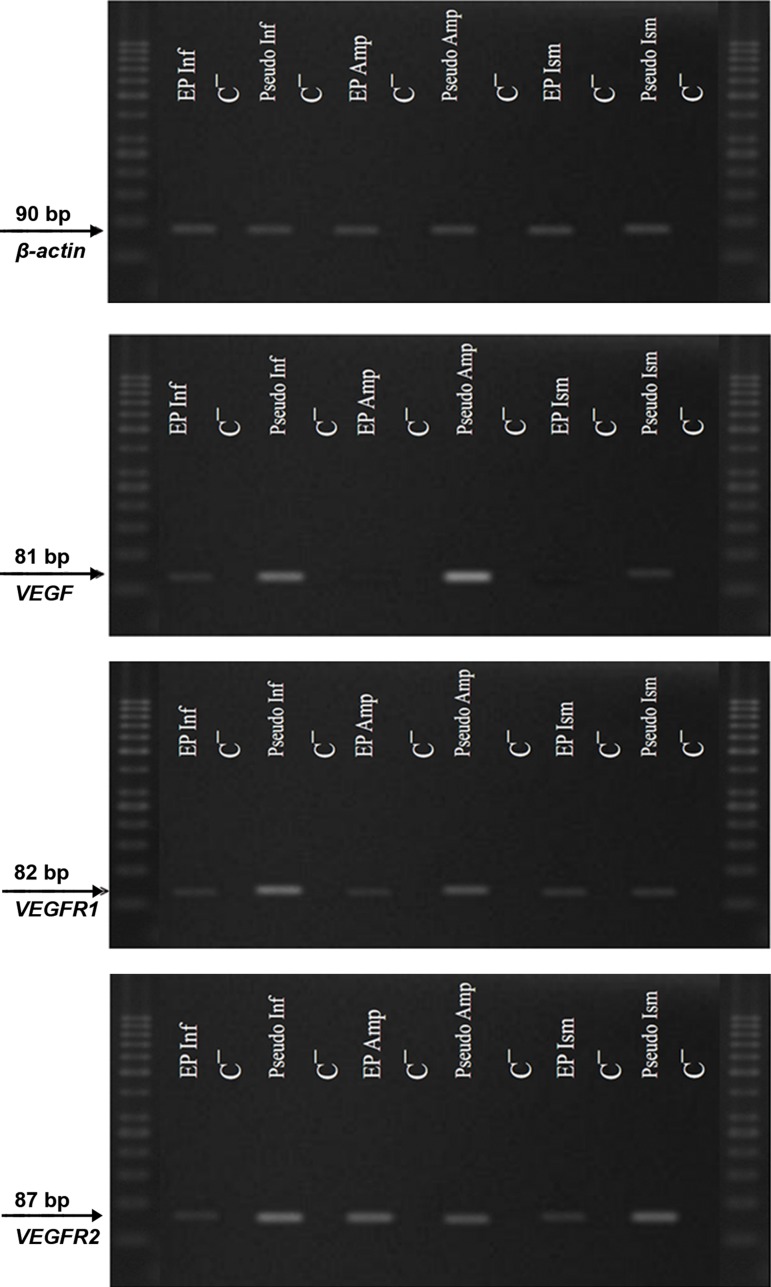
This was a case-control study. The case group consisted of women who underwent salpingectomy because of EP. The control group consisted of women with normal fallopian tubes that underwent hysterectomy. Prior to tubal sampling, each control subject received an injection of human chorionic gonadotropin (hCG) to produce a state of pseudo-pregnancy. Fallopian tubes from both groups were procured. We investigated VEGF, VEGFR1 and VEGFR2 mRNA expressions in different sections of these tubes (infundibulum, ampulla and isthmus) by reverse transcription polymerase chain reaction (RT-PCR) and quantitative PCR (Q-PCR).
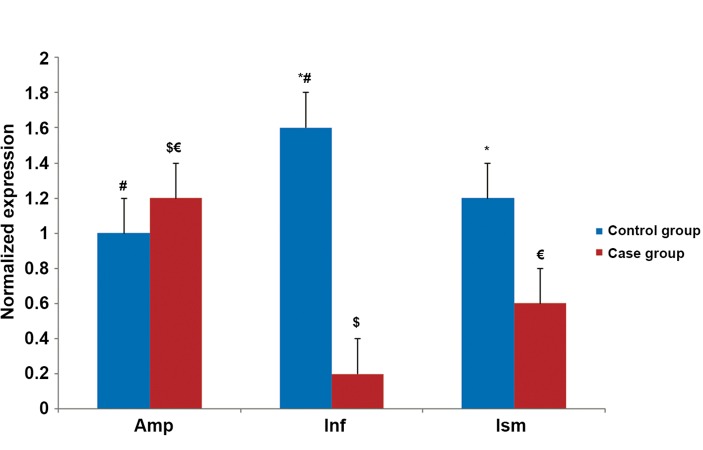
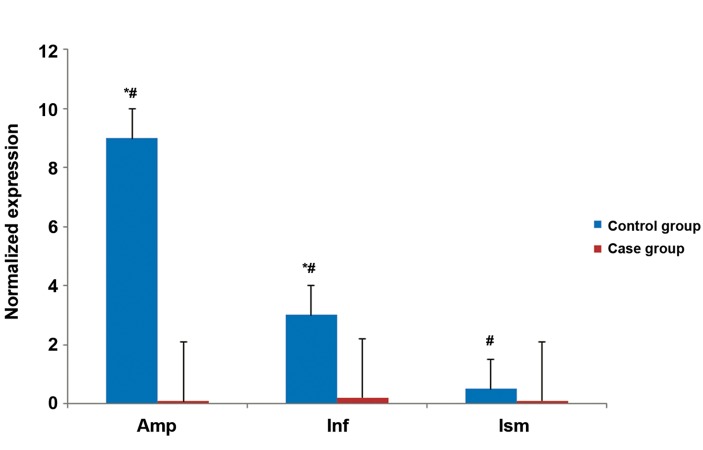
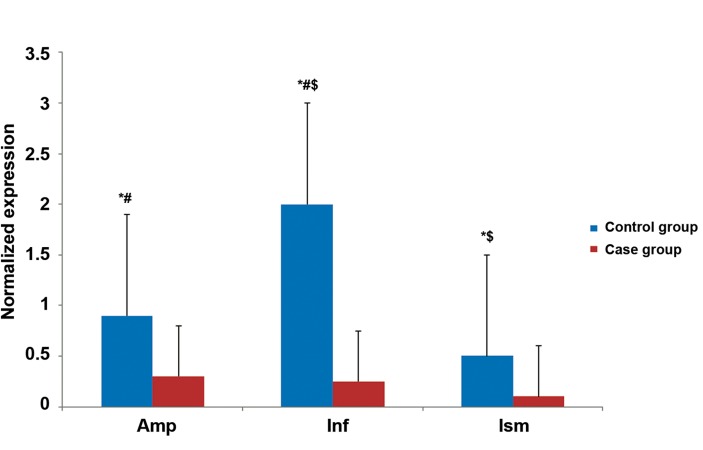
RT-PCR showed expressions of these genes in all sections of the fallopian tubes in both groups. Q-PCR analysis revealed that expressions of VEGF, VEGFR1 and VEGFR2 were lower in all sections of the fallopian tubes from the case group compared to the controls. Only VEGFR2 had higher expression in the ampulla of the case group.
Decreased expressions of VEGF, VEGFR1 and VEGFR2 in the EP group may have a role in the pathogenesis of embryo implantation in fallopian tubes.
成功妊娠需要胚胎着床和胎盘形成。异位妊娠(EP)是一种妊娠并发症,当胚胎在子宫腔外着床时发生,最常见于输卵管。另一方面,成功着床的一个重要方面是血管生成。血管内皮生长因子(VEGF)是一种强效血管生成因子,通过其受体血管内皮生长因子受体1(VEGFR1)和血管内皮生长因子受体2(VEGFR2)发挥作用,负责血管发育。本研究旨在调查与假孕妇女的输卵管相比,患异位妊娠妇女的输卵管中VEGF及其受体的mRNA表达。我们假设在异位妊娠期间,人输卵管中VEGF及其受体的表达可能会发生变化。
这是一项病例对照研究。病例组由因异位妊娠接受输卵管切除术的妇女组成。对照组由接受子宫切除术且输卵管正常的妇女组成。在采集输卵管样本之前,每个对照受试者接受人绒毛膜促性腺激素(hCG)注射以产生假孕状态。采集两组的输卵管。我们通过逆转录聚合酶链反应(RT-PCR)和定量PCR(Q-PCR)研究这些输卵管不同节段(漏斗部、壶腹部和峡部)中VEGF、VEGFR1和VEGFR2的mRNA表达。
RT-PCR显示两组输卵管的所有节段中均有这些基因的表达。Q-PCR分析显示,与对照组相比,病例组输卵管所有节段中VEGF、VEGFR1和VEGFR2的表达均较低。仅VEGFR2在病例组的壶腹部有较高表达。
异位妊娠组中VEGF、VEGFR1和VEGFR2表达降低可能在输卵管胚胎着床的发病机制中起作用。