Rotomskis Augustinas, Margevičiūtė Ramunė, Germanavičius Arūnas, Kaubrys Gintaras, Budrys Valmantas, Bagdonas Albinas
Vilnius University Faculty of Philosophy, Universiteto st. 9/1, Vilnius, Lithuania.
School of Philosophy, Psychology and Language Sciences, The University of Edinburgh, Edinburgh, UK.
BMC Neurol. 2015 Apr 17;15:57. doi: 10.1186/s12883-015-0315-3.
One of the usual problems psychologists and clinicians face in clinical practice is differential diagnostics of Alzheimer's disease and depression. It has been reported that the ACE and ACE-R could discriminate the cognitive dysfunctions due to depression from that due to dementia, although this is not uniform in all studies. The current study aimed to evaluate the utility of the ACE-R to differentiate late-life onset depression (with severe episode) from mild-moderate Alzheimer's Disease (AD).
This study received approval from the Lithuanian Bioethics Committee. All participants were older than 50 years (mean age = 66.52 (±8.76) years). The study sample consisted of 295 individuals: 117 with severe depression, 85 with mild-moderate Alzheimer's disease (AD), and 94 age, gender and education matched participants of control group.
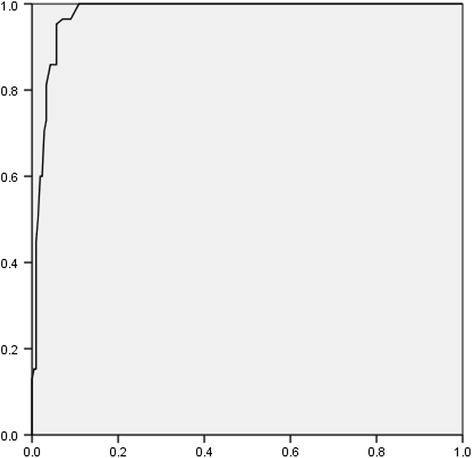
The ACE-R had high sensitivity (100%) and specificity (81%) at detecting cognitive impairments related to AD. Patients with late-life onset depression (ACE-R mean 76.82, SD = 7.36) performed worse than controls (ACE-R mean 85.08, SD = 7.2), but better than the AD group (ACE-R mean 54.74, SD = 12.19). Participants with late-life onset depression were differentiated by mild impairment in the ACE-R total score with mild memory (13.79, SD = 6.29) and greater deficits in letter fluency (3.65, SD = 1.21) than in semantic fluency (4.68, SD = 1.23). Participants with AD were differentiated by severely impaired performance on attention and orientation (11.80, SD = 2.93), memory (8.25, SD = 3.47) and language subtests (17.21, SD = 4.04), and moderately impaired performance on verbal fluency (6.07, SD = 2.74).
ACE-R has diagnostic accuracy in detecting people with AD and can be used in differential diagnostics of late-life onset depression (severe episode) and AD. Diagnostic accuracy may be improved by analyzing the neuropsychological profiles and using lower cutoffs for different age groups.
心理学家和临床医生在临床实践中常面临的问题之一是阿尔茨海默病与抑郁症的鉴别诊断。据报道,ACE和ACE-R能够区分由抑郁症导致的认知功能障碍和由痴呆症导致的认知功能障碍,尽管并非所有研究结果都一致。本研究旨在评估ACE-R在区分老年期起病的抑郁症(重度发作)与轻度至中度阿尔茨海默病(AD)方面的效用。
本研究获得立陶宛生物伦理委员会的批准。所有参与者年龄均超过50岁(平均年龄=66.52(±8.76)岁)。研究样本包括295名个体:117名重度抑郁症患者、85名轻度至中度阿尔茨海默病(AD)患者以及94名年龄、性别和教育程度匹配的对照组参与者。
ACE-R在检测与AD相关的认知障碍方面具有较高的敏感性(100%)和特异性(81%)。老年期起病的抑郁症患者(ACE-R平均分为76.82,标准差=7.36)的表现比对照组(ACE-R平均分为85.08,标准差=7.2)差,但优于AD组(ACE-R平均分为54.74,标准差=12.19)。老年期起病的抑郁症患者在ACE-R总分上有轻度损伤,在记忆方面有轻度损伤(13.79,标准差=6.29),在字母流畅性方面的缺陷(3.65,标准差=1.21)大于语义流畅性方面的缺陷(4.68,标准差=1.23)。AD患者在注意力和定向(11.80,标准差=2.93)、记忆(8.25,标准差=3.47)和语言子测试(17.21,标准差=4.04)方面表现严重受损,在言语流畅性方面表现中度受损(6.07,标准差=2.74)。
ACE-R在检测AD患者方面具有诊断准确性,可用于老年期起病的抑郁症(重度发作)和AD的鉴别诊断。通过分析神经心理学特征并为不同年龄组使用更低的临界值,诊断准确性可能会提高