Kryst Joanna, Kawalec Paweł, Pilc Andrzej
Independent EBM expert, Kraków, Poland.
Drug Management Department, Institute of Public Health, Faculty of Health Sciences, Jagiellonian University, Krakow, Poland.
PLoS One. 2015 May 1;10(5):e0124279. doi: 10.1371/journal.pone.0124279. eCollection 2015.
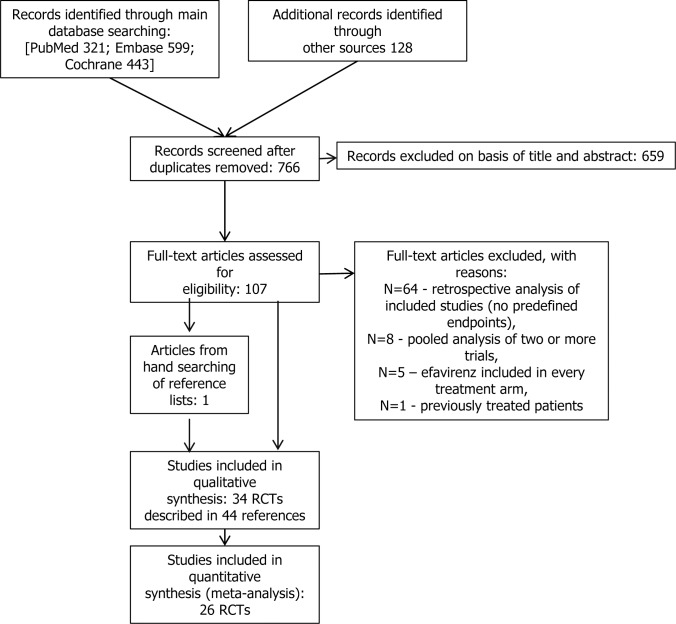
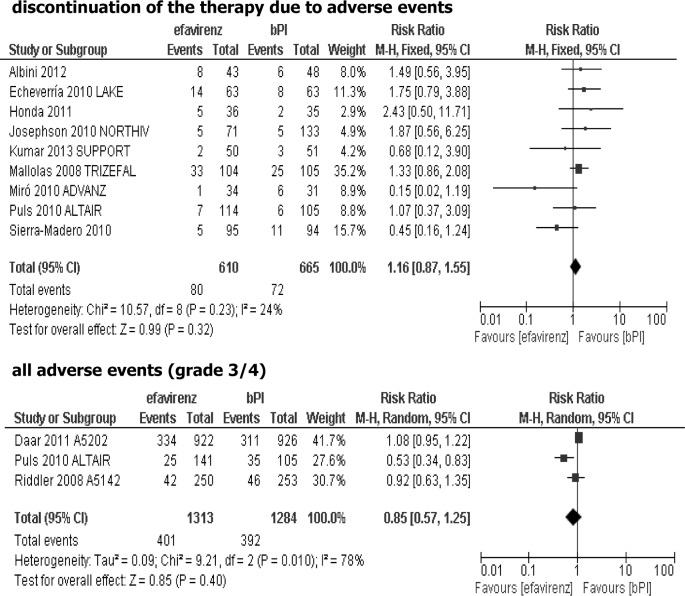
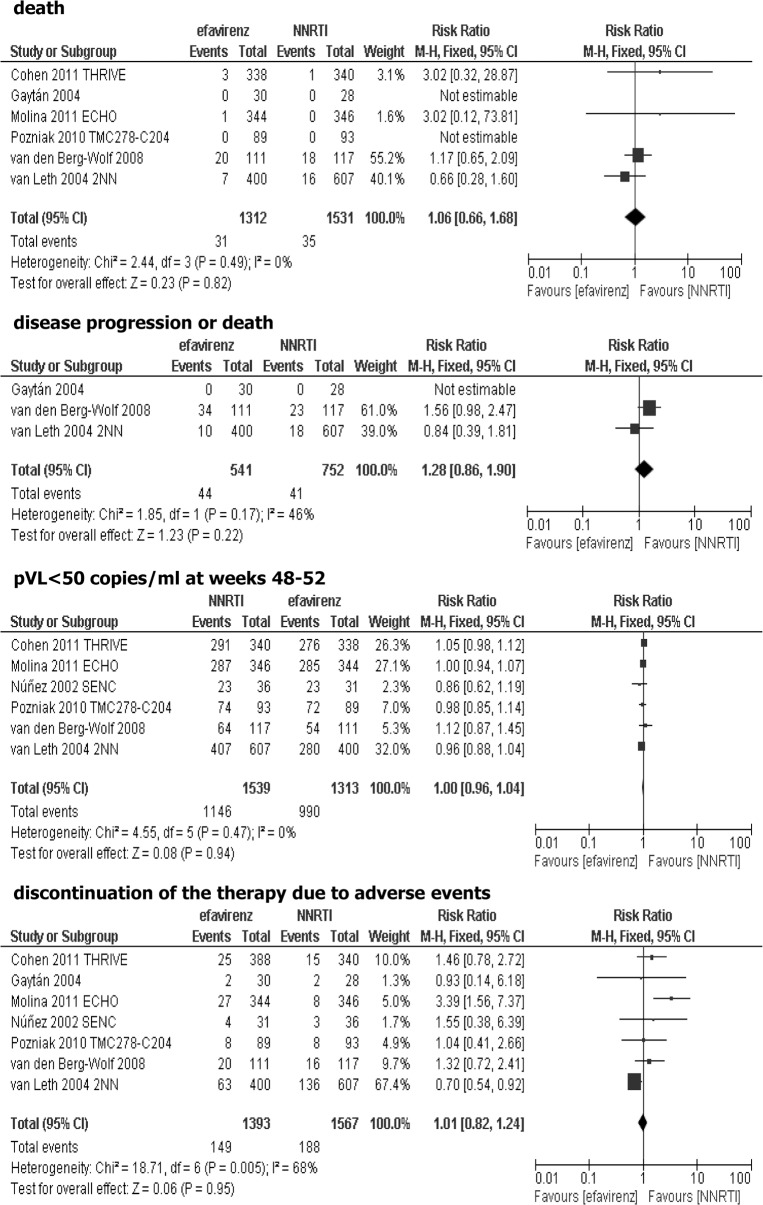
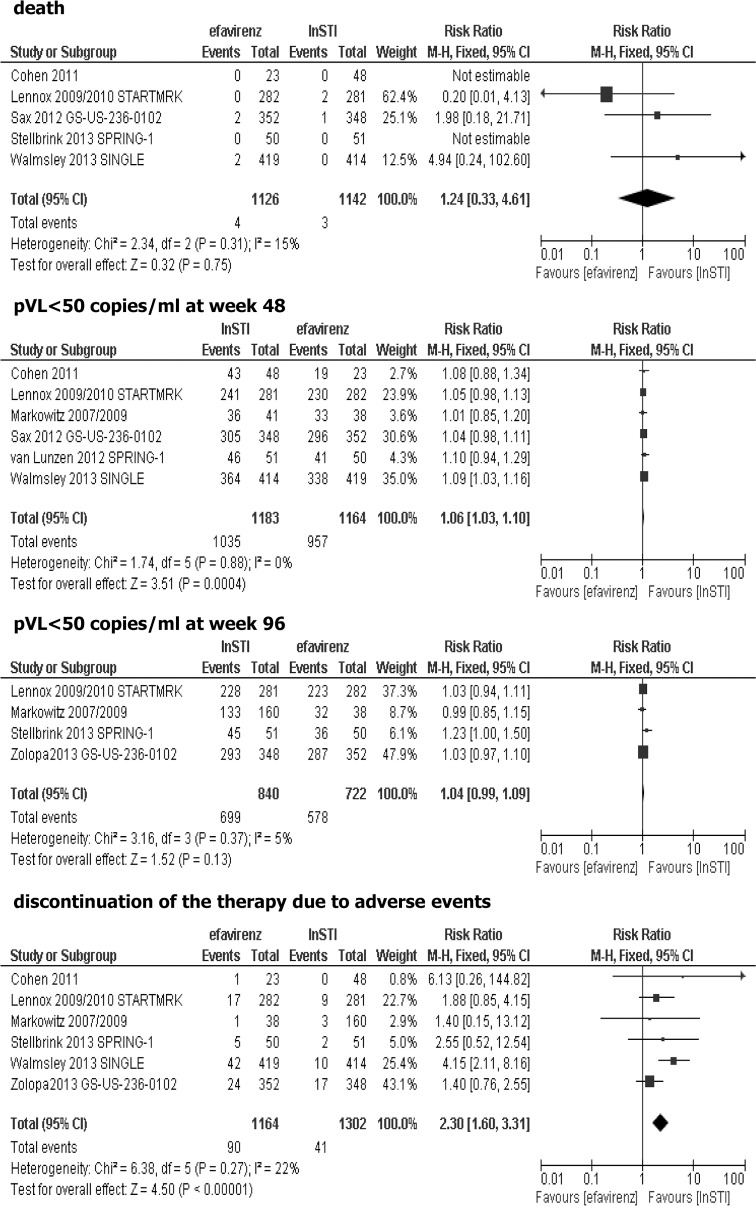
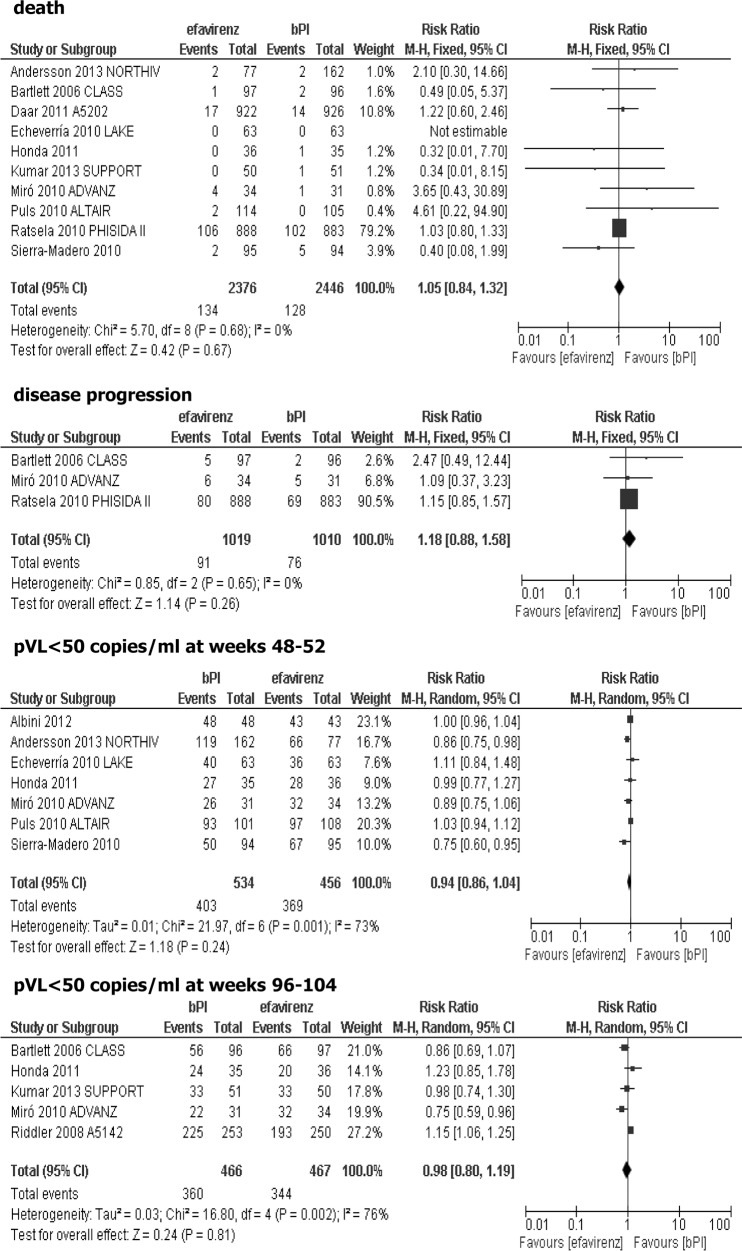
Efavirenz, a non-nucleoside reverse-transcriptase inhibitor (NNRTI) is one of the most commonly prescribed antiretroviral drugs. The present article provides a systematic overview and meta-analysis of clinical trials comparing efavirenz and other active drugs currently recommended for treatment of HIV-infected, antiretroviral-naive patients. Electronic databases (Pubmed, Embase, the Cochrane Library, Trip Database) were searched up till 23 December 2013 for randomized controlled clinical trials published as a peer-reviewed papers, and concerning efavirenz-based regimens used as initial treatment for HIV infection. Thirty-four studies were included in the systematic review, while twenty-six trials were suitable for the meta-analysis. Efavirenz was compared with drugs from four different classes: NNRTIs other than efavirenz (nevirapine or rilpivirine), integrase strand transfer inhibitors (InSTIs), ritonavir-boosted protease inhibitors (bPI) and chemokine (C-C motif) receptor 5 (CCR5) antagonists (maraviroc), all of them were added to the background regimen. Results of the current meta-analysis showed that efavirenz-based regimens were equally effective as other recommended regimens based on NNRTI, ritonavir-boosted PI or CCR5 antagonist in terms of efficacy outcomes (disease progression and/or death, plasma viral HIV RNA <50 copies/ml) while statistically significant more patients treated with InSTI achieved plasma viral load <50 copies/ml at week 48. In comparison with both InSTI-based and CCR5-based therapy, efavirenz-based treatment was associated with a higher risk of therapy discontinuation due to adverse events. However, comparisons of efevirenz-based treatment with InSTI-based and CCR5-based therapy were based on a limited number of trials, therefore, conclusions from these two comparisons must be confirmed in further reliable randomized controlled studies. Results of our meta-analysis support the present clinical guidelines for antiretroviral-naive, HIV-infected patients, in which efavirenz is one of the most preferred regimens in the analyzed population. Beneficial safety profile of InSTI-based and CCR5-based therapy over efavirenz-based treatment needs further studies.
依非韦伦是一种非核苷类逆转录酶抑制剂(NNRTI),是最常用的抗逆转录病毒药物之一。本文对比较依非韦伦与目前推荐用于治疗初治HIV感染患者的其他活性药物的临床试验进行了系统综述和荟萃分析。检索了电子数据库(PubMed、Embase、Cochrane图书馆、Trip数据库),直至2013年12月23日,查找作为同行评审论文发表的随机对照临床试验,以及有关以依非韦伦为基础的方案用于HIV感染初始治疗的研究。系统综述纳入了34项研究,而26项试验适合进行荟萃分析。依非韦伦与来自四个不同类别的药物进行了比较:除依非韦伦之外的NNRTIs(奈韦拉平或利匹韦林)、整合酶链转移抑制剂(InSTIs)、利托那韦增强的蛋白酶抑制剂(bPI)和趋化因子(C-C基序)受体5(CCR5)拮抗剂(马拉维罗),所有这些药物均添加到背景治疗方案中。当前荟萃分析的结果表明,在疗效结果(疾病进展和/或死亡、血浆HIV病毒RNA<50拷贝/ml)方面,以依非韦伦为基础的方案与基于其他推荐的NNRTI、利托那韦增强的PI或CCR5拮抗剂的方案同样有效,而在第48周时,接受InSTI治疗的患者中达到血浆病毒载量<50拷贝/ml的患者在统计学上显著更多。与基于InSTI和基于CCR5的治疗相比,基于依非韦伦的治疗因不良事件导致治疗中断的风险更高。然而,基于依非韦伦治疗与基于InSTI治疗和基于CCR5治疗的比较是基于数量有限的试验,因此,这两项比较得出的结论必须在进一步可靠的随机对照研究中得到证实。我们荟萃分析结果支持目前针对初治HIV感染患者的临床指南,其中依非韦伦是分析人群中最优选的方案之一。基于InSTI和基于CCR5的治疗相对于基于依非韦伦的治疗的有益安全性需要进一步研究。