Yin Xianyong, Cheng Hui, Lin Yan, Wineinger Nathan E, Zhou Fusheng, Sheng Yujun, Yang Chao, Li Pan, Li Feng, Shen Changbing, Yang Sen, Schork Nicholas J, Zhang Xuejun
Institute of Dermatology, Department of Dermatology, The First Affiliated Hospital, Anhui Medical University, Hefei, Anhui Province, China; Key lab of Dermatology, Ministry of Education, State Key Lab of Dermatology Incubation Center, Anhui Medical University, Hefei, Anhui Province, China; Key Lab of Gene Resource Utilization for Complex Diseases, Hefei, Anhui Province, China; Collaborative Innovation Center for Complex and Severe Dermatosis, Anhui Medical University, Hefei, Anhui Province, China; The Scripps Translational Science Institute, La Jolla, California, United States of America; Department of Molecular and Experimental Medicine, The Scripps Research Institute, La Jolla, California, United States of America; Human Biology, J. Craig Venter Institute, La Jolla, California, United States of America.
Institute of Dermatology, Department of Dermatology, The First Affiliated Hospital, Anhui Medical University, Hefei, Anhui Province, China; Key lab of Dermatology, Ministry of Education, State Key Lab of Dermatology Incubation Center, Anhui Medical University, Hefei, Anhui Province, China; Key Lab of Gene Resource Utilization for Complex Diseases, Hefei, Anhui Province, China; Collaborative Innovation Center for Complex and Severe Dermatosis, Anhui Medical University, Hefei, Anhui Province, China.
PLoS One. 2015 May 1;10(5):e0125369. doi: 10.1371/journal.pone.0125369. eCollection 2015.
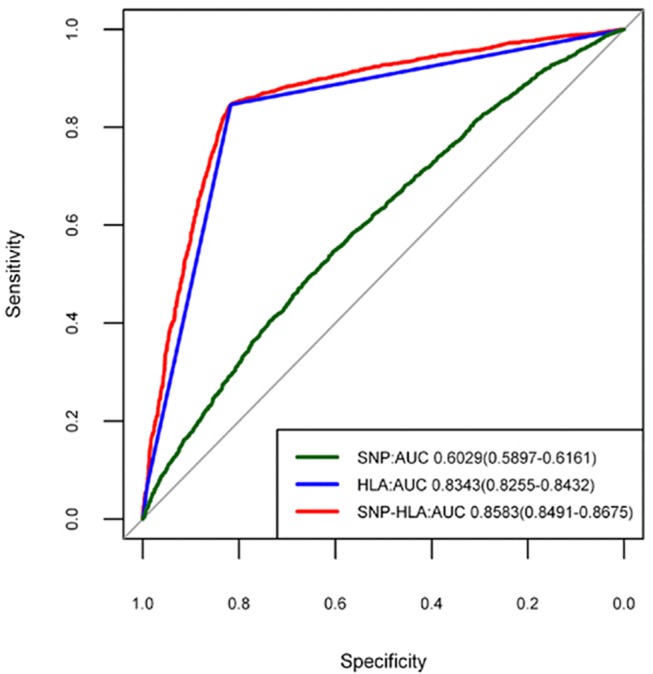
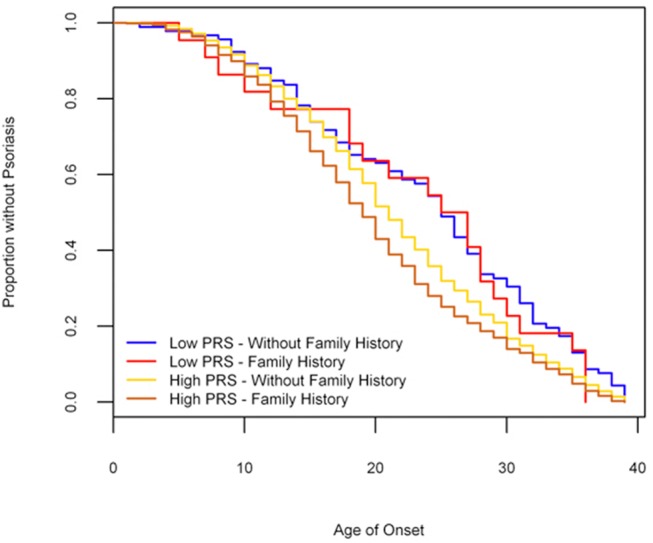
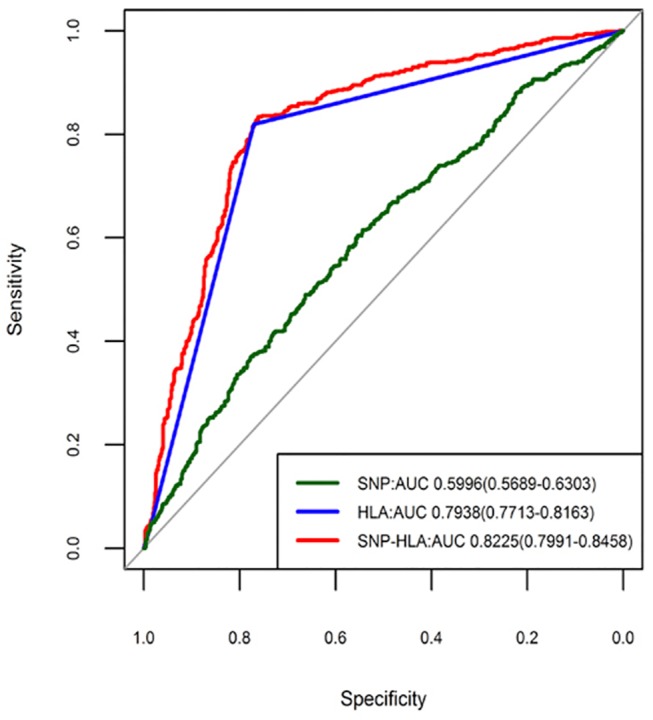
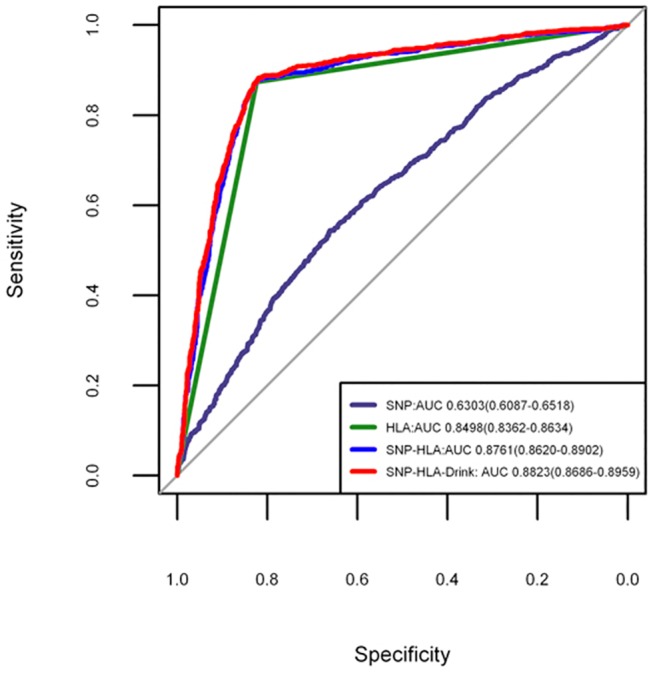
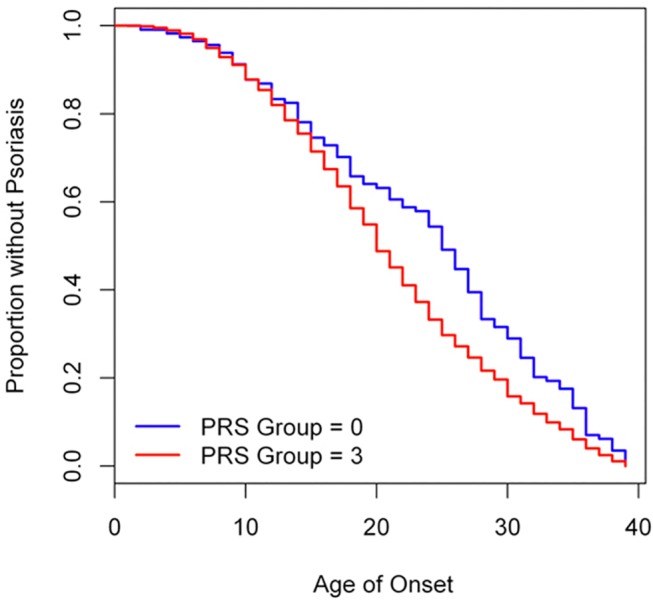
With numbers of common variants identified mainly through genome-wide association studies (GWASs), there is great interest in incorporating the findings into screening individuals at high risk of psoriasis. The purpose of this study is to establish genetic prediction models and evaluate its discriminatory ability in psoriasis in Han Chinese population. We built the genetic prediction models through weighted polygenic risk score (PRS) using 14 susceptibility variants in 8,819 samples. We found the risk of psoriasis among individuals in the top quartile of PRS was significantly larger than those in the lowest quartile of PRS (OR = 28.20, P < 2.0×10(-16)). We also observed statistically significant associations between the PRS, family history and early age onset of psoriasis. We also built a predictive model with all 14 known susceptibility variants and alcohol consumption, which achieved an area under the curve statistic of ~ 0.88. Our study suggests that 14 psoriasis known susceptibility loci have the discriminating potential, as is also associated with family history and age of onset. This is the genetic predictive model in psoriasis with the largest accuracy to date.
随着主要通过全基因组关联研究(GWAS)鉴定出大量常见变异,人们对将这些发现纳入银屑病高危个体的筛查产生了浓厚兴趣。本研究的目的是建立遗传预测模型,并评估其在中国汉族人群中对银屑病的鉴别能力。我们通过加权多基因风险评分(PRS),利用8819个样本中的14个易感变异构建了遗传预测模型。我们发现,PRS处于最高四分位数的个体患银屑病的风险显著高于PRS处于最低四分位数的个体(OR = 28.20,P < 2.0×10(-16))。我们还观察到PRS、家族史与银屑病早发之间存在统计学显著关联。我们还构建了一个包含所有14个已知易感变异和饮酒情况的预测模型,其曲线下面积统计值约为0.88。我们的研究表明,14个已知的银屑病易感位点具有鉴别潜力,且与家族史和发病年龄也有关联。这是迄今为止银屑病遗传预测模型中准确性最高的。