Petrus Paul, Rosqvist Fredrik, Edholm David, Mejhert Niklas, Arner Peter, Dahlman Ingrid, Rydén Mikael, Sundbom Magnus, Risérus Ulf
Department of Medicine, Karolinska Institutet, Karolinska University Hospital, Huddinge, Stockholm, Sweden.
Clinical Nutrition and Metabolism, Department of Public Health and Caring Sciences, Uppsala University, Uppsala, Sweden.
Lipids Health Dis. 2015 May 2;14:42. doi: 10.1186/s12944-015-0042-1.
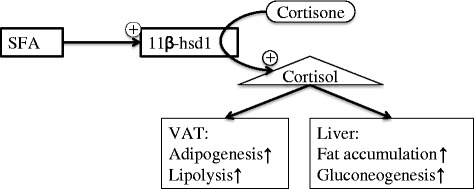
Visceral fat accumulation is associated with metabolic disease. It is therefore relevant to study factors that regulate adipose tissue distribution. Recent data shows that overeating saturated fatty acids promotes greater visceral fat storage than overeating unsaturated fatty acids. Visceral adiposity is observed in states of hypercortisolism, and the enzyme 11-β-hydroxysteroid-dehydrogenase type 1 (11β-hsd1) is a major regulator of cortisol activity by converting inactive cortisone to cortisol in adipose tissue. We hypothesized that tissue fatty acid composition regulates body fat distribution through local effects on the expression of 11β-hsd1 and its corresponding gene (HSD11B1) resulting in altered cortisol activity.
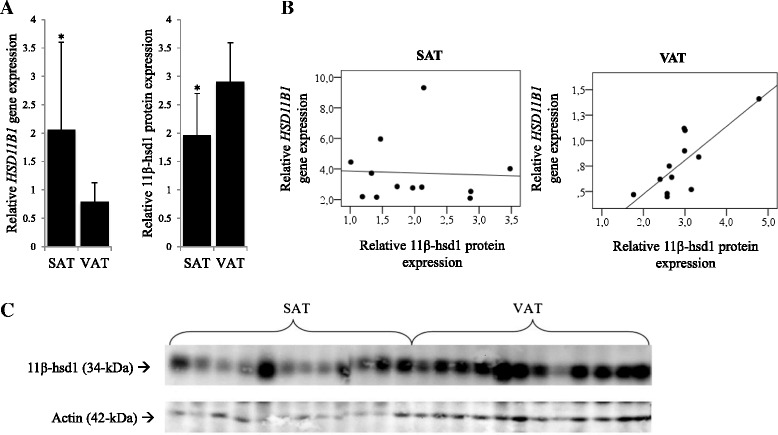
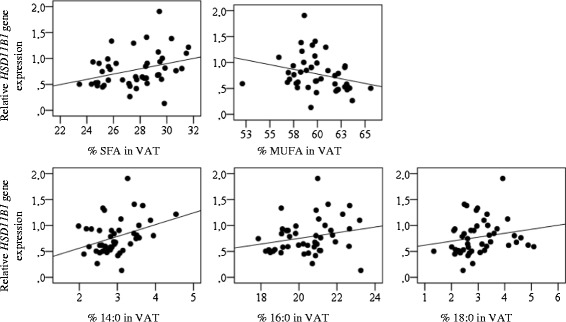
Visceral- and subcutaneous adipose tissue biopsies were collected during Roux-en-Y gastric bypass surgery from 45 obese women (BMI; 41±4 kg/m2). The fatty acid composition of each biopsy was measured and correlated to the mRNA levels of HSD11B1. 11β-hsd1 protein levels were determined in a subgroup (n=12) by western blot analysis. Our main finding was that tissue saturated fatty acids (e.g. palmitate) were associated with increased 11β-hsd1 gene- and protein-expression in visceral but not subcutaneous adipose tissue.
The present study proposes a link between HSD11B1 and saturated fatty acids in visceral, but not subcutaneous adipose tissue. Nutritional regulation of visceral fat mass through HSD11B1 is of interest for the modulation of metabolic risk and warrants further investigation.
内脏脂肪堆积与代谢性疾病相关。因此,研究调节脂肪组织分布的因素具有重要意义。最近的数据表明,过量摄入饱和脂肪酸比过量摄入不饱和脂肪酸会促进更多的内脏脂肪储存。在皮质醇增多症状态下可观察到内脏肥胖,而11-β-羟基类固醇脱氢酶1型(11β-hsd1)通过在脂肪组织中将无活性的可的松转化为皮质醇,是皮质醇活性的主要调节因子。我们假设组织脂肪酸组成通过对11β-hsd1及其相应基因(HSD11B1)表达的局部影响来调节体脂分布,从而导致皮质醇活性改变。
在Roux-en-Y胃旁路手术期间,从45名肥胖女性(BMI;41±4kg/m²)采集了内脏和皮下脂肪组织活检样本。测量每个活检样本的脂肪酸组成,并将其与HSD11B1的mRNA水平相关联。通过蛋白质印迹分析在一个亚组(n = 12)中测定11β-hsd1蛋白水平。我们的主要发现是组织饱和脂肪酸(如棕榈酸)与内脏而非皮下脂肪组织中11β-hsd1基因和蛋白表达增加有关。
本研究提出了内脏而非皮下脂肪组织中HSD11B1与饱和脂肪酸之间存在联系。通过HSD11B1对内脏脂肪量进行营养调节对于调节代谢风险具有重要意义,值得进一步研究。