Fabbi Patrizia, Spallarossa Paolo, Garibaldi Silvano, Barisione Chiara, Mura Marzia, Altieri Paola, Rebesco Barbara, Monti Maria Gaia, Canepa Marco, Ghigliotti Giorgio, Brunelli Claudio, Ameri Pietro
Research Center of Cardiovascular Biology, Department of Internal Medicine, University of Genova, Genova, Italy.
Antiblastic Drug Unit, IRCCS AOU San Martino-IST, Genova, Italy.
PLoS One. 2015 May 8;10(5):e0124643. doi: 10.1371/journal.pone.0124643. eCollection 2015.
Insulin-like growth factor-1 (IGF-1) promotes the survival of cardiomyocytes by activating type 1 IGF receptor (IGF-1R). Within the myocardium, IGF-1 action is modulated by IGF binding protein-3 (IGFBP-3), which sequesters IGF-1 away from IGF-1R. Since cardiomyocyte apoptosis is implicated in anthracycline cardiotoxicity, we investigated the effects of the anthracycline, doxorubicin, on the IGF-1 system in H9c2 cardiomyocytes.
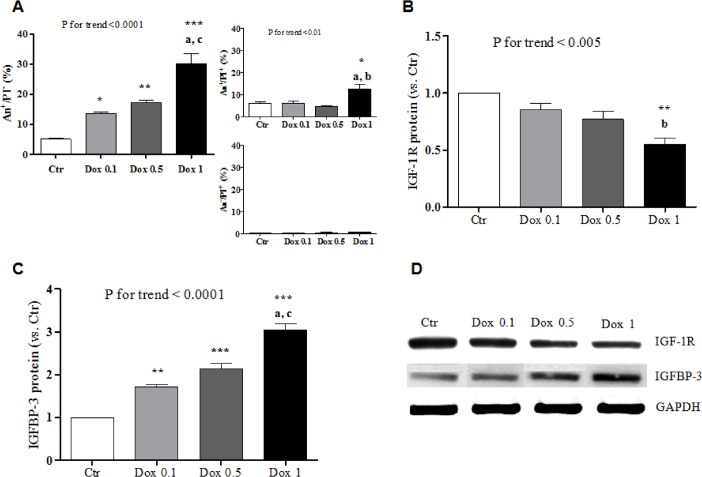
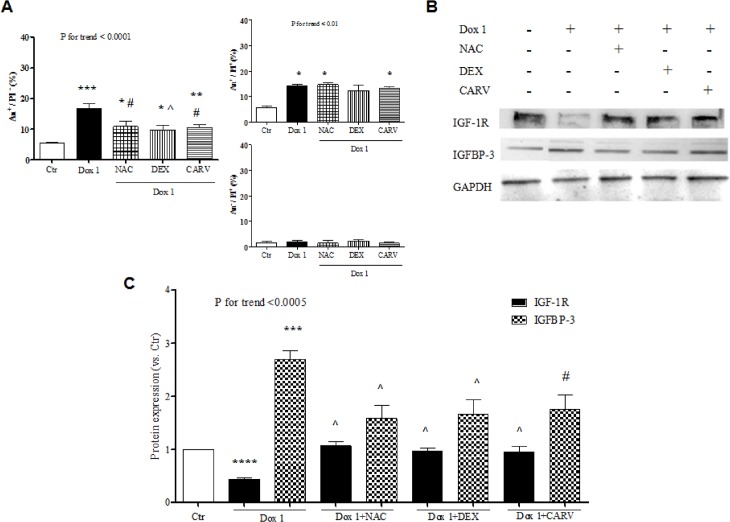
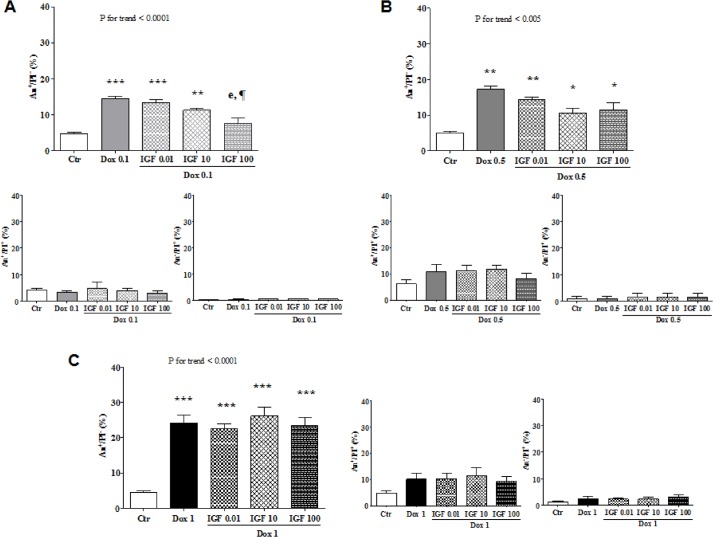
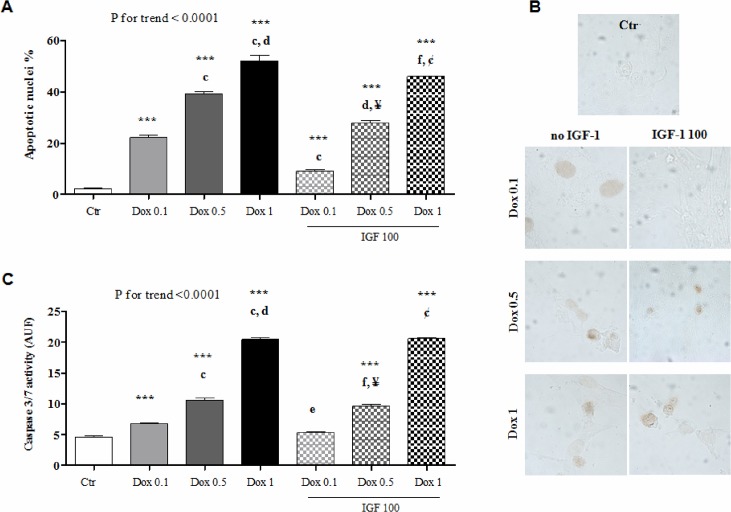
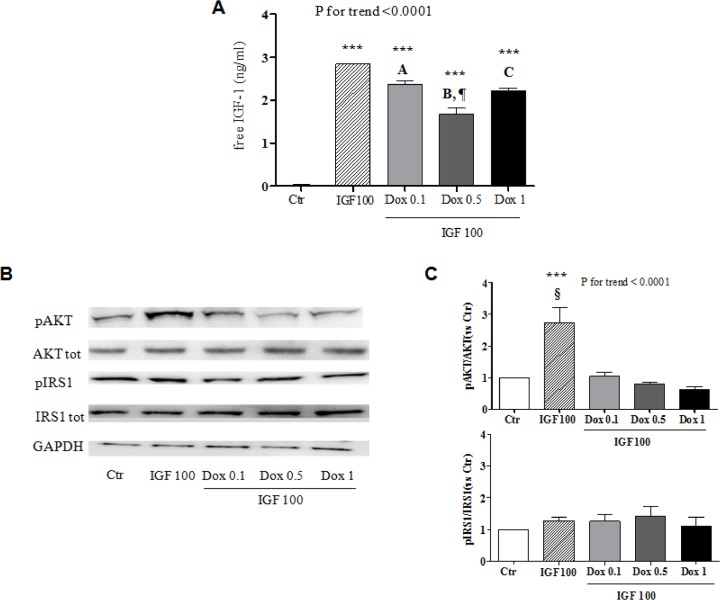
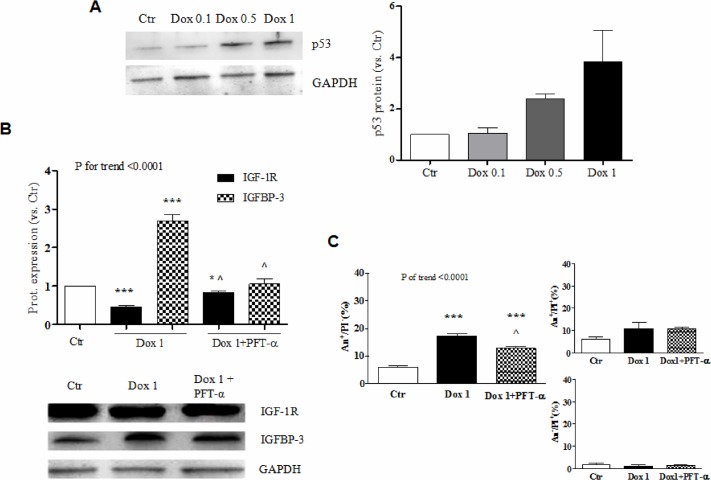
Besides inducing apoptosis, concentrations of doxorubicin comparable to those observed in patients after bolus infusion (0.1-1 µM) caused a progressive decrease in IGF-1R and increase in IGFBP-3 expression. Exogenous IGF-1 was capable to rescue cardiomyocytes from apoptosis triggered by 0.1 and 0.5 µM, but not 1 µM doxorubicin. The loss of response to IGF-1 was paralleled by a significant reduction in IGF-1 availability and signaling, as assessed by free hormone levels in conditioned media and Akt phosphorylation in cell lysates, respectively. Doxorubicin also dose-dependently induced p53, which is known to repress the transcription of IGF1R and induce that of IGFBP3. Pre-treatment with the p53 inhibitor, pifithrin-α, prevented apoptosis and the changes in IGF-1R and IGFBP-3 elicited by doxorubicin. The decrease in IGF-1R and increase in IGFBP-3, as well as apoptosis, were also antagonized by pre-treatment with the antioxidant agents, N-acetylcysteine, dexrazoxane, and carvedilol.
Doxorubicin down-regulates IGF-1R and up-regulates IGFBP-3 via p53 and oxidative stress in H9c2 cells. This leads to resistance to IGF-1 that may contribute to doxorubicin-initiated apoptosis. Further studies are needed to confirm these findings in human cardiomyocytes and explore the possibility of manipulating the IGF-1 axis to protect against anthracycline cardiotoxicity.
胰岛素样生长因子-1(IGF-1)通过激活1型IGF受体(IGF-1R)促进心肌细胞存活。在心肌内,IGF-1的作用受IGF结合蛋白-3(IGFBP-3)调节,后者将IGF-1与IGF-1R隔离。由于心肌细胞凋亡与蒽环类药物心脏毒性有关,我们研究了蒽环类药物阿霉素对H9c2心肌细胞中IGF-1系统的影响。
除诱导凋亡外,与推注给药后患者体内观察到的浓度相当的阿霉素浓度(0.1 - 1 µM)导致IGF-1R逐渐减少,IGFBP-3表达增加。外源性IGF-1能够挽救由0.1和0.5 µM阿霉素引发的心肌细胞凋亡,但不能挽救1 µM阿霉素引发的凋亡。对IGF-1反应的丧失与IGF-1可用性和信号传导的显著降低平行,分别通过条件培养基中的游离激素水平和细胞裂解物中的Akt磷酸化来评估。阿霉素还剂量依赖性地诱导p53,已知p53可抑制IGF1R的转录并诱导IGFBP3的转录。用p53抑制剂pifithrin-α预处理可预防凋亡以及阿霉素引起的IGF-1R和IGFBP-3变化。抗氧化剂N-乙酰半胱氨酸、右丙亚胺和卡维地洛预处理也可拮抗IGF-1R的减少、IGFBP-3的增加以及凋亡。
阿霉素通过p53和氧化应激在H9c2细胞中下调IGF-1R并上调IGFBP-3。这导致对IGF-1的抗性,这可能导致阿霉素引发的凋亡。需要进一步研究以在人类心肌细胞中证实这些发现,并探索操纵IGF-1轴以预防蒽环类药物心脏毒性的可能性。