
磁粒子成像:当前进展与未来方向。
Magnetic particle imaging: current developments and future directions.
作者信息
Panagiotopoulos Nikolaos, Duschka Robert L, Ahlborg Mandy, Bringout Gael, Debbeler Christina, Graeser Matthias, Kaethner Christian, Lüdtke-Buzug Kerstin, Medimagh Hanne, Stelzner Jan, Buzug Thorsten M, Barkhausen Jörg, Vogt Florian M, Haegele Julian
机构信息
Clinic for Radiology and Nuclear Medicine, University Hospital Schleswig Holstein, Campus Lübeck, Germany.
Institute of Medical Engineering, University of Lübeck, Lübeck, Germany.
出版信息
Int J Nanomedicine. 2015 Apr 22;10:3097-114. doi: 10.2147/IJN.S70488. eCollection 2015.
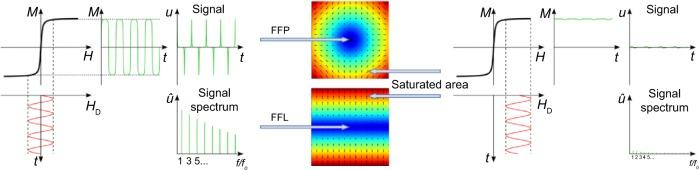
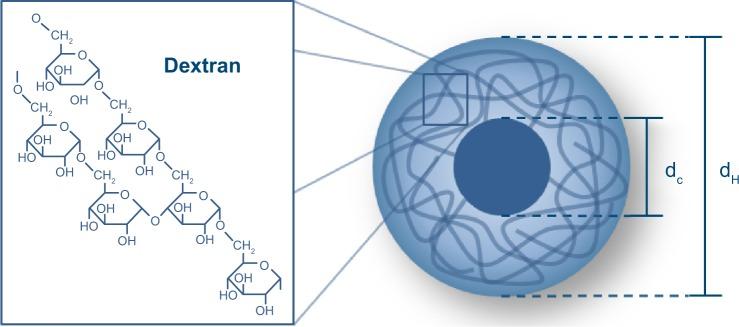
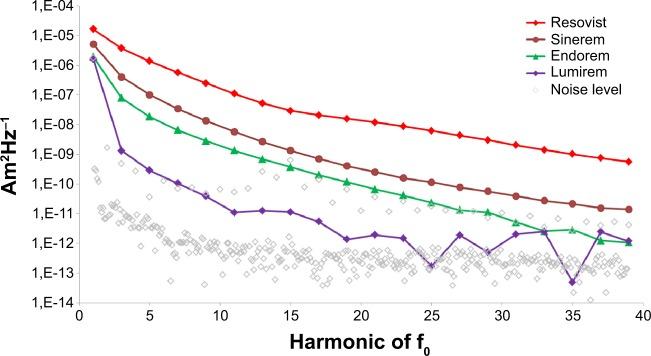
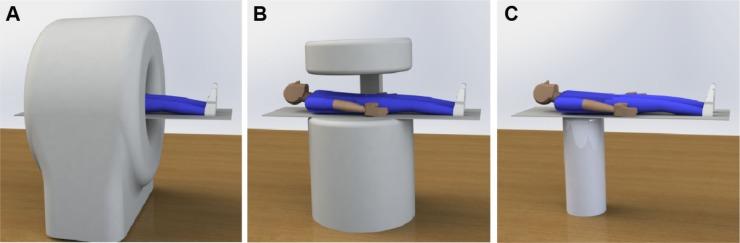
Magnetic particle imaging (MPI) is a novel imaging method that was first proposed by Gleich and Weizenecker in 2005. Applying static and dynamic magnetic fields, MPI exploits the unique characteristics of superparamagnetic iron oxide nanoparticles (SPIONs). The SPIONs' response allows a three-dimensional visualization of their distribution in space with a superb contrast, a very high temporal and good spatial resolution. Essentially, it is the SPIONs' superparamagnetic characteristics, the fact that they are magnetically saturable, and the harmonic composition of the SPIONs' response that make MPI possible at all. As SPIONs are the essential element of MPI, the development of customized nanoparticles is pursued with the greatest effort by many groups. Their objective is the creation of a SPION or a conglomerate of particles that will feature a much higher MPI performance than nanoparticles currently available commercially. A particle's MPI performance and suitability is characterized by parameters such as the strength of its MPI signal, its biocompatibility, or its pharmacokinetics. Some of the most important adjuster bolts to tune them are the particles' iron core and hydrodynamic diameter, their anisotropy, the composition of the particles' suspension, and their coating. As a three-dimensional, real-time imaging modality that is free of ionizing radiation, MPI appears ideally suited for applications such as vascular imaging and interventions as well as cellular and targeted imaging. A number of different theories and technical approaches on the way to the actual implementation of the basic concept of MPI have been seen in the last few years. Research groups around the world are working on different scanner geometries, from closed bore systems to single-sided scanners, and use reconstruction methods that are either based on actual calibration measurements or on theoretical models. This review aims at giving an overview of current developments and future directions in MPI about a decade after its first appearance.
磁粒子成像(MPI)是一种新型成像方法,于2005年由格莱希(Gleich)和魏泽内克(Weizenecker)首次提出。通过施加静态和动态磁场,MPI利用了超顺磁性氧化铁纳米颗粒(SPIONs)的独特特性。SPIONs的响应使得能够以出色的对比度、非常高的时间分辨率和良好的空间分辨率对其在空间中的分布进行三维可视化。从本质上讲,正是SPIONs的超顺磁性特性、它们的磁饱和性以及SPIONs响应的谐波组成使得MPI成为可能。由于SPIONs是MPI的基本元素,许多研究团队都在全力以赴地研发定制纳米颗粒。他们的目标是制造出一种SPION或颗粒聚集体,其MPI性能要比目前市场上可买到的纳米颗粒高得多。颗粒的MPI性能和适用性由诸如MPI信号强度、生物相容性或药代动力学等参数来表征。一些最重要的用于调节这些参数的“调节螺栓”是颗粒的铁芯和流体动力学直径、它们的各向异性、颗粒悬浮液的组成以及它们的涂层。作为一种无电离辐射的三维实时成像模态,MPI似乎非常适合血管成像与介入以及细胞和靶向成像等应用。在过去几年中,可以看到在实现MPI基本概念的实际过程中有许多不同的理论和技术方法。世界各地的研究团队正在研究不同的扫描仪几何结构,从闭孔系统到单面扫描仪,并使用基于实际校准测量或理论模型的重建方法。这篇综述旨在概述MPI自首次出现约十年后的当前发展情况和未来方向。

 Zotero 插件