
研究人员和研究学员的学科文化对纳米载体在不同使用场景下用于药物递送的可接受性的影响:一项混合方法研究。
Effects of disciplinary cultures of researchers and research trainees on the acceptability of nanocarriers for drug delivery in different contexts of use: a mixed-methods study.
作者信息
Chenel Vanessa, Boissy Patrick, Cloarec Jean-Pierre, Patenaude Johane
机构信息
Interdisciplinary Institute for Technological Innovation (3IT), Université de Sherbrooke, Sherbrooke, QC Canada ; Department of Surgery, Faculty of Medicine and Health Sciences, Université de Sherbrooke, 3001-12th Avenue North, Sherbrooke, QC J1H 5N4 Canada ; Laboratoire Nanotechnologies et Nanosystèmes (LN2), Centre National de la Recherche Scientifique (CNRS), Université de Sherbrooke, Sherbrooke, Canada ; Institut des Nanotechnologies de Lyon (INL), Site École Centrale de Lyon, Université de Lyon, Lyon, France.
Interdisciplinary Institute for Technological Innovation (3IT), Université de Sherbrooke, Sherbrooke, QC Canada ; Department of Surgery, Faculty of Medicine and Health Sciences, Université de Sherbrooke, 3001-12th Avenue North, Sherbrooke, QC J1H 5N4 Canada ; Laboratoire Nanotechnologies et Nanosystèmes (LN2), Centre National de la Recherche Scientifique (CNRS), Université de Sherbrooke, Sherbrooke, Canada.
出版信息
J Nanopart Res. 2015;17(4):186. doi: 10.1007/s11051-015-2998-1. Epub 2015 Apr 17.
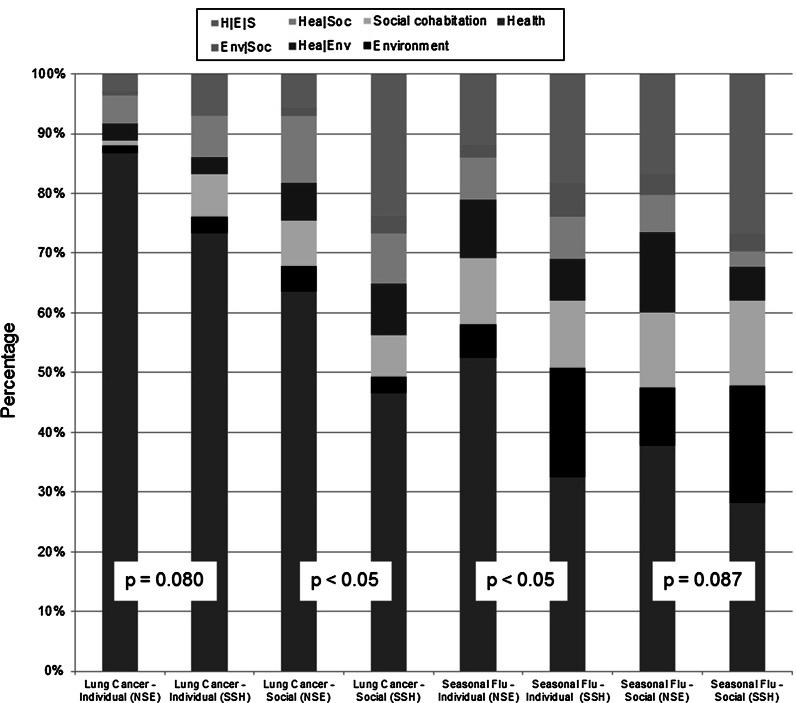
The acceptability of nanomedical applications, which have the potential to generate ethical and societal impacts, is a significant factor in the deployment of nanomedicine. A lack of fit between nanomedical applications and society's values may result from a partial consideration of such impacts. New approaches for technological evaluation focused on impact perception, acceptance, and acceptability are needed to go beyond traditional technology assessment approaches used with nanotechnology, which focus mainly on toxicological and safety criteria. Using a new evaluative approach based on perceived impacts of nanotechnology, the objective of this study was to assess perceptions among researchers and research trainees familiar with emergent technologies and from different disciplinary background the scope of acceptability judgments made towards the use of nanocarriers. This mixed-methods study was based on scenarios presenting two types of drug-delivery nanocarriers (carbon, synthetic DNA) in two contexts of use (lung cancer treatment, seasonal flu treatment). Researchers and research trainees in the natural sciences and engineering, and the social sciences and the humanities were invited by email to take part in this project. An online questionnaire followed by semi-directed interviews allowed characterization of disciplinary divergences regarding to impact perception, acceptance, and acceptability of the scenarios. The results suggest that impact perception is influenced by disciplinary culture. Also, trends can be seen between respondents' profiles and variables of acceptance and acceptability, and certain components of the acceptability judgement are specific to each disciplinary culture. The acknowledgment and consideration of these disciplinary divergences could allow, among others, for opening up interdisciplinary dialogue on matters related to the acceptability of nanomedical applications and their developments.
纳米医学应用有可能产生伦理和社会影响,其可接受性是纳米医学应用部署的一个重要因素。对这些影响的部分考虑可能导致纳米医学应用与社会价值观之间缺乏契合度。需要采用侧重于影响认知、接受度和可接受性的新技术评估方法,以超越用于纳米技术的传统技术评估方法,传统方法主要侧重于毒理学和安全标准。本研究的目的是使用一种基于纳米技术感知影响的新评估方法,评估熟悉新兴技术且来自不同学科背景的研究人员和研究学员对使用纳米载体的可接受性判断范围。这项混合方法研究基于在两种使用场景(肺癌治疗、季节性流感治疗)中呈现两种类型的药物递送纳米载体(碳、合成DNA)的情景。通过电子邮件邀请自然科学与工程、社会科学与人文学科的研究人员和研究学员参与该项目。一份在线问卷随后进行半定向访谈,从而能够对情景的影响认知、接受度和可接受性方面的学科差异进行描述。结果表明,影响认知受学科文化影响。此外,在受访者的概况与接受度和可接受性变量之间可以看出一些趋势,并且可接受性判断的某些组成部分特定于每种学科文化。承认并考虑这些学科差异尤其能够开启关于纳米医学应用及其发展的可接受性相关问题的跨学科对话。

 Zotero 插件