Department of Knowledge Development, Public Health Agency of Sweden, Sweden.
Department of Computer and Information Science, Linköping University, Sweden.
Scand J Public Health. 2015 Jul;43(5):540-7. doi: 10.1177/1403494815576787. Epub 2015 May 12.
The aim of this study was to estimate the self-reported domestic incidence of acute gastrointestinal illness in the Swedish population irrespective of route of transmission or type of pathogen causing the disease. Previous studies in Sweden have primarily focused on incidence of acute gastrointestinal illness related to consumption of contaminated food and drinking water.
In May 2009, we sent a questionnaire to 4000 randomly selected persons aged 0-85 years, asking about the number of episodes of stomach disease during the last 12 months. To validate the data on symptoms, we compared the study results with anonymous queries submitted to a Swedish medical website.
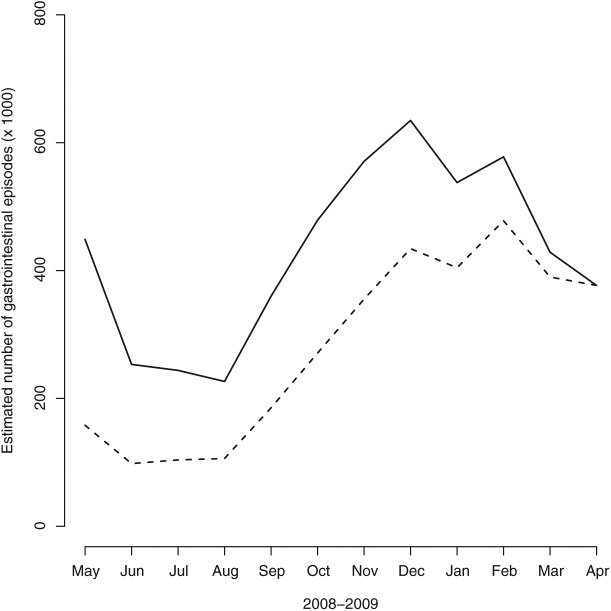
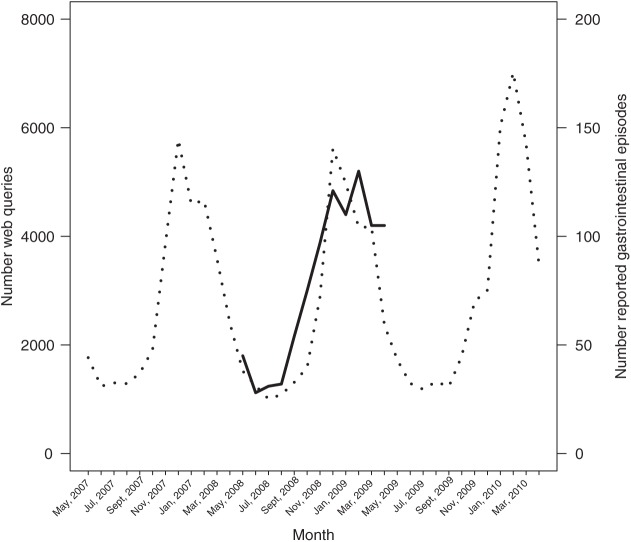
The response rate was 64%. We estimated that a total number of 2744,778 acute gastrointestinal illness episodes (95% confidence intervals 2475,641-3013,915) occurred between 1 May 2008 and 30 April 2009. Comparing the number of reported episodes with web queries indicated that the low number of episodes during the first 6 months was an effect of seasonality rather than recall bias. Further, the result of the recall bias analysis suggested that the survey captured approximately 65% of the true number of episodes among the respondents.
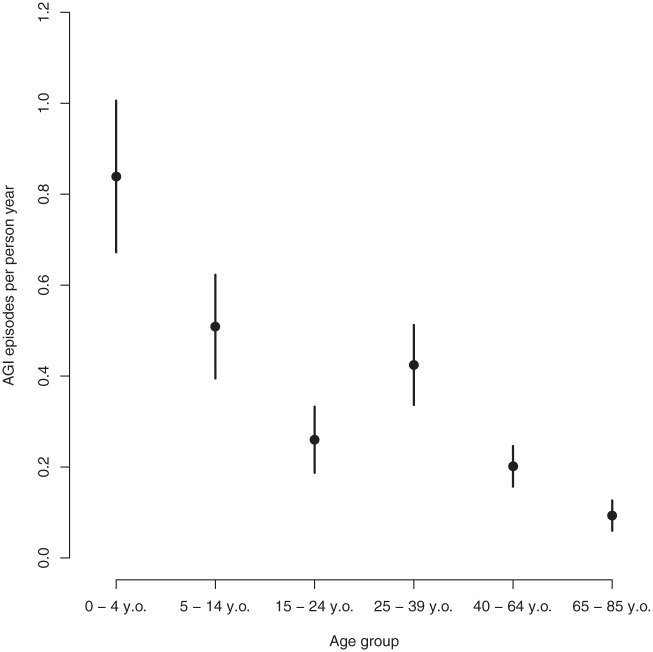
The estimated number of Swedish acute gastrointestinal illness cases in this study is about five times higher than previous estimates this study provides valuable information on the incidence of gastrointestinal symptoms in Sweden, irrespective of route of transmission, indicating a high burden of acute gastrointestinal illness, especially among children, and large societal costs, primarily due to production losses.
本研究旨在估算瑞典人群中未经传播途径或病原体类型分类的自我报告急性胃肠道疾病的发病率。既往在瑞典进行的研究主要集中于与食用受污染的食物和饮用水相关的急性胃肠道疾病发病率。
2009 年 5 月,我们向 4000 名随机选择的 0-85 岁人群发送了一份问卷,询问他们在过去 12 个月中胃部疾病发作的次数。为了验证症状数据的准确性,我们将研究结果与匿名提交给瑞典医学网站的查询进行了比较。
应答率为 64%。我们估计,2008 年 5 月 1 日至 2009 年 4 月 30 日期间共发生 2744778 例急性胃肠道疾病(95%置信区间为 2475641-3013915)。将报告的发作次数与网络查询进行比较表明,前 6 个月发作次数较少是季节性的影响,而不是回忆偏倚的结果。此外,回忆偏倚分析的结果表明,该调查大约捕捉到了受访者中实际发作次数的 65%。
本研究中估算的瑞典急性胃肠道疾病病例数比既往估计值高约 5 倍。本研究提供了有关瑞典胃肠道症状发病率的有价值信息,无论传播途径如何,都表明急性胃肠道疾病负担沉重,尤其是儿童,且社会成本巨大,主要是由于生产损失。