Department of Pathology, University of Alabama at Birmingham, 1825 University Blvd, SHEL 602, Birmingham, AL USA ; Comprehensive Diabetes Center, University of Alabama at Birmingham, 1825 University Boulevard, SHEL 1207, Birmingham, AL USA.
Department of Microbiology, University of Alabama at Birmingham, 3201 1st Avenue North, Birmingham, AL USA ; Center for Clinical and Translational Science, University of Alabama at Birmingham, 1924 7th Avenue South, Birmingham, AL USA.
Microbiome. 2015 Apr 25;3:17. doi: 10.1186/s40168-015-0080-y. eCollection 2015.
Current research has led to the appreciation that there are differences in the commensal microbiota between healthy individuals and individuals that are predisposed to disease. Treatments to reverse disease pathogenesis through the manipulation of the gastrointestinal (GI) microbiota are now being explored. Normalizing microbiota between different strains of mice in the same study is also needed to better understand disease pathogenesis. Current approaches require repeated delivery of bacteria and large numbers of animals and vary in treatment start time. A method is needed that can shift the microbiota of predisposed individuals to a healthy microbiota at an early age and sustain this shift through the lifetime of the individual.
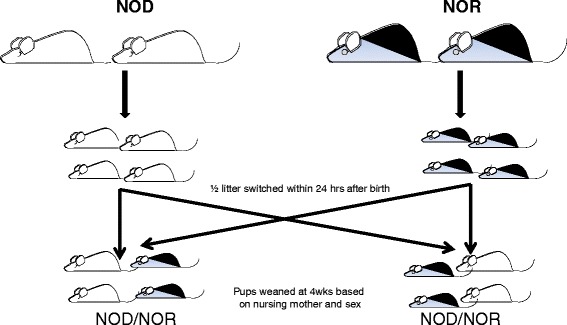
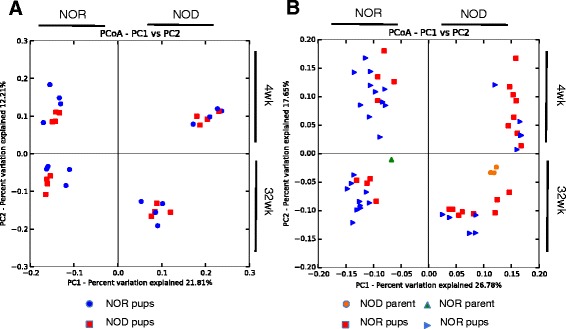
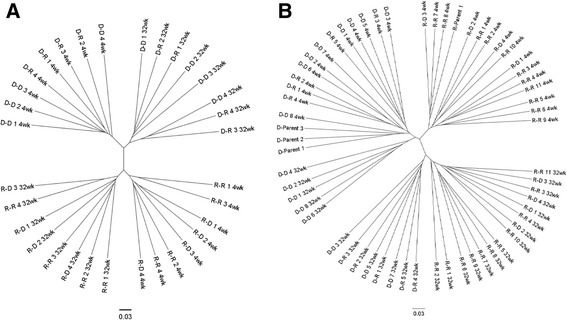
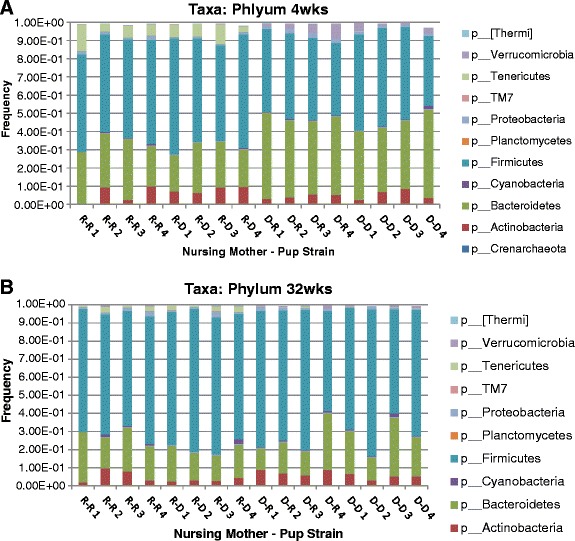
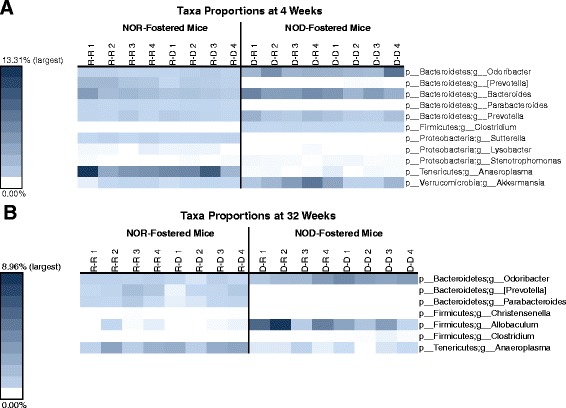
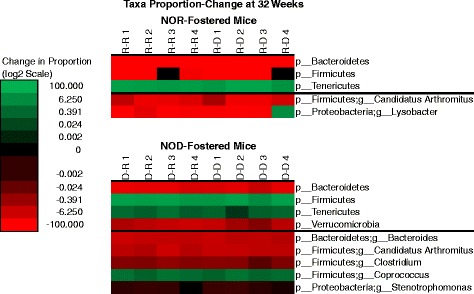
We tested cross-fostering of pups within 48 h of birth as a means to permanently shift the microbiota from birth. Taxonomical analysis revealed that the nursing mother was the critical factor in determining bacterial colonization, instead of the birth mother. Data was evaluated using bacterial 16S rDNA sequences from fecal pellets and sequencing was performed on an Illumina Miseq using a 251 bp paired-end library.
The results show that cross-fostering is an effective means to induce an early and maintained shift in the commensal microbiota. This will allow for the evaluation of a prolonged microbial shift and its effects on disease pathogenesis. Cross-fostering will also eliminate variation within control models by normalizing the commensal microbiota between different strains of mice.
目前的研究使人们认识到,健康个体和易患疾病个体之间的共生微生物群落存在差异。目前正在探索通过操纵胃肠道(GI)微生物群来逆转疾病发病机制的治疗方法。为了更好地了解疾病发病机制,还需要在同一研究中使不同品系小鼠之间的微生物群落正常化。目前的方法需要反复递送细菌和大量动物,并且在治疗开始时间上存在差异。需要一种方法,能够将易患个体的微生物群在早期转移到健康的微生物群,并在个体的一生中维持这种转移。
我们测试了在出生后 48 小时内进行交叉寄养,作为一种永久性改变微生物群的方法。分类学分析表明,哺乳母亲是决定细菌定植的关键因素,而不是分娩母亲。使用来自粪便样本的细菌 16S rDNA 序列评估数据,并使用 Illumina Miseq 进行测序,使用 251 bp 配对末端文库。
结果表明,交叉寄养是诱导共生微生物群早期和持续改变的有效手段。这将允许评估微生物群的长期改变及其对疾病发病机制的影响。交叉寄养还将通过使不同品系小鼠之间的共生微生物群落正常化来消除对照模型中的变异性。