Buyong Muhamad Ramdzan, Larki Farhad, Faiz Mohd Syafiq, Hamzah Azrul Azlan, Yunas Jumrail, Majlis Burhanuddin Yeop
Institute of Microengineering and Nanoelectronics (IMEN), Universiti Kebangsaan Malaysia, Bangi, Selangor 43600, Malaysia.
Sensors (Basel). 2015 May 11;15(5):10973-90. doi: 10.3390/s150510973.
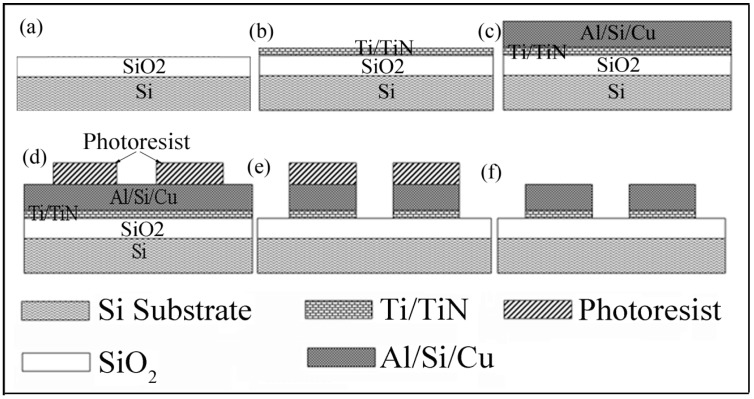
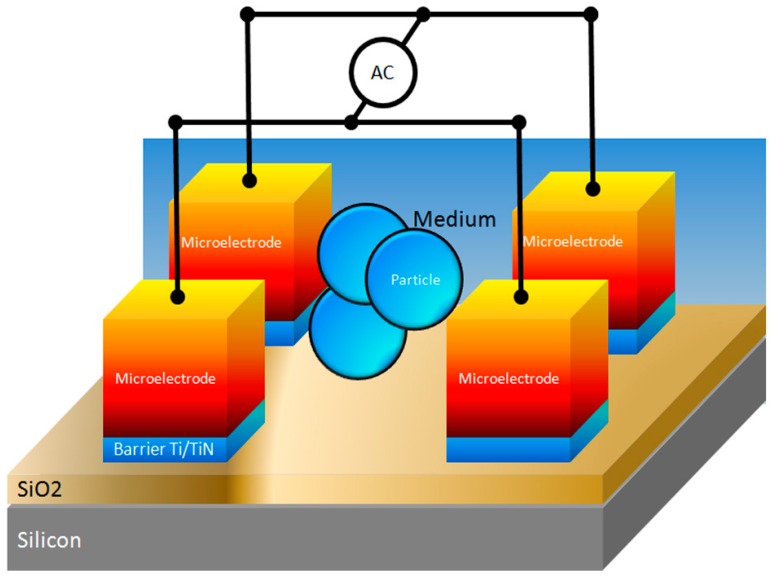
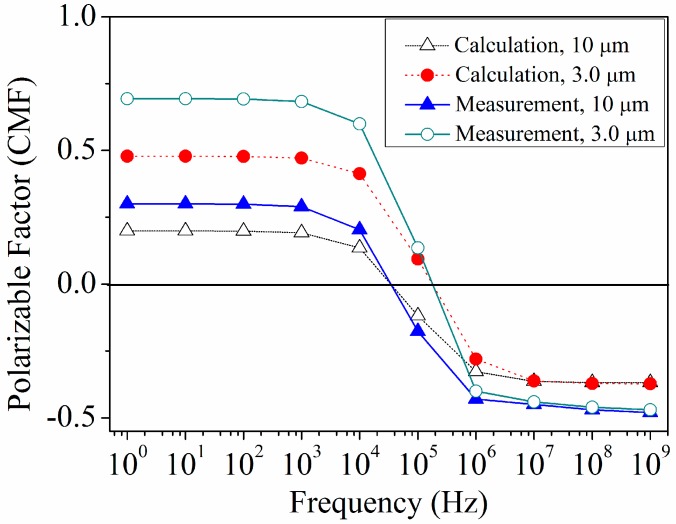
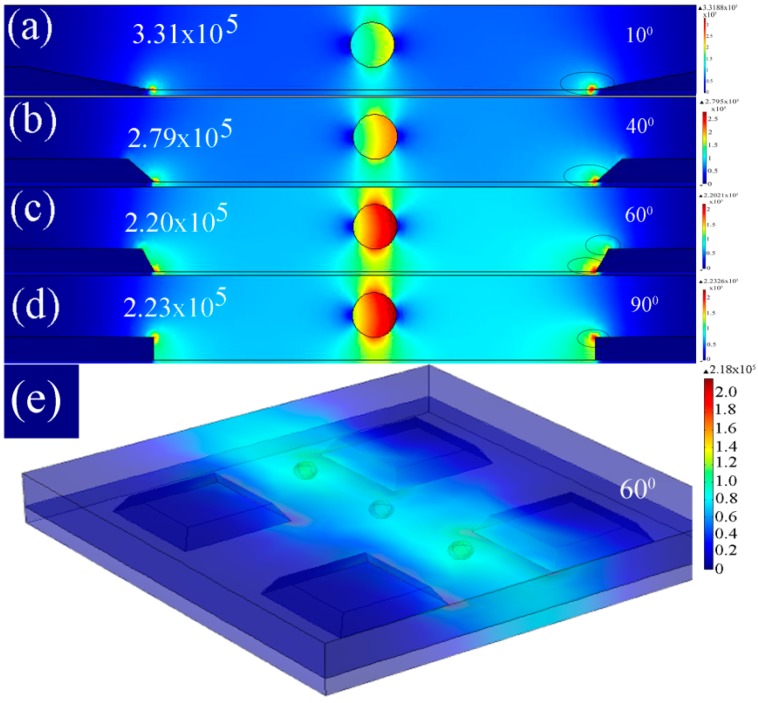
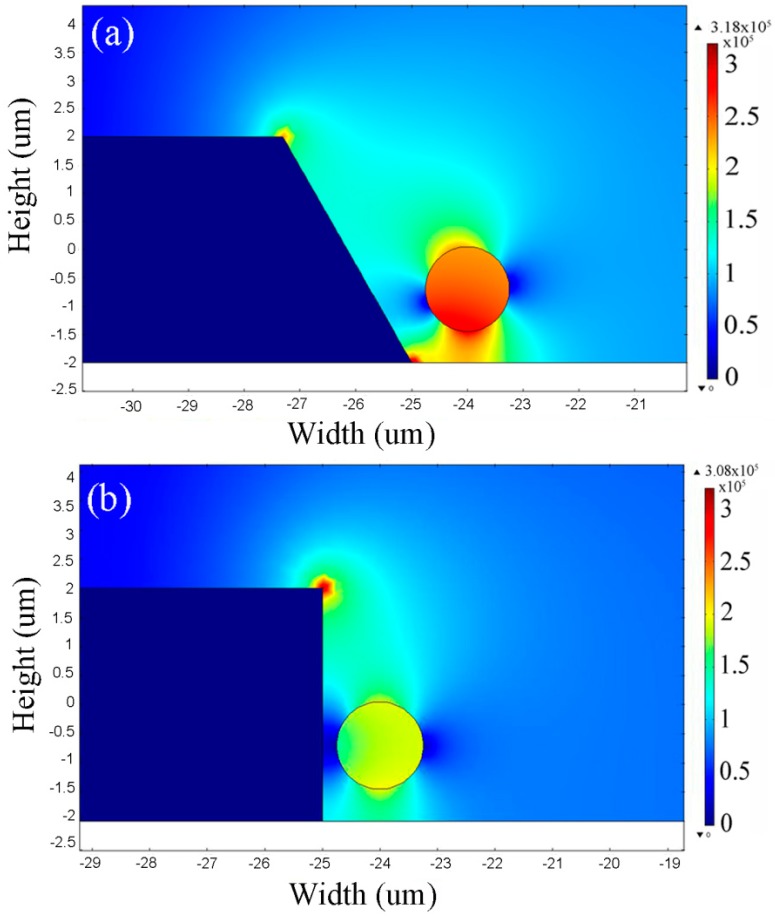
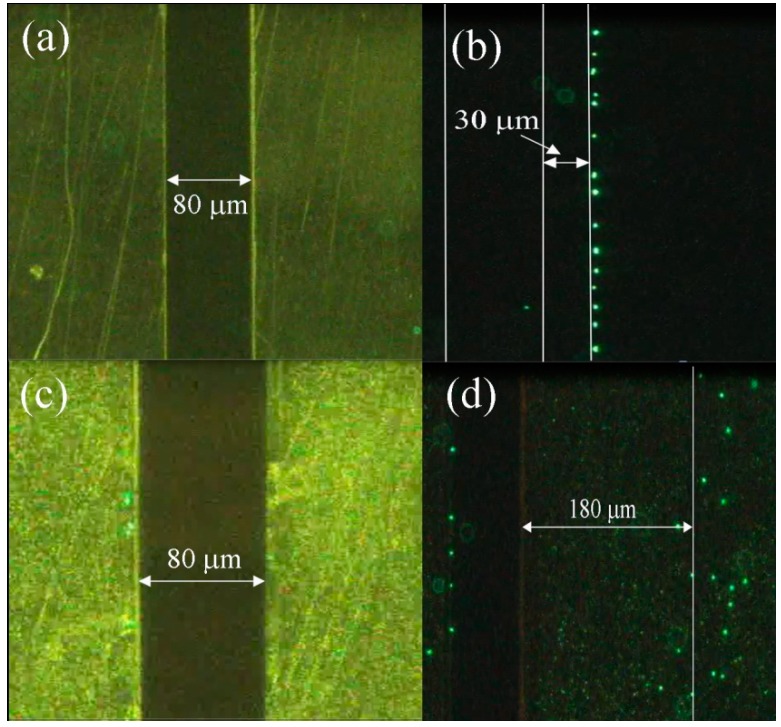
In this work, the dielectrophoretic force (F(DEP)) response of Aluminium Microelectrode Arrays with tapered profile is investigated through experimental measurements and numerical simulations. A standard CMOS processing technique with a step for the formation of a tapered profile resist is implemented in the fabrication of Tapered Aluminium Microelectrode Arrays (TAMA). The F(DEP) is investigated through analysis of the Clausius-Mossotti factor (CMF) and cross-over frequency (f(xo)). The performance of TAMA with various side wall angles is compared to that of microelectrodes with a straight cut sidewall profile over a wide range of frequencies through FEM numerical simulations. Additionally, electric field measurement (EFM) is performed through scanning probe microscopy (SPM) in order to obtain the region of force focus in both platforms. Results showed that the tapered profile microelectrodes with angles between 60° and 70° produce the highest electric field gradient on the particles. Also, the region of the strongest electric field in TAMA is located at the bottom and top edge of microelectrode while the strongest electric field in microelectrodes with straight cut profile is found at the top corner of the microelectrode. The latter property of microelectrodes improves the probability of capturing/repelling the particles at the microelectrode's side wall.
在这项工作中,通过实验测量和数值模拟研究了具有锥形轮廓的铝微电极阵列的介电泳力(F(DEP))响应。在锥形铝微电极阵列(TAMA)的制造过程中,采用了一种标准的CMOS处理技术,其中包括形成锥形轮廓抗蚀剂的步骤。通过对克劳修斯-莫索蒂因子(CMF)和交叉频率(f(xo))的分析来研究F(DEP)。通过有限元数值模拟,在很宽的频率范围内,将具有不同侧壁角度的TAMA的性能与具有直切侧壁轮廓的微电极的性能进行了比较。此外,通过扫描探针显微镜(SPM)进行电场测量(EFM),以获得两个平台上的力聚焦区域。结果表明,角度在60°至70°之间的锥形轮廓微电极在颗粒上产生的电场梯度最高。而且,TAMA中最强电场区域位于微电极的底部和顶部边缘,而具有直切轮廓的微电极中最强电场位于微电极的顶角处。微电极的后一种特性提高了在微电极侧壁捕获/排斥颗粒的概率。