Saucedo Lucía, Buffa Gabriela N, Rosso Marina, Guillardoy Tomás, Góngora Adrian, Munuce María J, Vazquez-Levin Mónica H, Marín-Briggiler Clara
Instituto de Biología y Medicina Experimental (IBYME), CONICET-FIBYME, Buenos Aires, Argentina.
Laboratorio de Medicina Reproductiva, Area de Bioquímica Clínica, Facultad de Ciencias Bioquímicas y Farmacéuticas, Universidad Nacional de Rosario, Rosario, Santa Fe, Argentina; Reprolab, Sanatorio Británico de Rosario, Rosario, Santa Fe, Argentina.
PLoS One. 2015 May 13;10(5):e0127297. doi: 10.1371/journal.pone.0127297. eCollection 2015.
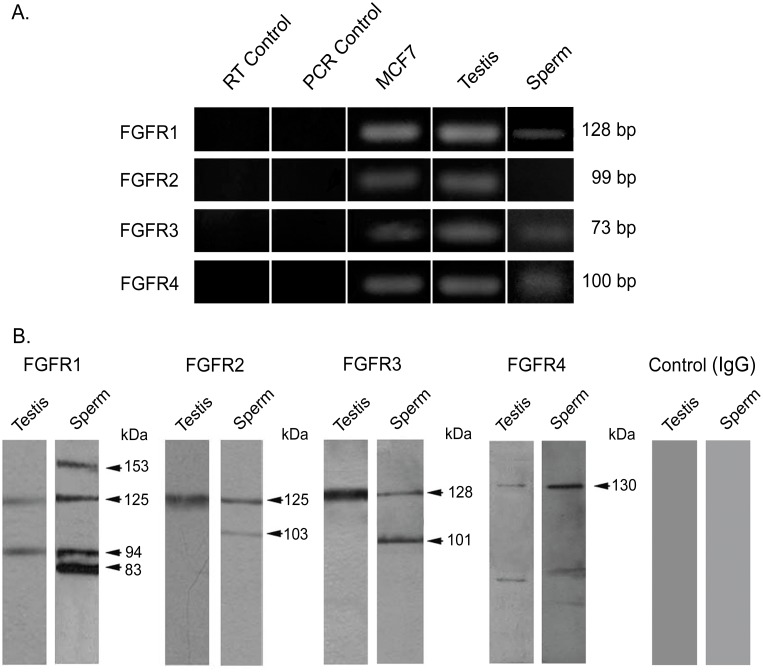
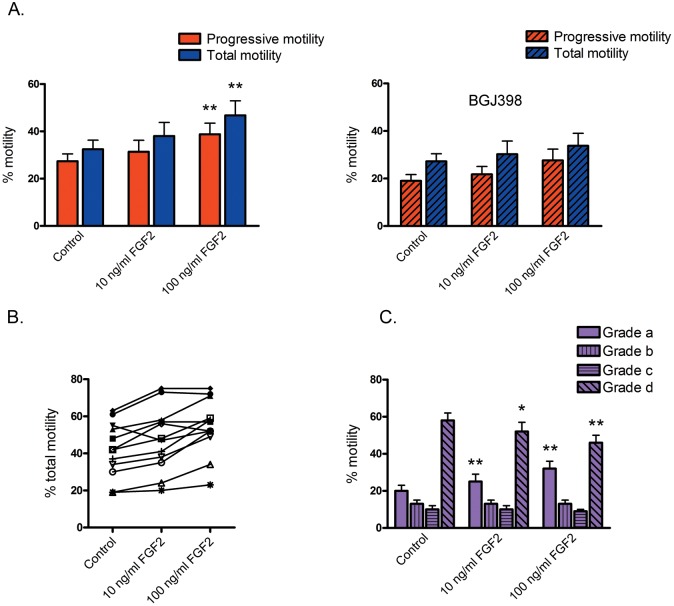
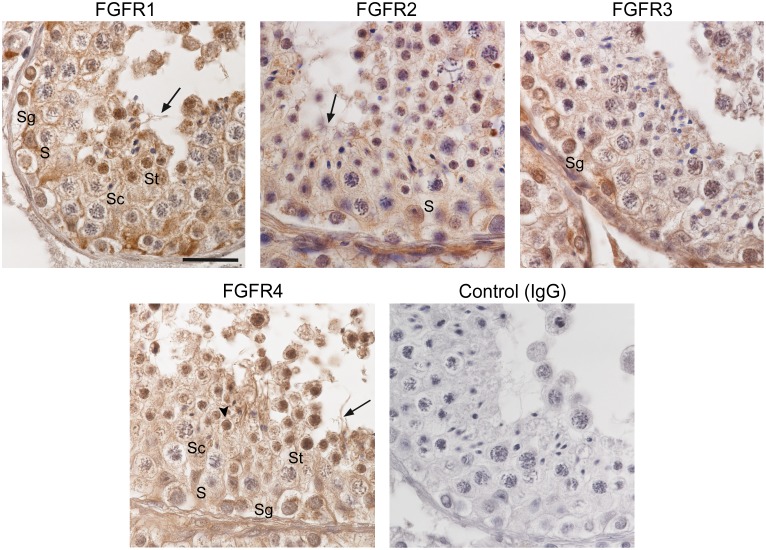
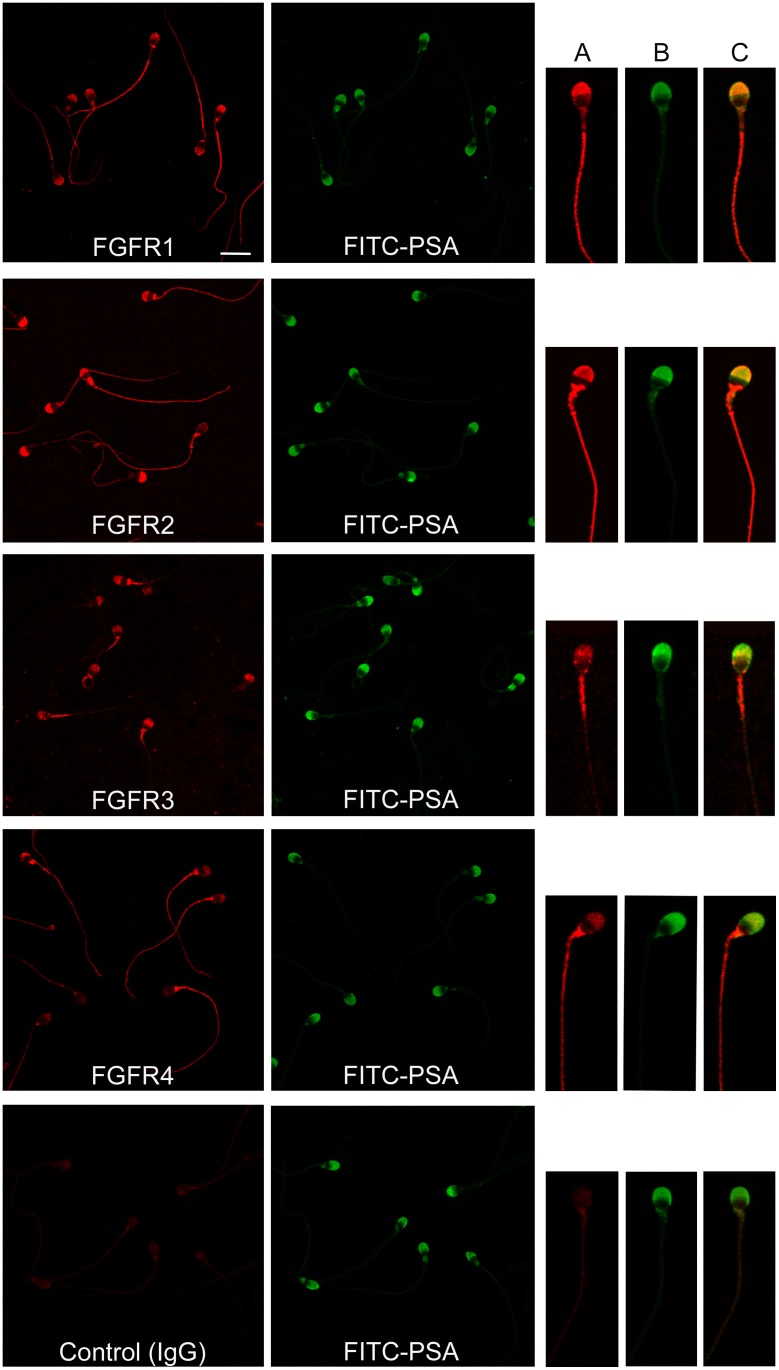
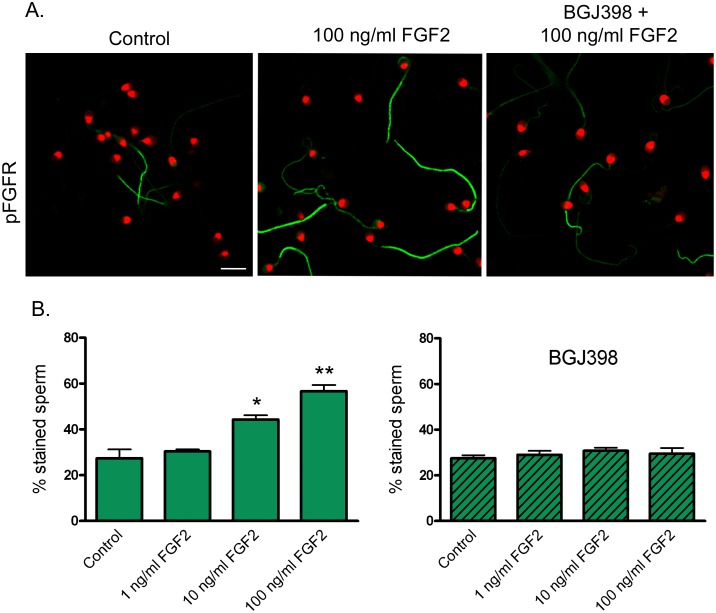
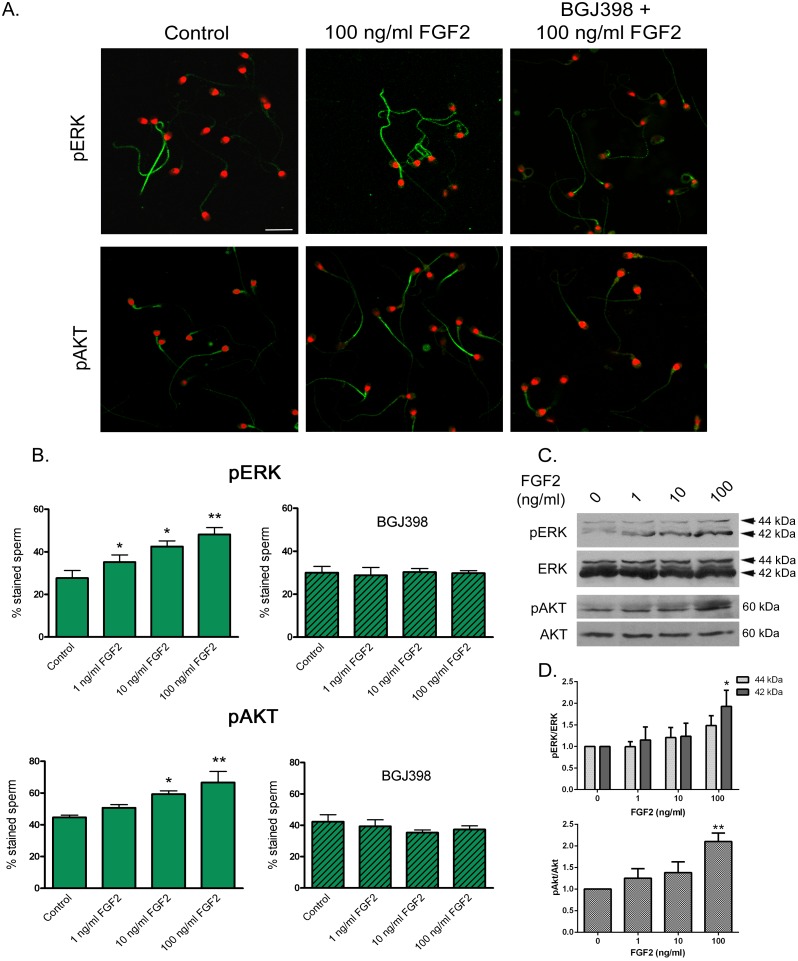
Fibroblast growth factors receptors (FGFRs) have been widely characterized in somatic cells, but there is scarce evidence of their expression and function in mammalian gametes. The objective of the present study was to evaluate the expression of FGFRs in human male germ cells, to determine sperm FGFR activation by the FGF2 ligand and their participation in the regulation of sperm motility. The expression of FGFR1, 2, 3 and 4 mRNAs and proteins in human testis and localization of these receptors in germ cells of the seminiferous epithelium was demonstrated. In ejaculated sperm, FGFRs were localized to the acrosomal region and flagellum. Sperm exposure to FGF2 caused an increase in flagellar FGFR phosphorylation and activation of extracellular signal-regulated kinase (ERK) and protein kinase B (PKB or Akt) signaling pathways. Incubation with FGF2 led to a significant increase in the percentage of total and progressive sperm motility, as well as in sperm kinematics. All responses were prevented by sperm preincubation with BGJ398, a specific inhibitor of FGFR tyrosine kinase activity. In addition to confirming the expression of FGFRs in germ cells of the human testis, our study describes for the first time the presence, localization and functionality of human sperm FGFRs, and provides evidence of the beneficial effect of FGF2 upon sperm motility.
成纤维细胞生长因子受体(FGFRs)在体细胞中已得到广泛研究,但其在哺乳动物配子中的表达及功能的相关证据却很少。本研究的目的是评估FGFRs在人类雄性生殖细胞中的表达,确定FGF2配体对精子FGFR的激活作用及其在精子运动调节中的参与情况。研究证实了FGFR1、2、3和4的mRNA及蛋白在人类睾丸中的表达,以及这些受体在生精上皮生殖细胞中的定位。在射出的精子中,FGFRs定位于顶体区域和鞭毛。精子暴露于FGF2会导致鞭毛FGFR磷酸化增加,以及细胞外信号调节激酶(ERK)和蛋白激酶B(PKB或Akt)信号通路的激活。与FGF2孵育会导致总精子活力和渐进性精子活力的百分比显著增加,以及精子运动学参数的改善。所有这些反应都可通过用FGFR酪氨酸激酶活性的特异性抑制剂BGJ398对精子进行预孵育来阻断。除了证实FGFRs在人类睾丸生殖细胞中的表达外,我们的研究首次描述了人类精子FGFRs的存在、定位和功能,并提供了FGF2对精子活力有益作用的证据。