Jacobson Kathryn, van Diepeningen Anne, Evans Sarah, Fritts Rachel, Gemmel Philipp, Marsho Chris, Seely Mary, Wenndt Anthony, Yang Xiaoxuan, Jacobson Peter
Biology Department, Grinnell College, Grinnell, Iowa, United States of America.
CBS-KNAW Fungal Biodiversity Centre, Utrecht, The Netherlands.
PLoS One. 2015 May 15;10(5):e0126977. doi: 10.1371/journal.pone.0126977. eCollection 2015.
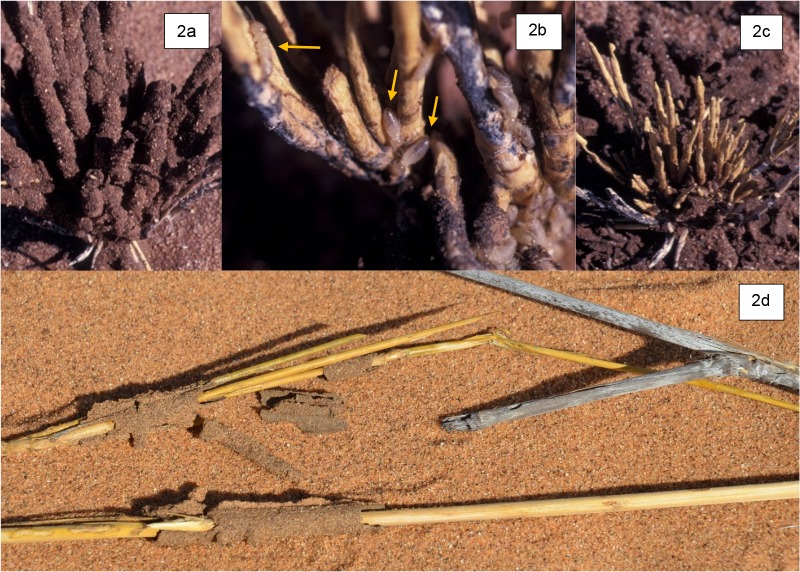
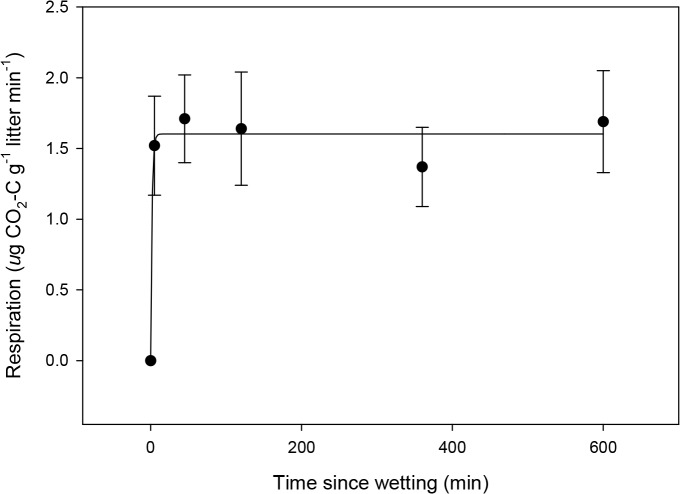
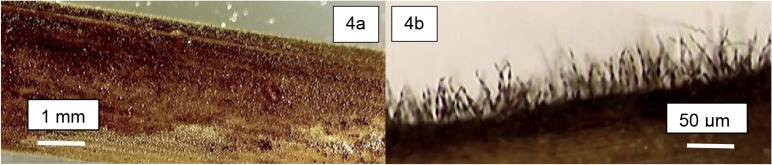
The hyper-arid western Namib Sand Sea (mean annual rainfall 0-17 mm) is a detritus-based ecosystem in which primary production is driven by large, but infrequent rainfall events. A diverse Namib detritivore community is sustained by minimal moisture inputs from rain and fog. The decomposition of plant material in the Namib Sand Sea (NSS) has long been assumed to be the province of these detritivores, with beetles and termites alone accounting for the majority of litter losses. We have found that a mesophilic Ascomycete community, which responds within minutes to moisture availability, is present on litter of the perennial Namib dune grass Stipagrostis sabulicola. Important fungal traits that allow survival and decomposition in this hyper-arid environment with intense desiccation, temperature and UV radiation stress are darkly-pigmented hyphae, a thermal range that includes the relatively low temperature experienced during fog and dew, and an ability to survive daily thermal and desiccation stress at temperatures as high as 50°C for five hours. While rainfall is very limited in this area, fog and high humidity provide regular periods (≥ 1 hour) of sufficient moisture that can wet substrates and hence allow fungal growth on average every 3 days. Furthermore, these fungi reduce the C/N ratio of the litter by a factor of two and thus detritivores, like the termite Psammotermes allocerus, favor fungal-infected litter parts. Our studies show that despite the hyper-aridity of the NSS, fungi are a key component of energy flow and biogeochemical cycling that should be accounted for in models addressing how the NSS ecosystem will respond to projected climate changes which may alter precipitation, dew and fog regimes.
纳米比亚西部的超干旱沙海(年平均降雨量0 - 17毫米)是一个以碎屑为基础的生态系统,其中初级生产由大型但不频繁的降雨事件驱动。纳米比亚多样化的碎屑食性动物群落依靠雨水和雾气带来的极少水分输入得以维持。长期以来,人们一直认为纳米比亚沙海(NSS)中植物材料的分解是这些碎屑食性动物的活动范围,仅甲虫和白蚁就占了凋落物损失的大部分。我们发现,一种中生的子囊菌群落存在于多年生纳米比亚沙丘草沙生针茅的凋落物上,这种群落能在几分钟内对水分供应做出反应。在这种极度干旱的环境中,伴随着强烈的干燥、温度和紫外线辐射压力,能让真菌生存和分解的重要特征包括深色的菌丝、涵盖雾和露水期间相对低温的温度范围,以及在高达50°C的温度下每天承受热和干燥压力达5小时仍能存活的能力。虽然该地区降雨非常有限,但雾气和高湿度会定期(≥1小时)提供足够的水分,使基质湿润,从而平均每3天就能让真菌生长。此外,这些真菌将凋落物的碳氮比降低了一半,因此像白蚁Allocerus psammotermes这样的碎屑食性动物更喜欢被真菌感染的凋落物部分。我们的研究表明,尽管纳米比亚沙海极度干旱,但真菌是能量流动和生物地球化学循环的关键组成部分,在探讨纳米比亚沙海生态系统将如何应对可能改变降水、露水和雾气状况的预计气候变化的模型中应予以考虑。