Vaidyanathan Ramanathan, van Leeuwen Lara Michelle, Rauf Sakandar, Shiddiky Muhammad J A, Trau Matt
Centre for Personalised Nanomedicine, Australian Institute for Bioengineering and Nanotechnology (AIBN), Corner College and Cooper Roads (Bldg 75), The University of Queensland, Brisbane QLD 4072, Australia.
1] Centre for Personalised Nanomedicine, Australian Institute for Bioengineering and Nanotechnology (AIBN), Corner College and Cooper Roads (Bldg 75), The University of Queensland, Brisbane QLD 4072, Australia [2] School of Chemistry and Molecular Biosciences, The University of Queensland, Brisbane, QLD 4072, Australia.
Sci Rep. 2015 May 15;5:9756. doi: 10.1038/srep09756.
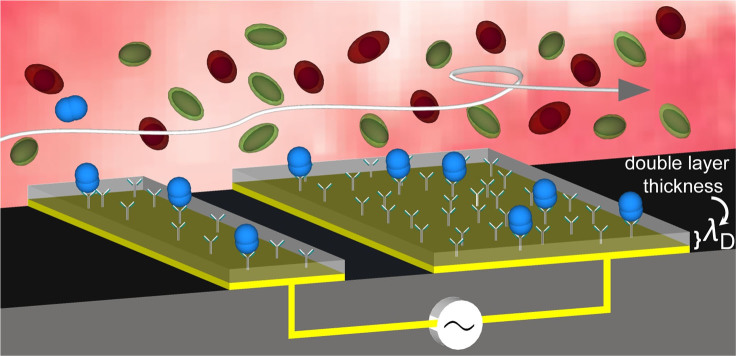
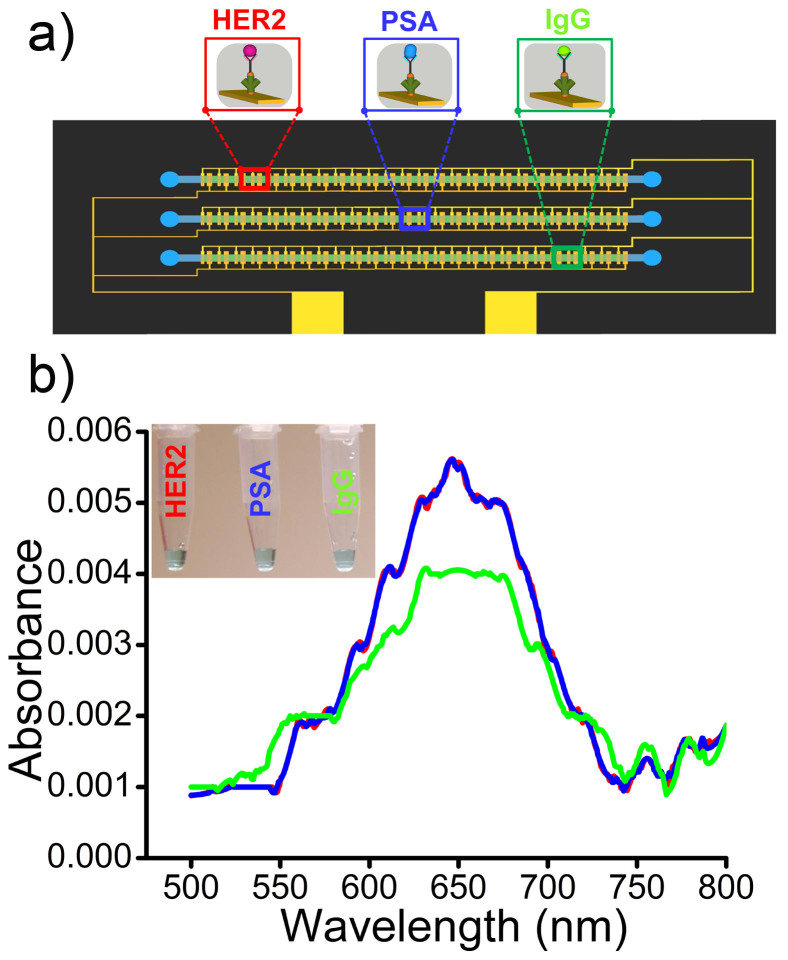
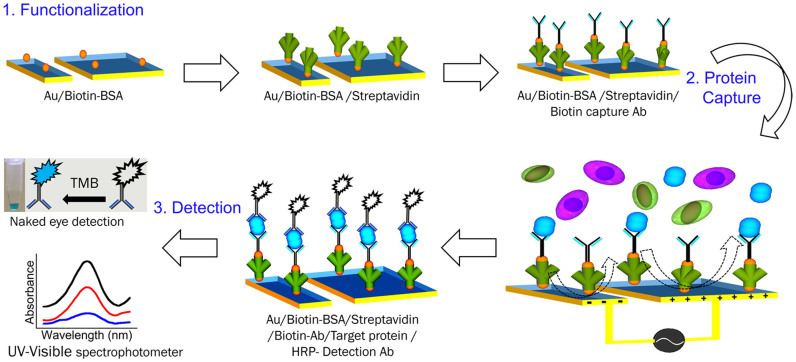
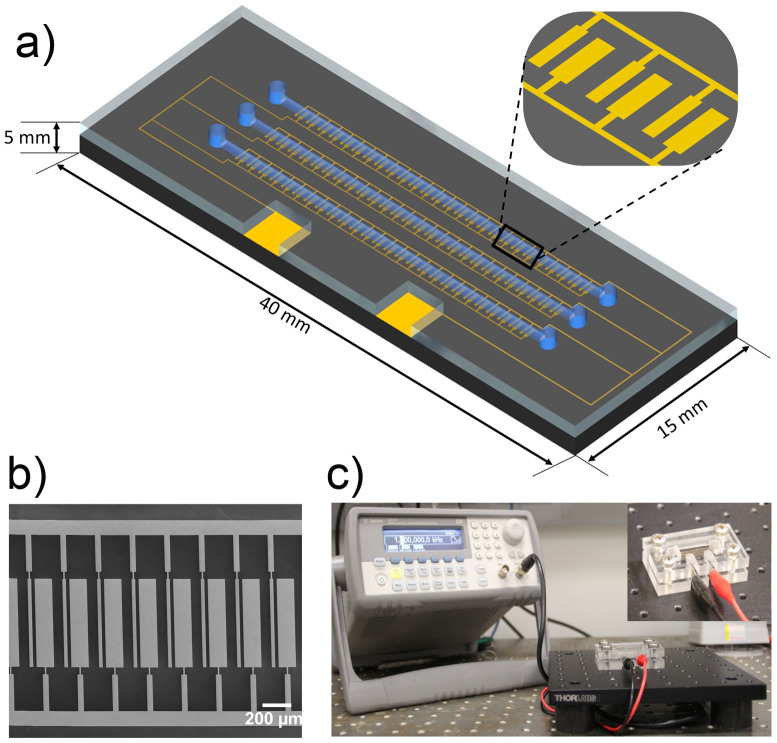
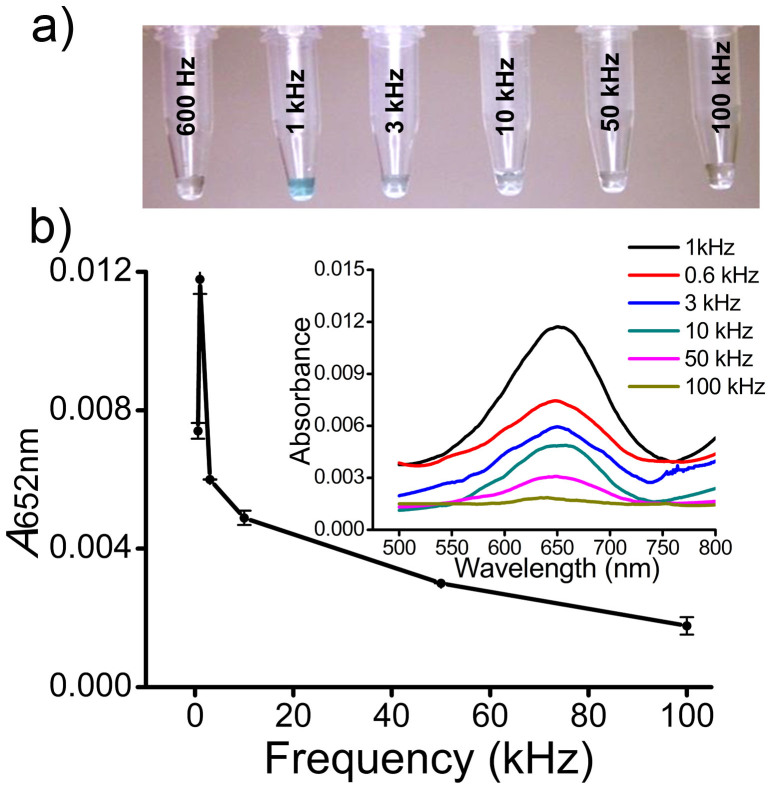
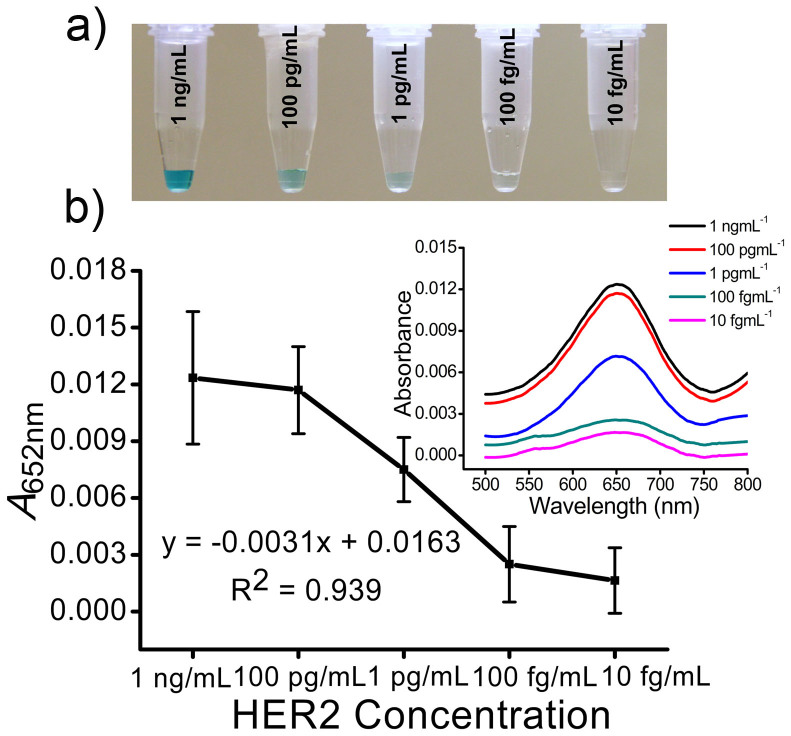
Microfluidic flow based multiplexed devices have gained significant promise in detecting biomarkers in complex biological samples. However, to fully exploit their use in bioanalysis, issues such as (i) low sensitivity and (ii) high levels of nonspecific adsorption of non-target species have to be overcome. Herein, we describe a new multiplexed device for the sensitive detection of multiple protein biomarkers in serum by using an alternating current (ac) electrohydrodynamics (ac-EHD) induced surface shear forces based phenomenon referred to as nanoshearing. The tunable nature (via manipulation of ac field) of these nanoshearing forces can alter the capture performance of the device (e.g., improved fluid transport enhances number of sensor-target collisions). This can also selectively displace weakly (nonspecifically) bound molecules from the electrode surface (i.e., fluid shear forces can be tuned to shear away nonspecific species present in biological samples). Using this approach, we achieved sensitive (100 fg mL(-1)) naked eye detection of multiple protein targets spiked in human serum and a 1000-fold enhancement in comparison to hydrodynamic flow based devices for biomarker detection. We believe that this approach could potentially represent a clinical diagnostic tool that can be integrated into resource-limited settings for sensitive detection of target biomarkers using naked eye.
基于微流体流动的多重检测设备在检测复杂生物样品中的生物标志物方面展现出了巨大的潜力。然而,要充分发挥其在生物分析中的作用,必须克服诸如(i)灵敏度低和(ii)非目标物种非特异性吸附水平高等问题。在此,我们描述了一种新型多重检测设备,该设备通过利用基于交流电(ac)电动力学(ac-EHD)诱导表面剪切力的现象(称为纳米剪切)来灵敏检测血清中的多种蛋白质生物标志物。这些纳米剪切力的可调性(通过操纵交流电场)可以改变设备的捕获性能(例如,改善流体传输可增加传感器与目标的碰撞次数)。这还可以选择性地从电极表面置换弱(非特异性)结合的分子(即,可以调节流体剪切力以剪切掉生物样品中存在的非特异性物种)。使用这种方法,我们实现了对添加到人体血清中的多种蛋白质靶标的灵敏(100 fg mL(-1))裸眼检测,与基于流体动力学流动的生物标志物检测设备相比,增强了1000倍。我们相信,这种方法有可能成为一种临床诊断工具,可以集成到资源有限的环境中,用于使用裸眼灵敏检测目标生物标志物。