Svitálková Zuzana, Haruštiaková Danka, Mahríková Lenka, Berthová Lenka, Slovák Mirko, Kocianová Elena, Kazimírová Mária
Institute of Zoology, Slovak Academy of Sciences, Dúbravská cesta 9, 845 06, Bratislava, Slovakia.
Institute of Biostatistics and Analyses, Faculty of Medicine and Faculty of Science, Masaryk University, Kamenice 3, 625 00, Brno, Czech Republic.
Parasit Vectors. 2015 May 17;8:276. doi: 10.1186/s13071-015-0880-8.
Ixodes ricinus is the principal vector of Anaplasma phagocytophilum, the ethiological agent of granulocytic anaplasmosis in Europe. Anaplasmosis is an emerging zoonotic disease with a natural enzootic cycle. The reservoir competence of rodents is unclear. Monitoring of A. phagocytophilum prevalence in I. ricinus and rodents in various habitat types of Slovakia may contribute to the knowledge about the epidemiology of anaplasmosis in Central Europe.
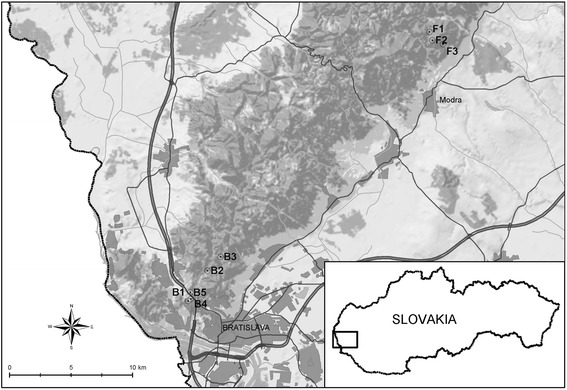
Over 4400 questing ixodid ticks, 1000 rodent-attached ticks and tissue samples of 606 rodents were screened for A. phagocytophilum DNA by real-time PCR targeting the msp2 gene. Ticks and rodents were captured along six transects in an urban/suburban and natural habitat in south-western Slovakia during 2011-2014. Estimates of wildlife (roe deer, red deer, fallow deer, mouflon, wild boar) densities in the study area were taken from hunter's yearly reports. Spatial and temporal differences in A. phagocytophilum prevalence in questing I. ricinus and relationships with relative abundance of ticks and wildlife were analysed.
Overall prevalence of A. phagocytophilum in questing I. ricinus was significantly higher in the urban/suburban habitat (7.2%; 95% CI: 6.1-8.3%) compared to the natural habitat (3.1%; 95% CI: 2.5-3.9%) (χ(2) = 37.451; P < 0.001). Significant local differences in prevalence of infected questing ticks were found among transects within each habitat as well as among years and between seasons. The trapped rodents belonged to six species. Apodemus flavicollis and Myodes glareolus prevailed in both habitats, Microtus arvalis was present only in the natural habitat. I. ricinus comprised 96.3% of the rodent-attached ticks, the rest were Haemaphysalis concinna, Ixodes trianguliceps and Dermacentor reticulatus. Only 0.5% of rodent skin and 0.6% of rodent-attached ticks (only I. ricinus) were infected with A. phagocytophilum. Prevalence of A. phagocytophilum in questing I. ricinus did not correlate significantly with relative abundance of ticks or with abundance of wildlife in the area.
The study confirms that urban I. ricinus populations are infected with A. phagocytophilum at a higher rate than in a natural habitat of south-western Slovakia and suggests that rodents are not the main reservoirs of the bacterium in the investigated area.
蓖麻硬蜱是嗜吞噬细胞无形体的主要传播媒介,嗜吞噬细胞无形体是欧洲粒细胞无形体病的病原体。无形体病是一种新出现的人畜共患病,具有自然的动物疫源循环。啮齿动物作为储存宿主的能力尚不清楚。监测斯洛伐克不同栖息地类型的蓖麻硬蜱和啮齿动物中嗜吞噬细胞无形体的流行情况,可能有助于了解中欧无形体病的流行病学。
通过针对msp2基因的实时荧光定量PCR,对4400多只正在寻找宿主的硬蜱、1000只附着在啮齿动物身上的硬蜱以及606只啮齿动物的组织样本进行嗜吞噬细胞无形体DNA筛查。2011 - 2014年期间,在斯洛伐克西南部的城市/郊区和自然栖息地沿着六条样带捕获硬蜱和啮齿动物。研究区域内野生动物(狍、马鹿、黇鹿、摩弗伦羊、野猪)密度的估计值来自猎人的年度报告。分析了正在寻找宿主的蓖麻硬蜱中嗜吞噬细胞无形体流行率的时空差异以及与硬蜱相对丰度和野生动物的关系。
在城市/郊区栖息地,正在寻找宿主的蓖麻硬蜱中嗜吞噬细胞无形体的总体流行率(7.2%;95%置信区间:6.1 - 8.3%)显著高于自然栖息地(3.1%;95%置信区间:2.5 - 3.9%)(χ(2)=37.451;P < 0.001)。在每个栖息地内的样带之间、年份之间以及季节之间,发现受感染的正在寻找宿主的硬蜱的流行率存在显著的局部差异。捕获的啮齿动物属于六个物种。黄颈姬鼠和林姬鼠在两个栖息地都占优势,田鼠仅出现在自然栖息地。附着在啮齿动物身上的硬蜱中,蓖麻硬蜱占96.3%,其余为血红扇头蜱、三角硬蜱和网纹革蜱。仅0.5%的啮齿动物皮肤和0.6%的附着在啮齿动物身上的硬蜱(仅蓖麻硬蜱)感染了嗜吞噬细胞无形体。正在寻找宿主的蓖麻硬蜱中嗜吞噬细胞无形体的流行率与该地区硬蜱的相对丰度或野生动物的丰度没有显著相关性。
该研究证实,斯洛伐克西南部城市的蓖麻硬蜱种群感染嗜吞噬细胞无形体的比例高于自然栖息地,并表明在研究区域内啮齿动物不是该细菌的主要储存宿主。