State Key Laboratory of Proteomics, Collaborative Innovation Center for Cardiovascular Disorders, Genetic Laboratory of Development and Disease, Institute of Biotechnology, Beijing, 100071 China.
Mil Med Res. 2015 May 9;2:11. doi: 10.1186/s40779-015-0038-1. eCollection 2015.
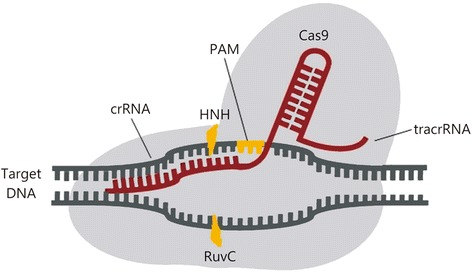
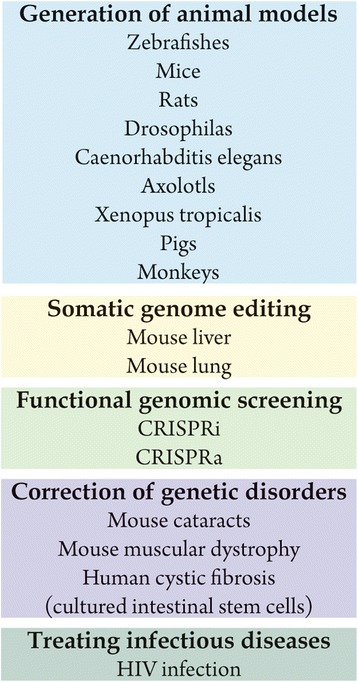
Targeted mutagenesis based on homologous recombination has been a powerful tool for understanding the mechanisms underlying development, normal physiology, and disease. A recent breakthrough in genome engineering technology based on the class of RNA-guided endonucleases, such as clustered regularly interspaced short palindromic repeats (CRISPR)-associated Cas9, is further revolutionizing biology and medical studies. The simplicity of the CRISPR-Cas9 system has enabled its widespread applications in generating germline animal models, somatic genome engineering, and functional genomic screening and in treating genetic and infectious diseases. This technology will likely be used in all fields of biomedicine, ranging from basic research to human gene therapy.
基于同源重组的靶向诱变已成为研究发育、正常生理和疾病机制的有力工具。基于 RNA 指导的内切酶(如成簇规律间隔短回文重复序列 (CRISPR) 相关 Cas9)的基因组编辑技术的最新突破,进一步推动了生物学和医学研究的发展。CRISPR-Cas9 系统的简单性使其在生成种系动物模型、体细胞基因组工程、功能基因组筛选以及治疗遗传和传染病方面得到了广泛应用。该技术可能将应用于从基础研究到人类基因治疗的生物医学的各个领域。