Taylor Joseph G, Liapis Konstantinos, Gribben John G
1Barts Cancer Institute, Centre for Haemato-Oncology, Charterhouse Square, London, EC1M 6BQ, UK.
Biomark Med. 2015;9(5):473-82. doi: 10.2217/bmm.15.13.
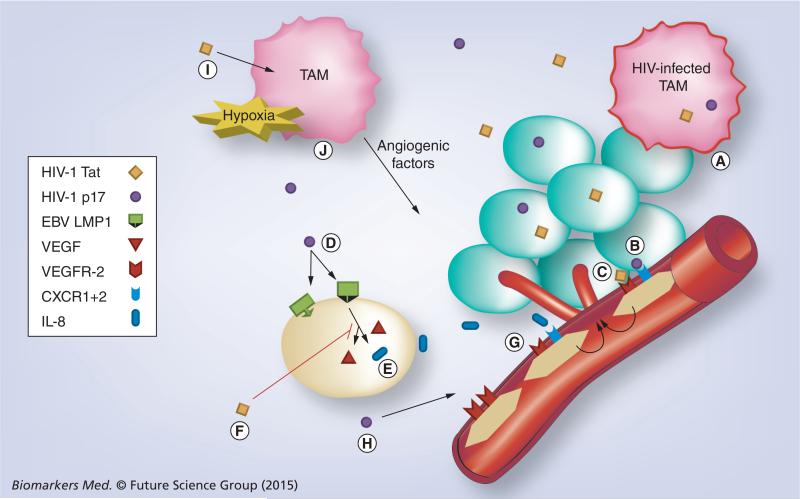
There has been considerable interest in the role of the lymphoma microenvironment. Despite the use of highly active antiretroviral therapy (HAART), AIDS-related diffuse large-B-cell lymphoma remains common and HIV-relatedHIV-associated classical Hodgkin's lymphoma is increasing in incidence. Less is known about the impact HIV and HAART have on the lymphoma microenvironment. AIDS-related diffuse large B-cell lymphoma is highly angiogenic, demonstrates increased lymphoblastic histology, proliferation, increased activated cytotoxic T cells, reduced CD4(+) and FOXP3(+) T cells, but no differences in tumor-associated macrophages. Early initiation of HAART improves immunosurveillance, but cases without viral antigens appear able to avoid immunologic reaction. Increased T cell infiltrates seen with HAART treatment in HIV-related classical Hodgkin's lymphoma may contribute to malignant cell growth.
淋巴瘤微环境的作用已引起了相当大的关注。尽管使用了高效抗逆转录病毒疗法(HAART),但艾滋病相关的弥漫性大B细胞淋巴瘤仍然很常见,并且HIV相关的经典霍奇金淋巴瘤的发病率正在上升。关于HIV和HAART对淋巴瘤微环境的影响,人们了解得较少。艾滋病相关的弥漫性大B细胞淋巴瘤具有高度血管生成性,表现出淋巴细胞组织学增加、增殖、活化的细胞毒性T细胞增加、CD4(+)和FOXP3(+) T细胞减少,但肿瘤相关巨噬细胞无差异。早期开始使用HAART可改善免疫监视,但没有病毒抗原的病例似乎能够避免免疫反应。在HIV相关的经典霍奇金淋巴瘤中,HAART治疗可见T细胞浸润增加,这可能有助于恶性细胞生长。