Bischof Oliver, Martínez-Zamudio Ricardo Iván
Institut Pasteur, Laboratory of Nuclear Organization and Oncogenesis, Department of Cell Biology and Infection, Paris, France.
INSERM, U993, Paris, France.
IUBMB Life. 2015 Apr;67(4):255-67. doi: 10.1002/iub.1373. Epub 2015 May 19.
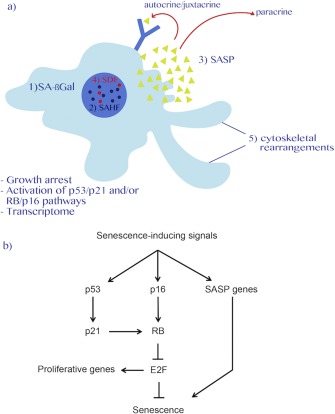
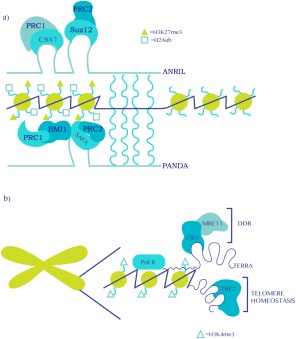
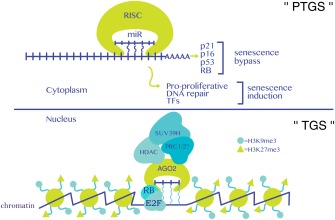
Cellular senescence is a stress response to a variety of extrinsic and intrinsic insults that cause genomic or epigenomic perturbations. It is now widely recognized as a potent tumor suppressor mechanism as well as a biological process impacting aging and organismal development. Like other cell fate decisions, senescence is executed and maintained by an intricate network of transcription factors (TFs), chromatin modifiers, and noncoding RNAs (ncRNAs). Altogether, these factors cooperate to implement the gene expression program that initiates and sustains the senescent phenotype. In the context of senescence, microRNAs (miRs) and long ncRNAs have been found to play regulatory roles at both the transcriptional and post-transcriptional levels. In this review, we discuss recent developments in the field and point toward future research directions to gain a better understanding of ncRNAs in senescence.
细胞衰老乃是对各种导致基因组或表观基因组扰动的外在和内在损伤的应激反应。如今,它被广泛认为是一种强大的肿瘤抑制机制,也是一个影响衰老和机体发育的生物学过程。与其他细胞命运决定一样,衰老由转录因子(TFs)、染色质修饰因子和非编码RNA(ncRNAs)构成的复杂网络执行并维持。总之,这些因子协同作用以实施启动和维持衰老表型的基因表达程序。在衰老的背景下,已发现微小RNA(miRs)和长链ncRNAs在转录和转录后水平均发挥调控作用。在本综述中,我们讨论了该领域的最新进展,并指出了未来的研究方向,以期更好地理解衰老过程中的ncRNAs。