Instituto de Biologia Molecular e Celular (IBMC), Rua Alfredo Allen, 208, 4200-135, Porto, Portugal.
Instituto de Investigação e Inovação em Saúde (I3S), Universidade do Porto, Rua Alfredo Allen, 208, 4200-135, Porto, Portugal.
Sci Rep. 2021 Feb 12;11(1):3710. doi: 10.1038/s41598-021-83243-8.
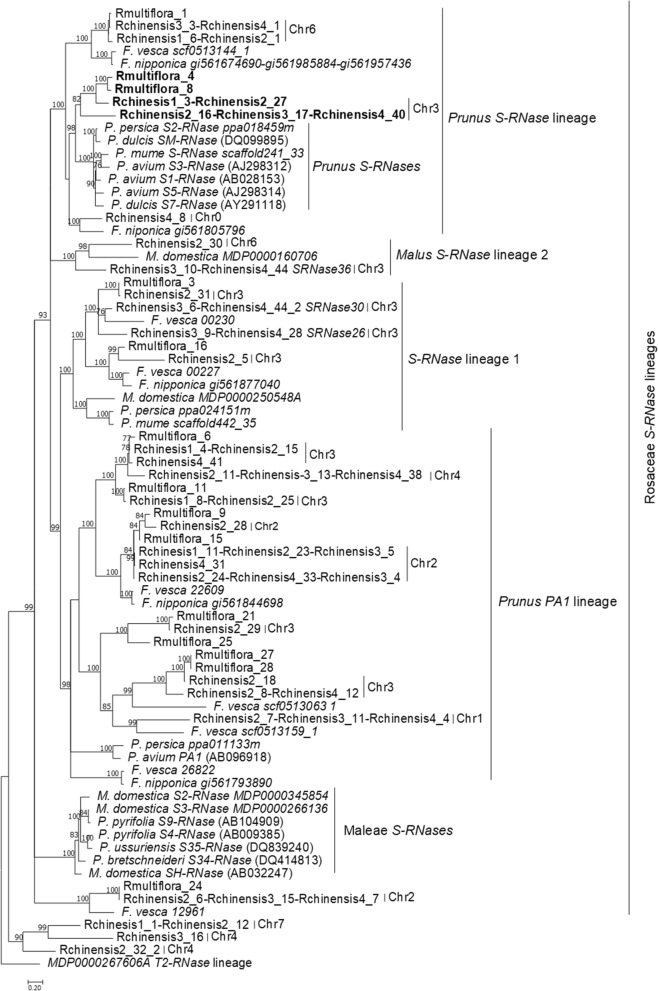
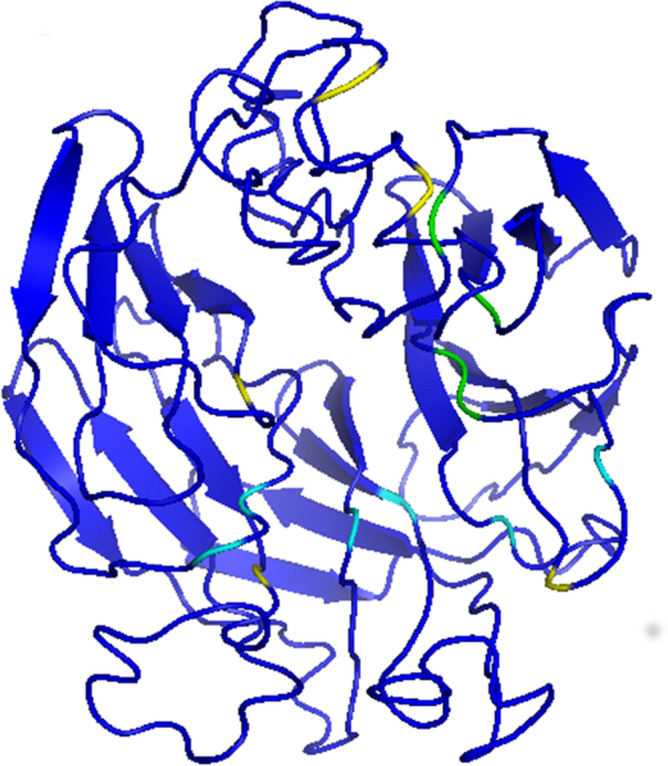
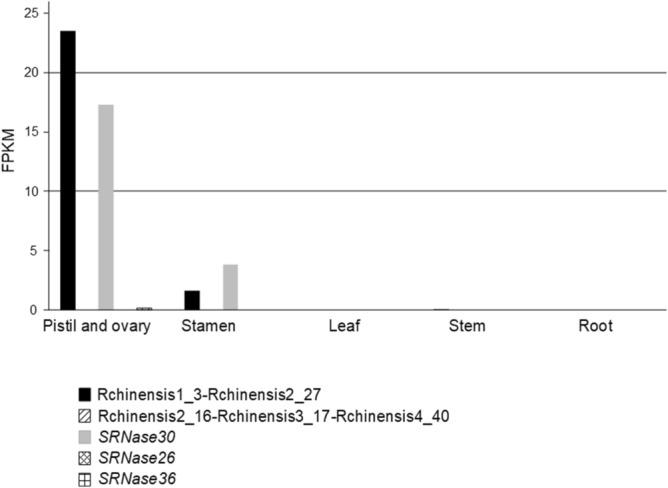
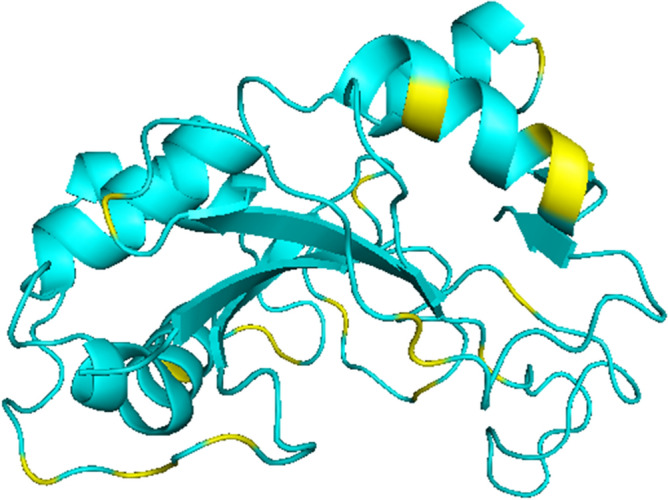
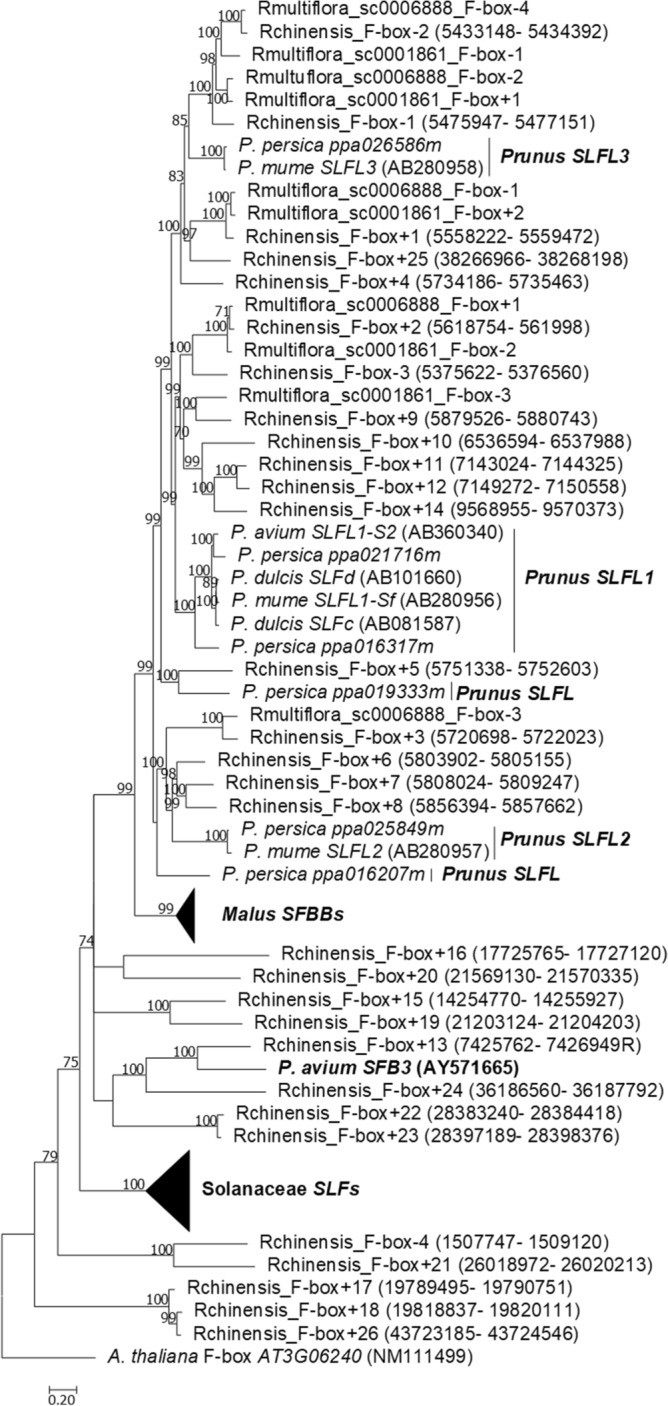
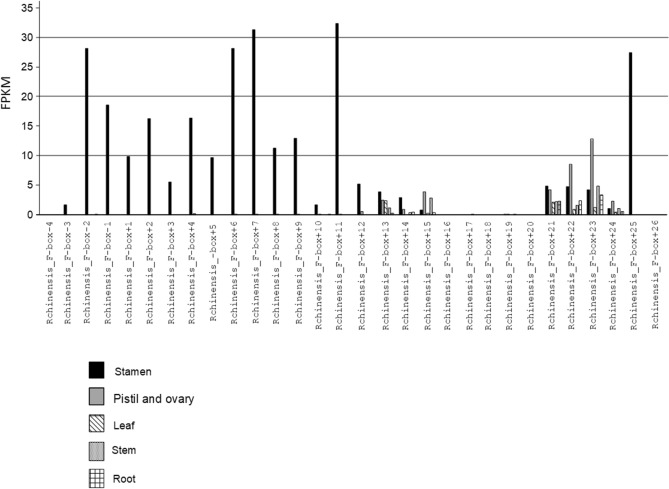
In Rosaceae species, two gametophytic self-incompatibility (GSI) mechanisms are described, the Prunus self-recognition system and the Maleae (Malus/Pyrus/Sorbus) non-self- recognition system. In both systems the pistil component is a S-RNase gene, but from two distinct phylogenetic lineages. The pollen component, always a F-box gene(s), in the case of Prunus is a single gene, and in Maleae there are multiple genes. Previously, the Rosa S-locus was mapped on chromosome 3, and three putative S-RNase genes were identified in the R. chinensis 'Old Blush' genome. Here, we show that these genes do not belong to the S-locus region. Using R. chinensis and R. multiflora genomes and a phylogenetic approach, we identified the S-RNase gene, that belongs to the Prunus S-lineage. Expression patterns support this gene as being the S-pistil. This gene is here also identified in R. moschata, R. arvensis, and R. minutifolia low coverage genomes, allowing the identification of positively selected amino acid sites, and thus, further supporting this gene as the S-RNase. Furthermore, genotype-phenotype association experiments also support this gene as the S-RNase. For the S-pollen GSI component we find evidence for multiple F-box genes, that show the expected expression pattern, and evidence for diversifying selection at the F-box genes within an S-haplotype. Thus, Rosa has a non-self-recognition system, like in Maleae species, despite the S-pistil gene belonging to the Prunus S-RNase lineage. These findings are discussed in the context of the Rosaceae GSI evolution. Knowledge on the Rosa S-locus has practical implications since genes controlling floral and other ornamental traits are in linkage disequilibrium with the S-locus.
在蔷薇科物种中,描述了两种配子体自交不亲和(GSI)机制,即李属自识别系统和 Malus/Pyrus/Sorbus 非自识别系统。在这两个系统中,雌蕊成分都是 S-RNase 基因,但来自两个不同的进化枝。花粉成分,在李属中总是一个 F-box 基因(s),而在 Malus 中则有多个基因。以前,Rosa S 位点被定位在染色体 3 上,在 R. chinensis 'Old Blush' 基因组中鉴定出三个假定的 S-RNase 基因。在这里,我们表明这些基因不属于 S 位点区域。使用 R. chinensis 和 R. multiflora 基因组和系统发育方法,我们鉴定出属于李属 S 谱系的 S-RNase 基因。表达模式支持该基因作为 S-雌蕊。该基因也在 R. moschata、R. arvensis 和 R. minutifolia 低覆盖率基因组中被鉴定出来,这允许鉴定出正选择的氨基酸位点,从而进一步支持该基因作为 S-RNase。此外,基因型-表型关联实验也支持该基因作为 S-RNase。对于 S-花粉 GSI 成分,我们找到了多个 F-box 基因的证据,这些基因显示出预期的表达模式,并且在 S 单倍型内的 F-box 基因中存在多样化选择的证据。因此,尽管 S-雌蕊基因属于李属 S-RNase 谱系,但 Rosa 具有类似于 Malus 物种的非自识别系统。这些发现将在蔷薇科 GSI 进化的背景下进行讨论。由于控制花卉和其他观赏性状的基因与 S 位点连锁不平衡,因此对 Rosa S 位点的了解具有实际意义。