Masuda Akio, Takeda Jun-ichi, Okuno Tatsuya, Okamoto Takaaki, Ohkawara Bisei, Ito Mikako, Ishigaki Shinsuke, Sobue Gen, Ohno Kinji
Division of Neurogenetics, Center for Neurological Diseases and Cancer, Showa-ku, Nagoya 466-8550, Japan;
Department of Neurology, Nagoya University Graduate School of Medicine, Nagoya 466-8550, Japan.
Genes Dev. 2015 May 15;29(10):1045-57. doi: 10.1101/gad.255737.114.
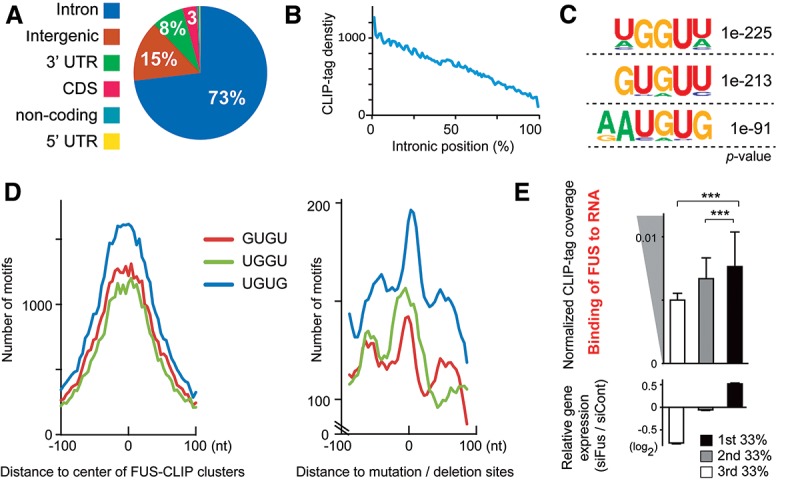
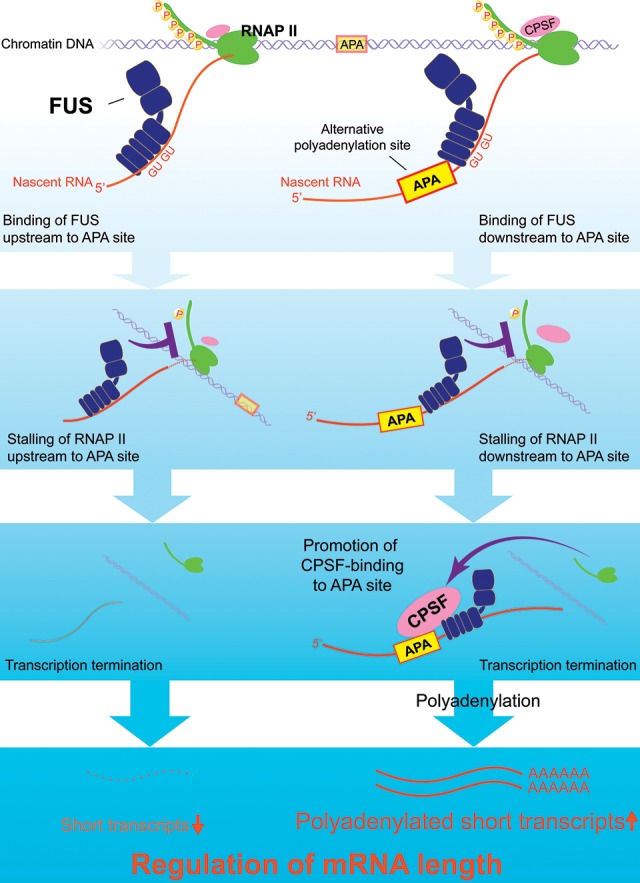
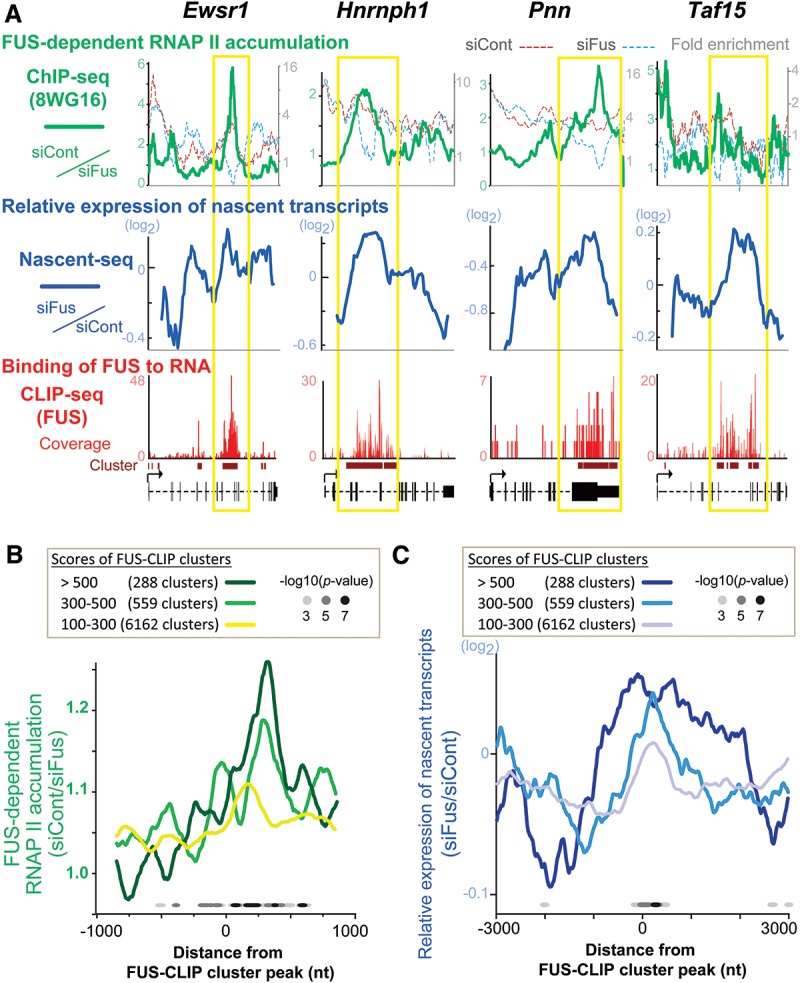
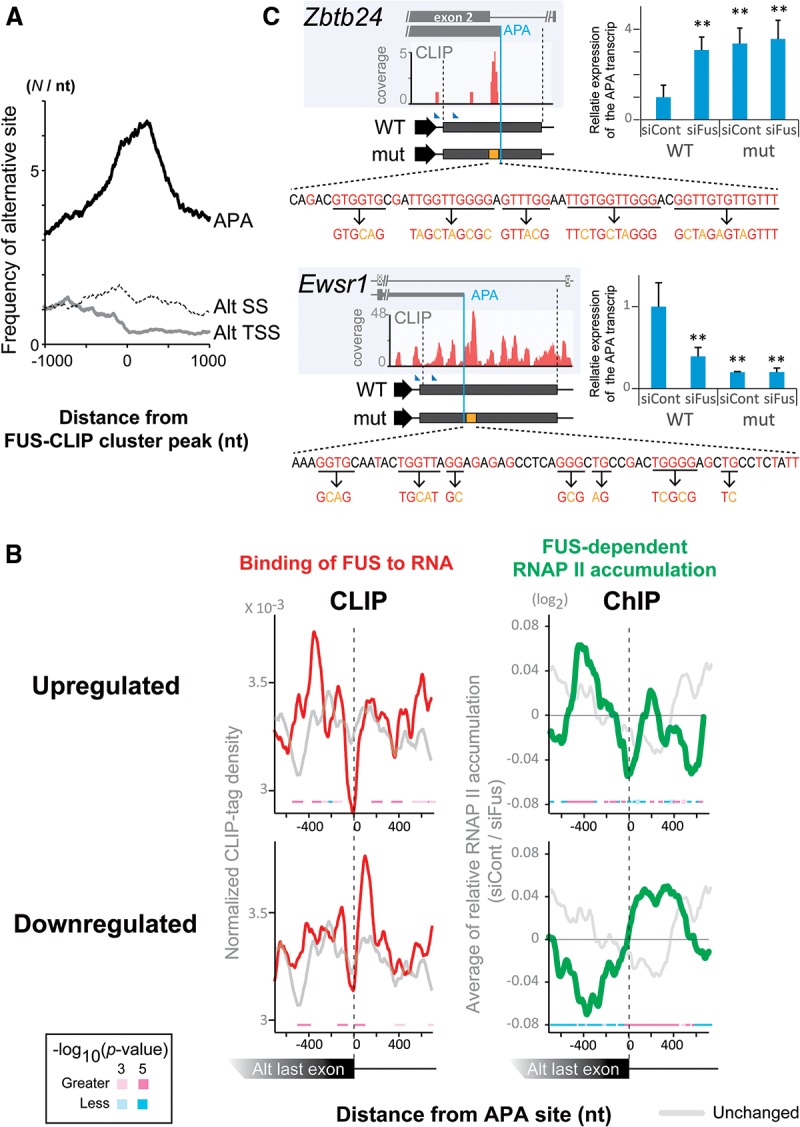
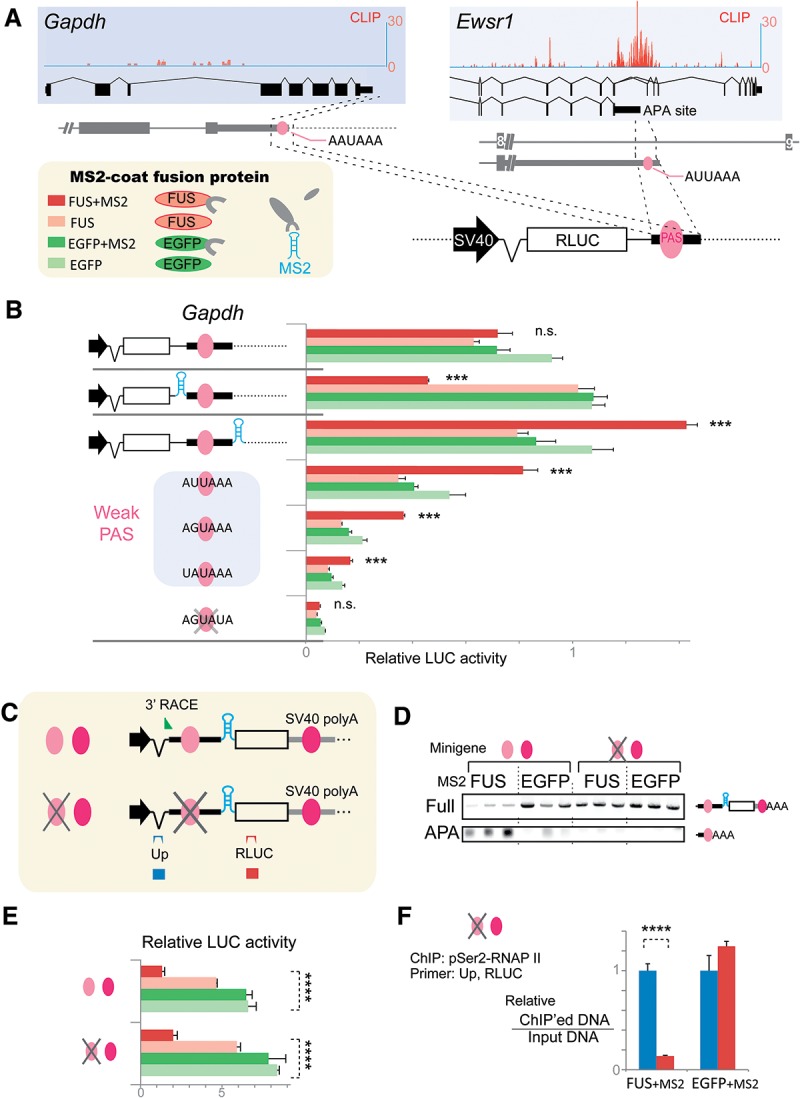
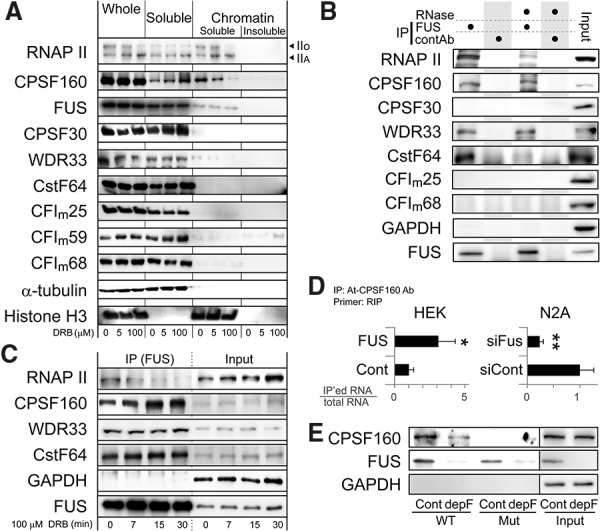
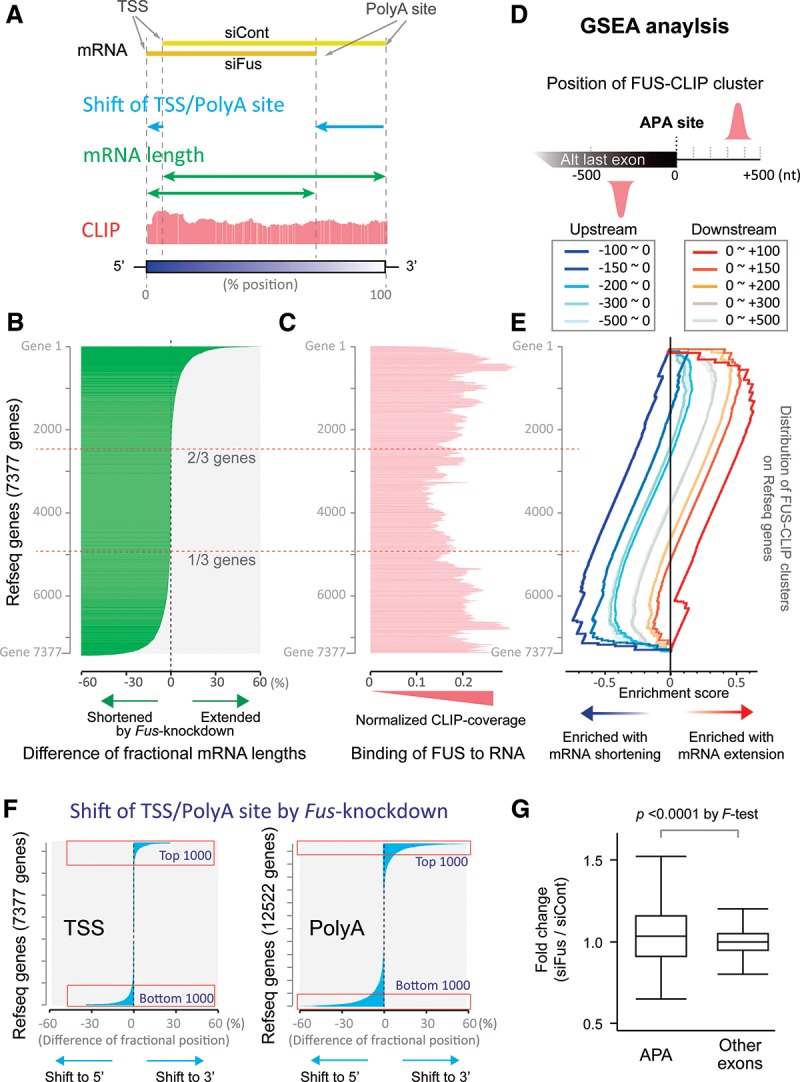
More than half of all human genes produce prematurely terminated polyadenylated short mRNAs. However, the underlying mechanisms remain largely elusive. CLIP-seq (cross-linking immunoprecipitation [CLIP] combined with deep sequencing) of FUS (fused in sarcoma) in neuronal cells showed that FUS is frequently clustered around an alternative polyadenylation (APA) site of nascent RNA. ChIP-seq (chromatin immunoprecipitation [ChIP] combined with deep sequencing) of RNA polymerase II (RNAP II) demonstrated that FUS stalls RNAP II and prematurely terminates transcription. When an APA site is located upstream of an FUS cluster, FUS enhances polyadenylation by recruiting CPSF160 and up-regulates the alternative short transcript. In contrast, when an APA site is located downstream from an FUS cluster, polyadenylation is not activated, and the RNAP II-suppressing effect of FUS leads to down-regulation of the alternative short transcript. CAGE-seq (cap analysis of gene expression [CAGE] combined with deep sequencing) and PolyA-seq (a strand-specific and quantitative method for high-throughput sequencing of 3' ends of polyadenylated transcripts) revealed that position-specific regulation of mRNA lengths by FUS is operational in two-thirds of transcripts in neuronal cells, with enrichment in genes involved in synaptic activities.
超过半数的人类基因会产生过早终止的多聚腺苷酸化短mRNA。然而,其潜在机制在很大程度上仍不清楚。对神经元细胞中的FUS(肉瘤融合蛋白)进行CLIP-seq(交联免疫沉淀[CLIP]结合深度测序)显示,FUS经常聚集在新生RNA的可变聚腺苷酸化(APA)位点周围。对RNA聚合酶II(RNAP II)进行ChIP-seq(染色质免疫沉淀[ChIP]结合深度测序)表明,FUS会使RNAP II停滞并过早终止转录。当一个APA位点位于FUS簇的上游时,FUS通过招募CPSF160增强多聚腺苷酸化,并上调可变短转录本。相反,当一个APA位点位于FUS簇的下游时,多聚腺苷酸化不会被激活,并且FUS对RNAP II的抑制作用会导致可变短转录本的下调。CAGE-seq(基因表达帽分析[CAGE]结合深度测序)和PolyA-seq(一种用于多聚腺苷酸化转录本3'端高通量测序的链特异性定量方法)表明,FUS对mRNA长度的位置特异性调控在神经元细胞中三分之二的转录本中起作用,且在参与突触活动的基因中富集。