Keshavan Matcheri S, Mehta Urvakhsh Meherwan, Padmanabhan Jaya L, Shah Jai L
Harvard Medical School.
McGill University.
Dev Psychopathol. 2015 May;27(2):615-35. doi: 10.1017/S095457941500019X.
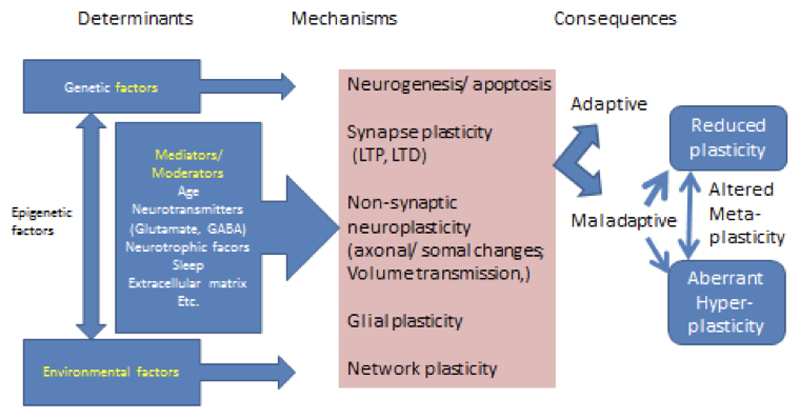
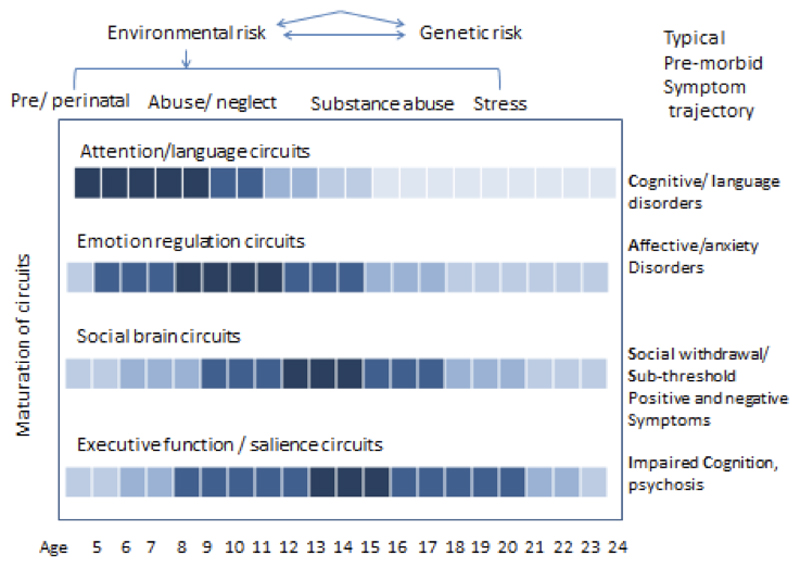
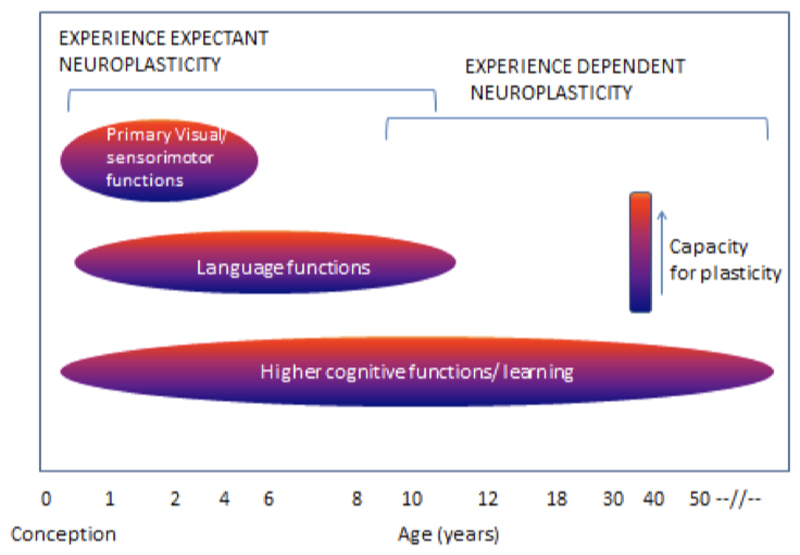
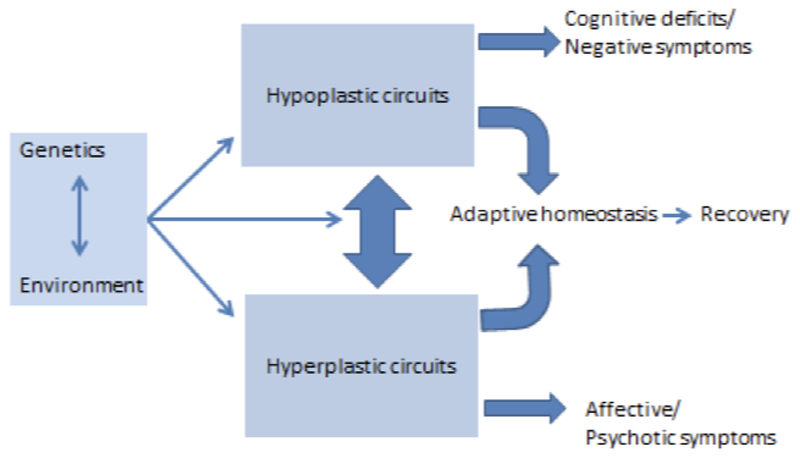
In this paper, we review the history of the concept of neuroplasticity as it relates to the understanding of neuropsychiatric disorders, using schizophrenia as a case in point. We briefly review the myriad meanings of the term neuroplasticity, and its neuroscientific basis. We then review the evidence for aberrant neuroplasticity and metaplasticity associated with schizophrenia as well as the risk for developing this illness, and discuss the implications of such understanding for prevention and therapeutic interventions. We argue that the failure and/or altered timing of plasticity of critical brain circuits might underlie cognitive and deficit symptoms, and may also lead to aberrant plastic reorganization in other circuits, leading to affective dysregulation and eventually psychosis. This "dysplastic" model of schizophrenia can suggest testable etiology and treatment-relevant questions for the future.
在本文中,我们以精神分裂症为例,回顾与神经精神疾病理解相关的神经可塑性概念的历史。我们简要回顾了术语“神经可塑性”的众多含义及其神经科学基础。然后,我们回顾了与精神分裂症相关的异常神经可塑性和元可塑性的证据以及患此病的风险,并讨论了这种理解对预防和治疗干预的意义。我们认为,关键脑回路可塑性的失败和/或时机改变可能是认知和缺陷症状的基础,也可能导致其他回路的异常可塑性重组,从而导致情感失调并最终引发精神病。这种精神分裂症的“发育异常”模型可以为未来提出可检验的病因学和与治疗相关的问题。