Pang Maoda, Jiang Jingwei, Xie Xing, Wu Yafeng, Dong Yuhao, Kwok Amy H Y, Zhang Wei, Yao Huochun, Lu Chengping, Leung Frederick C, Liu Yongjie
College of Veterinary Medicine, Nanjing Agricultural University, Nanjing, 210095, China.
Bioinformatics Center, Nanjing Agricultural University, Nanjing, 210095, China.
Sci Rep. 2015 May 27;5:9833. doi: 10.1038/srep09833.
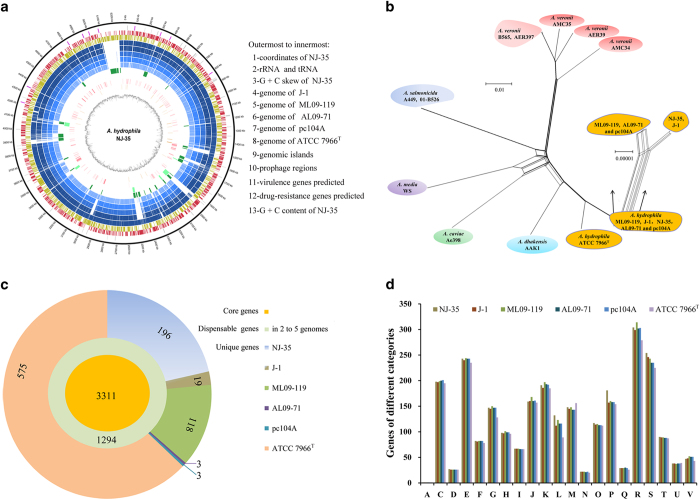
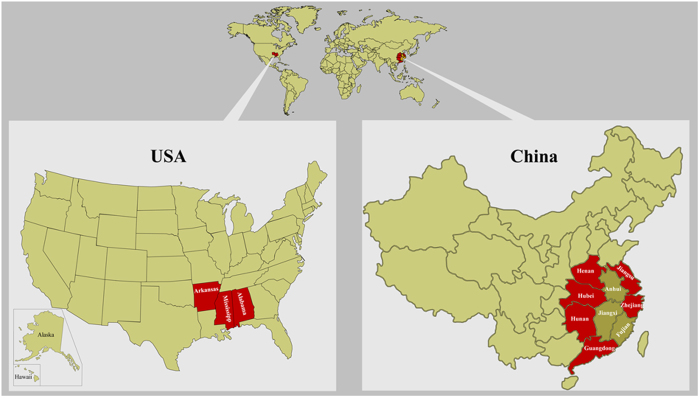
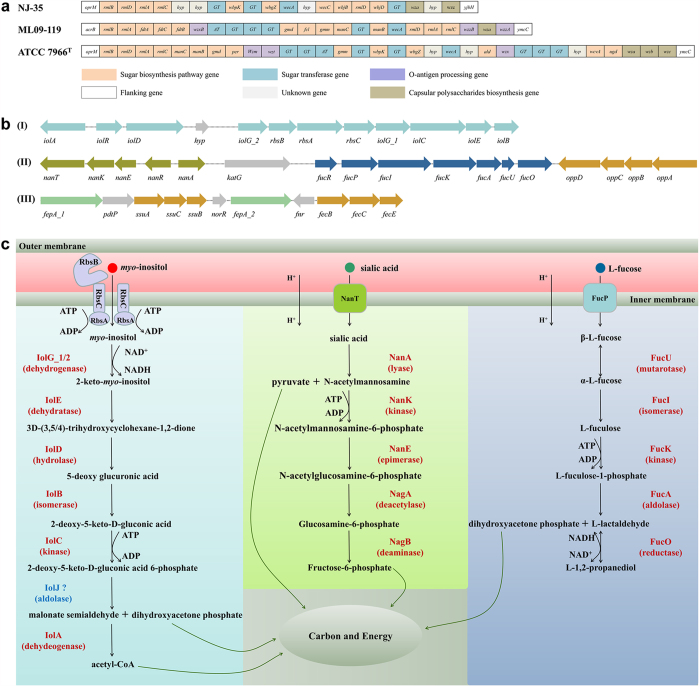
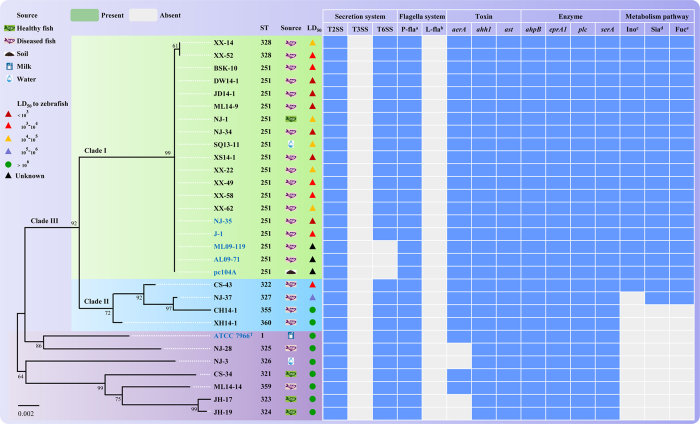
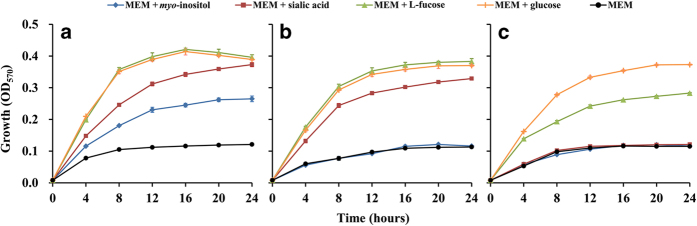
Outbreaks in fish of motile Aeromonad septicemia (MAS) caused by Aeromonas hydrophila have caused a great concern worldwide. Here, for the first time, we provide two complete genomes of epidemic A. hydrophila strains isolated in China. To gain an insight into the pathogenicity of epidemic A. hydrophila, we performed comparative genomic analyses of five epidemic strains belonging to sequence type (ST) 251, together with the environmental strain ATCC 7966(T). We found that the known virulence factors, including a type III secretion system, a type VI secretion system and lateral flagella, are not required for the high virulence of the ST251 clonal group. Additionally, our work identifies three utilization pathways for myo-inositol, sialic acid and L-fucose providing clues regarding the factors that underlie the epidemic and virulent nature of ST251 A. hydrophila. Based on the geographical distribution and biological resources of the ST251 clonal group, we conclude that ST251 is a high-risk clonal group of A. hydrophila which may be responsible for the MAS outbreaks in China and the southeastern United States.
嗜水气单胞菌引起的鱼类运动性气单胞菌败血症(MAS)疫情在全球引起了极大关注。在此,我们首次提供了在中国分离出的两株嗜水气单胞菌流行菌株的完整基因组。为深入了解嗜水气单胞菌流行菌株的致病性,我们对属于序列型(ST)251的五株流行菌株以及环境菌株ATCC 7966(T)进行了比较基因组分析。我们发现,已知的毒力因子,包括III型分泌系统、VI型分泌系统和侧鞭毛,并非ST251克隆群高毒力所必需。此外,我们的研究确定了肌醇、唾液酸和L-岩藻糖的三种利用途径,为ST251嗜水气单胞菌的流行和毒力特性的潜在因素提供了线索。基于ST251克隆群的地理分布和生物资源,我们得出结论,ST251是嗜水气单胞菌的一个高风险克隆群,可能是中国和美国东南部MAS疫情的原因。