Bidon Tobias, Schreck Nancy, Hailer Frank, Nilsson Maria A, Janke Axel
Senckenberg Biodiversity and Climate Research Centre Frankfurt, Frankfurt am Main, Germany International Graduate School of Science and Engineering (IGSSE), Technische Universität München, Garching, Germany.
Senckenberg Biodiversity and Climate Research Centre Frankfurt, Frankfurt am Main, Germany.
Genome Biol Evol. 2015 May 27;7(7):2010-22. doi: 10.1093/gbe/evv103.
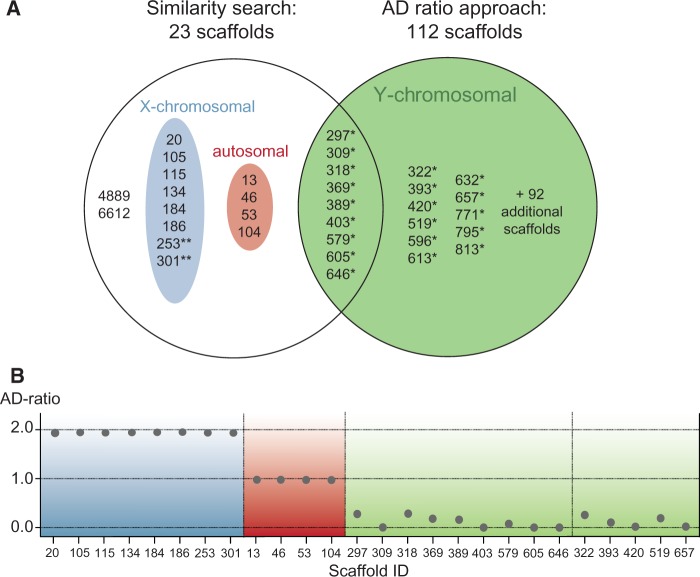
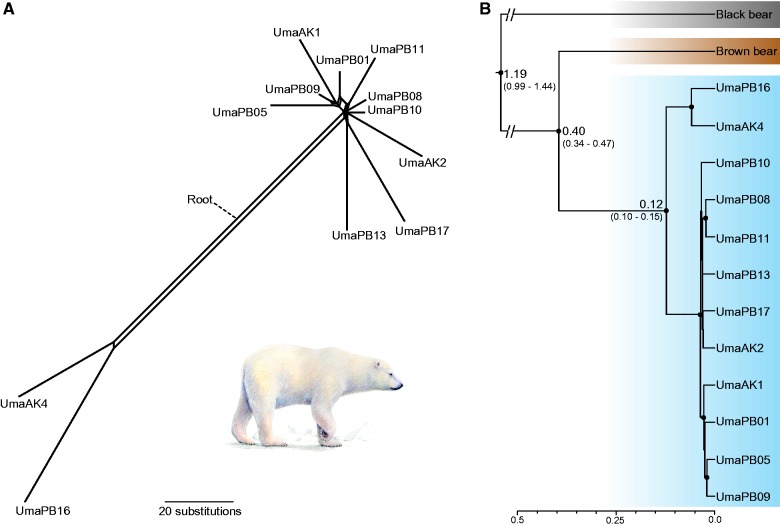
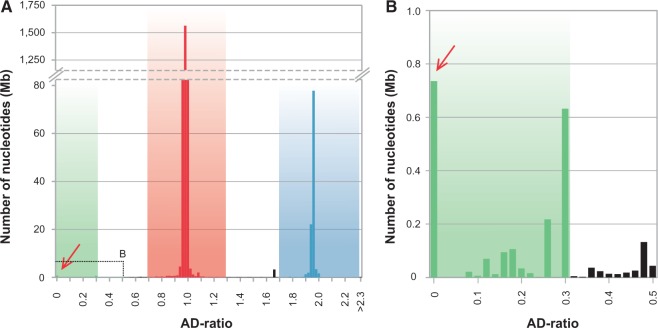
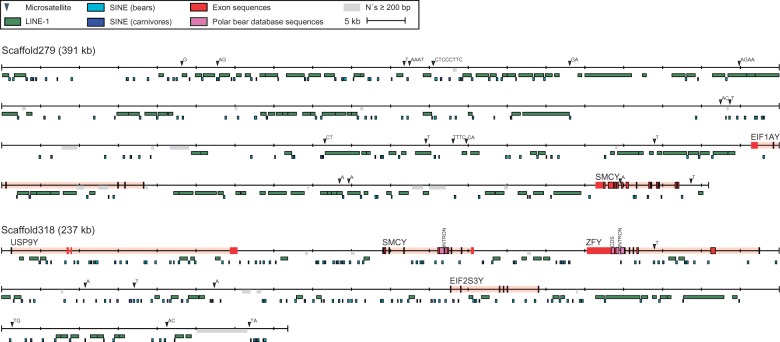
The male-inherited Y chromosome is the major haploid fraction of the mammalian genome, rendering Y-linked sequences an indispensable resource for evolutionary research. However, despite recent large-scale genome sequencing approaches, only a handful of Y chromosome sequences have been characterized to date, mainly in model organisms. Using polar bear (Ursus maritimus) genomes, we compare two different in silico approaches to identify Y-linked sequences: 1) Similarity to known Y-linked genes and 2) difference in the average read depth of autosomal versus sex chromosomal scaffolds. Specifically, we mapped available genomic sequencing short reads from a male and a female polar bear against the reference genome and identify 112 Y-chromosomal scaffolds with a combined length of 1.9 Mb. We verified the in silico findings for the longer polar bear scaffolds by male-specific in vitro amplification, demonstrating the reliability of the average read depth approach. The obtained Y chromosome sequences contain protein-coding sequences, single nucleotide polymorphisms, microsatellites, and transposable elements that are useful for evolutionary studies. A high-resolution phylogeny of the polar bear patriline shows two highly divergent Y chromosome lineages, obtained from analysis of the identified Y scaffolds in 12 previously published male polar bear genomes. Moreover, we find evidence of gene conversion among ZFX and ZFY sequences in the giant panda lineage and in the ancestor of ursine and tremarctine bears. Thus, the identification of Y-linked scaffold sequences from unordered genome sequences yields valuable data to infer phylogenomic and population-genomic patterns in bears.
雄性遗传的Y染色体是哺乳动物基因组的主要单倍体部分,使得Y连锁序列成为进化研究中不可或缺的资源。然而,尽管近期有大规模基因组测序方法,但迄今为止只有少数Y染色体序列得到了表征,主要是在模式生物中。利用北极熊(Ursus maritimus)基因组,我们比较了两种不同的计算机模拟方法来识别Y连锁序列:1)与已知Y连锁基因的相似性;2)常染色体支架与性染色体支架平均读深的差异。具体而言,我们将一只雄性和一只雌性北极熊的可用基因组测序短读段比对到参考基因组上,识别出112个Y染色体支架,总长度为1.9 Mb。我们通过雄性特异性体外扩增验证了北极熊较长支架的计算机模拟结果,证明了平均读深方法的可靠性。获得的Y染色体序列包含对进化研究有用的蛋白质编码序列、单核苷酸多态性、微卫星和转座元件。对北极熊父系的高分辨率系统发育分析显示出两个高度分化的Y染色体谱系,这是通过对12个先前发表的雄性北极熊基因组中识别出的Y支架进行分析得到的。此外,我们在大熊猫谱系以及熊科和眼镜熊科祖先中发现了ZFX和ZFY序列之间基因转换的证据。因此,从无序基因组序列中识别Y连锁支架序列为推断熊科的系统发育基因组学和群体基因组学模式提供了有价值的数据。