Pujari-Palmer Michael, Pujari-Palmer Shiuli, Engqvist Håkan, Karlsson Ott Marjam
Division of Applied Material Science, Department of Engineering Sciences, Uppsala University, Uppsala, Sweden.
PLoS One. 2015 May 29;10(5):e0128324. doi: 10.1371/journal.pone.0128324. eCollection 2015.
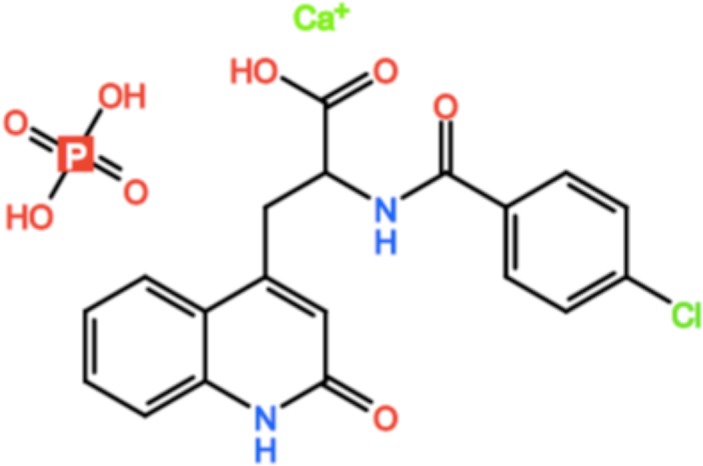
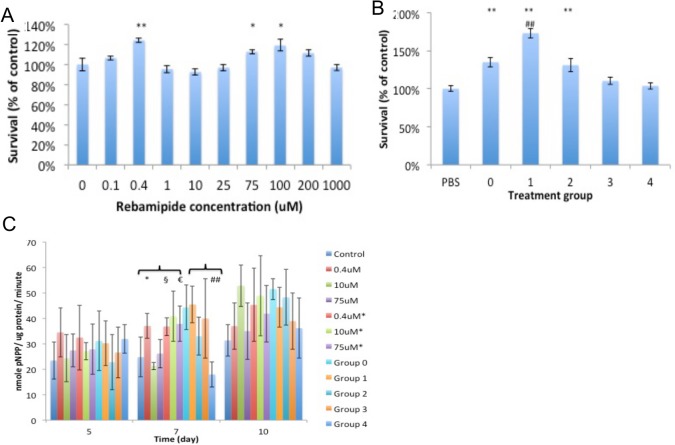
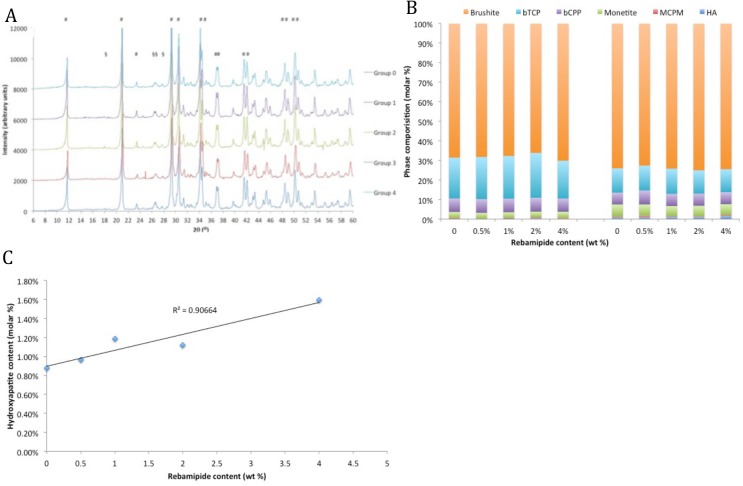
Many of the bioactive agents capable of stimulating osseous regeneration, such as bone morphogenetic protein-2 (BMP-2) or prostaglandin E2 (PGE2), are limited by rapid degradation, a short bioactive half-life at the target site in vivo, or are prohibitively expensive to obtain in large quantities. Rebamipide, an amino acid modified hydroxylquinoline, can alter the expression of key mediators of bone anabolism, cyclo-oxygenase 2 (COX-2), BMP-2 and vascular endothelial growth factor (VEGF), in diverse cell types such as mucosal and endothelial cells or chondrocytes. The present study investigates whether Rebamipide enhances proliferation and differentiation of osteoblasts when delivered from brushite cement. The reactive oxygen species (ROS) quenching ability of Rebampide was tested in macrophages as a measure of bioactivity following drug release incubation times, up to 14 days. Rebamipide release from brushite occurs via non-fickian diffusion, with a rapid linear release of 9.70% ± 0.37% of drug per day for the first 5 days, and an average of 0.5%-1% per day thereafter for 30 days. Rebamipide slows the initial and final cement setting time by up to 3 and 1 minute, respectively, but does not significantly reduce the mechanical strength below 4% (weight percentage). Pre-osteoblast proliferation increases by 24% upon exposure to 0.4 uM Rebamipide, and by up to 73% when Rebamipide is delivered via brushite cement. Low doses of Rebamipide do not adversely affect peak alkaline phosphatase activity in differentiating pre-osteoblasts. Rebamipide weakly stimulates proliferation in macrophages at low concentrations (118 ± 7.4% at 1 uM), and quenches ROS by 40-60%. This is the first investigation of Rebamipide in osteoblasts.
许多能够刺激骨再生的生物活性剂,如骨形态发生蛋白-2(BMP-2)或前列腺素E2(PGE2),都受到快速降解、在体内靶位点生物活性半衰期短的限制,或者大量获取成本过高。瑞巴派特是一种氨基酸修饰的羟基喹啉,可改变多种细胞类型(如黏膜细胞、内皮细胞或软骨细胞)中骨合成代谢关键介质环氧化酶2(COX-2)、BMP-2和血管内皮生长因子(VEGF)的表达。本研究探讨了从透钙磷石骨水泥中释放瑞巴派特时,它是否能增强成骨细胞的增殖和分化。在巨噬细胞中测试了瑞巴派特的活性氧(ROS)淬灭能力,作为药物释放孵育长达14天后生物活性的一种衡量指标。瑞巴派特从透钙磷石中释放是通过非菲克扩散,前5天药物每天快速线性释放9.70%±0.37%,此后30天平均每天释放0.5%-1%。瑞巴派特分别使骨水泥的初始和最终凝固时间最多减慢3分钟和1分钟,但不会使机械强度显著降低至4%(重量百分比)以下。前成骨细胞暴露于0.4 μM瑞巴派特时增殖增加24%,通过透钙磷石骨水泥释放瑞巴派特时增殖最多可增加73%。低剂量的瑞巴派特不会对分化中的前成骨细胞的碱性磷酸酶活性峰值产生不利影响。低浓度(1 μM时为118±7.4%)的瑞巴派特在巨噬细胞中对增殖有微弱刺激作用,并使ROS淬灭40%-60%。这是首次对瑞巴派特在成骨细胞中的研究。