McCarroll Charlotte S, Rossor Charlotte L, Morrison Linda R, Morrison Liam J, Loughrey Christopher M
Institute of Cardiovascular and Medical Sciences, College of Medical, Veterinary and Life Sciences, University of Glasgow, Glasgow, United Kingdom.
Easter Bush Pathology, Royal (Dick) School of Veterinary Studies and The Roslin Institute, Easter Bush Campus, University of Edinburgh, Midlothian, United Kingdom.
PLoS Negl Trop Dis. 2015 May 29;9(5):e0003811. doi: 10.1371/journal.pntd.0003811. eCollection 2015 May.
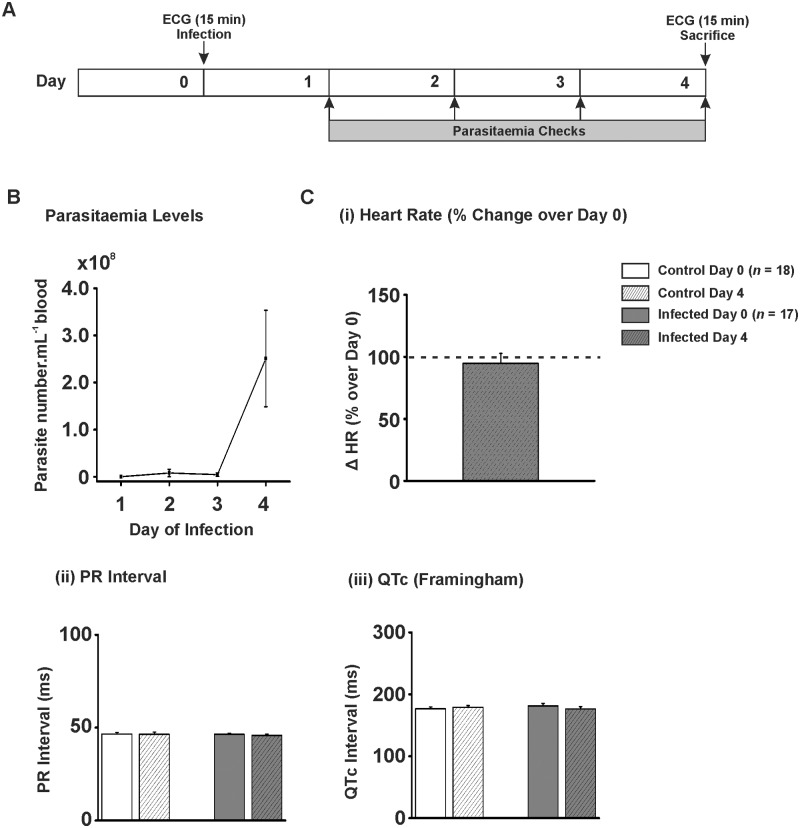
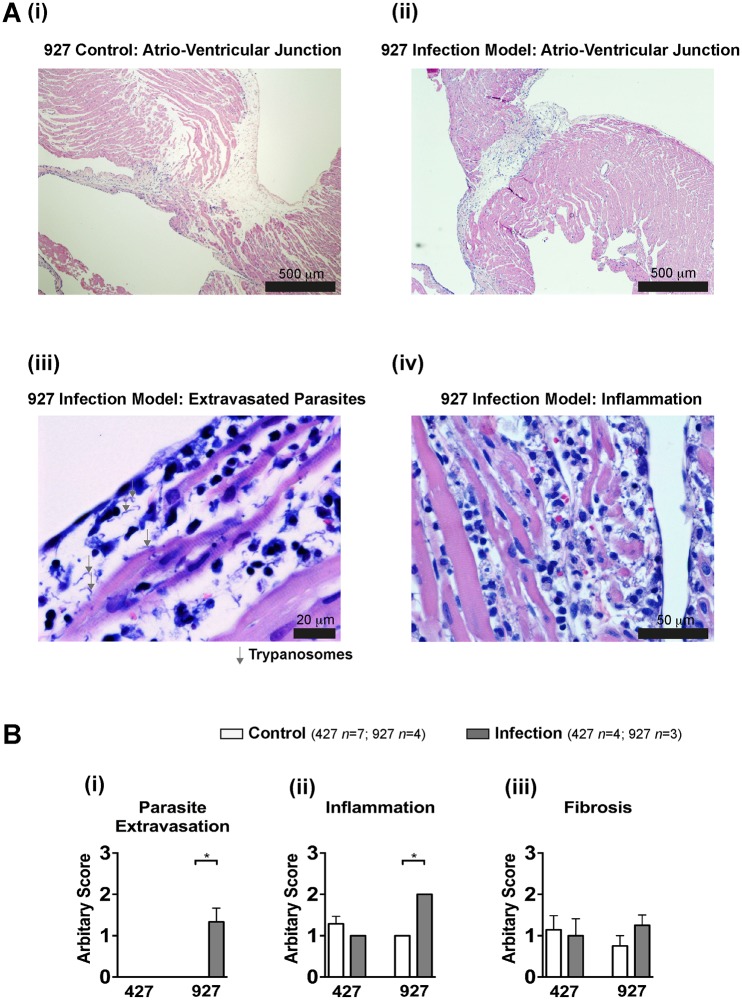
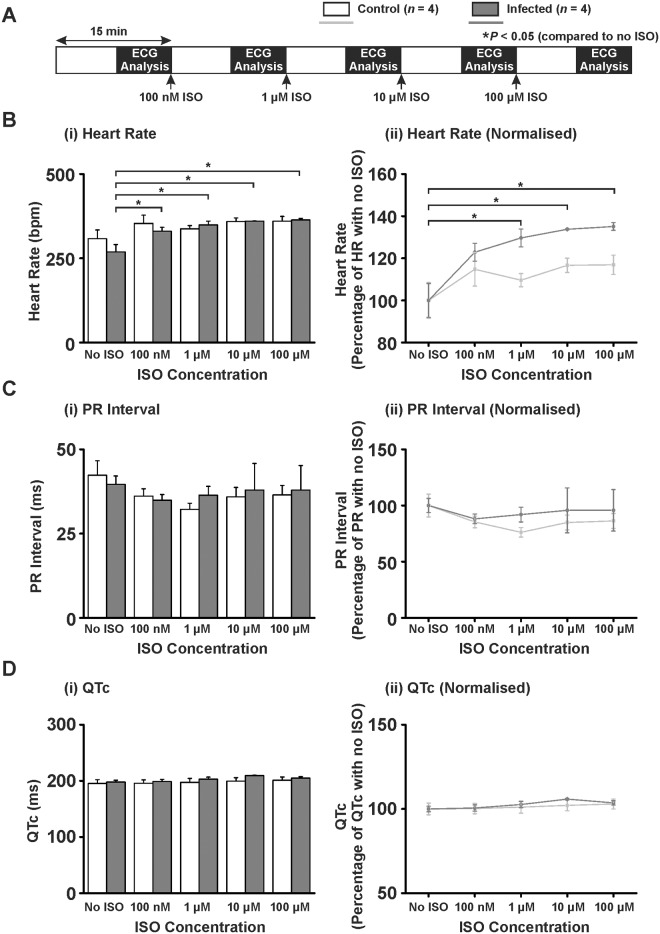
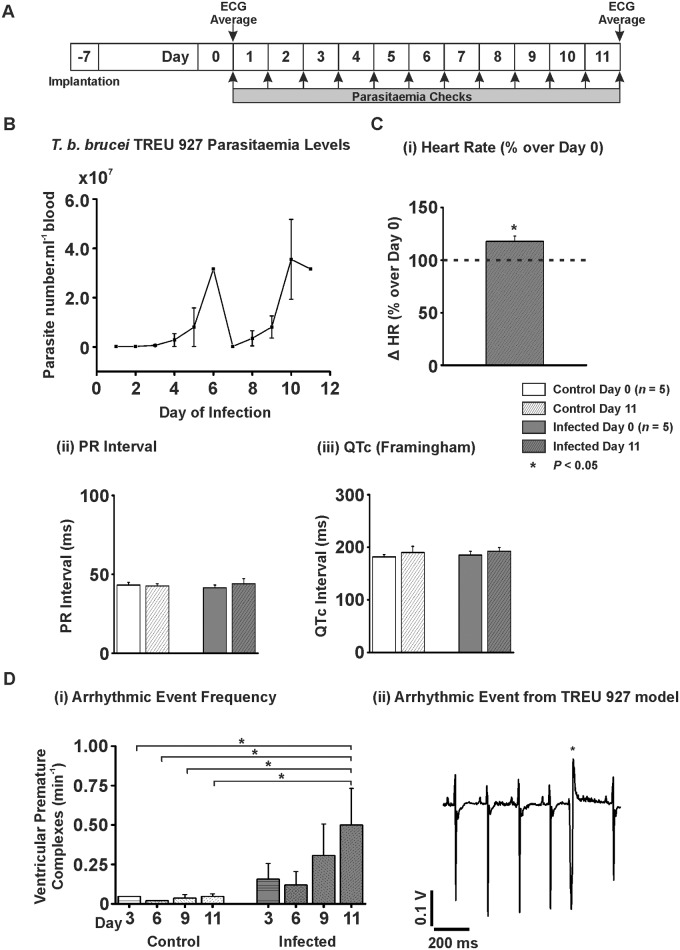
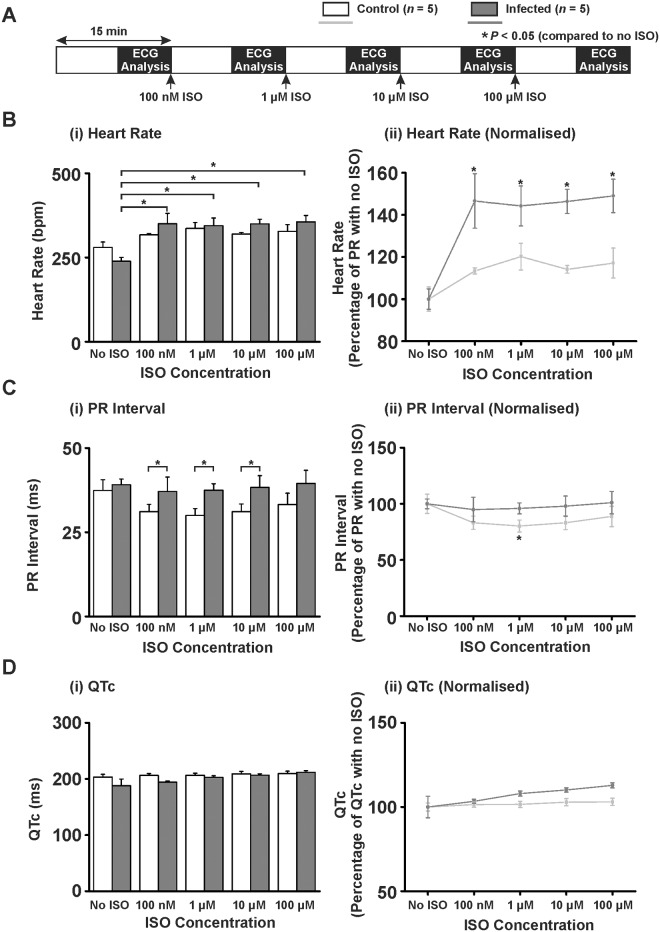
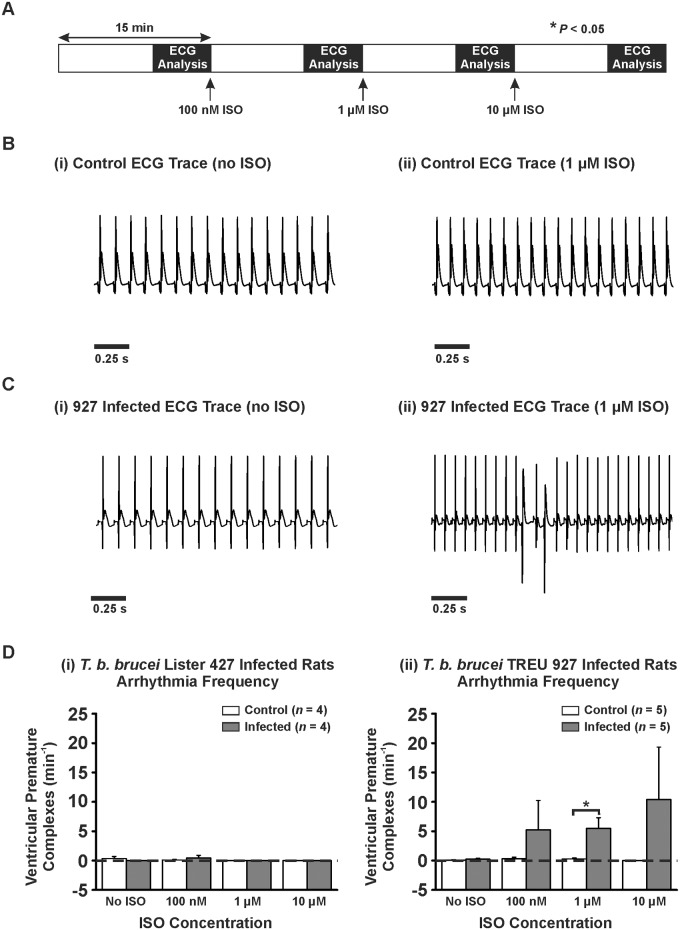
African trypanosomiasis (AT), caused by Trypanosoma brucei species, results in both neurological and cardiac dysfunction and can be fatal if untreated. Research on the pathogenesis and treatment of the disease has centred to date on the characteristic neurological symptoms, whereas cardiac dysfunction (e.g. ventricular arrhythmias) in AT remains largely unstudied. Animal models of AT demonstrating cardiac dysfunction similar to that described in field cases of AT are critically required to transform our understanding of AT-induced cardiac pathophysiology and identify future treatment strategies. We have previously shown that T. brucei can interact with heart muscle cells (cardiomyocytes) to induce ventricular arrhythmias in ex vivo adult rat hearts. However, it is unknown whether the arrhythmias observed ex vivo are also present during in vivo infection in experimental animal models. Here we show for the first time the characterisation of ventricular arrhythmias in vivo in two animal models of AT infection using electrocardiographic (ECG) monitoring. The first model utilised a commonly used monomorphic laboratory strain, Trypanosoma brucei brucei Lister 427, whilst the second model used a pleomorphic laboratory strain, T. b. brucei TREU 927, which demonstrates a similar chronic infection profile to clinical cases. The frequency of ventricular arrhythmias and heart rate (HR) was significantly increased at the endpoint of infection in the TREU 927 infection model, but not in the Lister 427 infection model. At the end of infection, hearts from both models were isolated and Langendorff perfused ex vivo with increasing concentrations of the β-adrenergic agonist isoproterenol (ISO). Interestingly, the increased frequency of arrhythmias observed in vivo in the TREU 927 infection model was lost upon isolation of the heart ex vivo, but re-emerged with the addition of ISO. Our results demonstrate that TREU 927 infection modifies the substrate of the myocardium in such a way as to increase the propensity for ventricular arrhythmias in response to a circulating factor in vivo or β-adrenergic stimulation ex vivo. The TREU 927 infection model provides a new opportunity to accelerate our understanding of AT-related cardiac pathophysiology and importantly has the required sensitivity to monitor adverse cardiac-related electrical dysfunction when testing new therapeutic treatments for AT.
非洲锥虫病(AT)由布氏锥虫引起,可导致神经和心脏功能障碍,若不治疗可能致命。迄今为止,关于该疾病发病机制和治疗的研究主要集中在其典型的神经症状上,而AT中的心脏功能障碍(如室性心律失常)在很大程度上仍未得到研究。迫切需要能够证明心脏功能障碍与AT野外病例中所描述的类似的AT动物模型,以改变我们对AT诱导的心脏病理生理学的理解,并确定未来的治疗策略。我们之前已经表明,布氏锥虫可与心肌细胞相互作用,在离体成年大鼠心脏中诱发室性心律失常。然而,在实验动物模型的体内感染过程中,离体观察到的心律失常是否也会出现尚不清楚。在此,我们首次使用心电图(ECG)监测对两种AT感染动物模型中的室性心律失常进行了体内特征分析。第一个模型使用了常用的单形实验室菌株布氏布氏锥虫李斯特427,而第二个模型使用了多形实验室菌株布氏锥虫TREU 927,该菌株表现出与临床病例相似的慢性感染特征。在TREU 927感染模型中,感染终点时室性心律失常的频率和心率(HR)显著增加,但在李斯特427感染模型中未出现这种情况。感染结束时,从两个模型中分离出心脏,并在离体条件下用浓度递增的β-肾上腺素能激动剂异丙肾上腺素(ISO)进行Langendorff灌注。有趣的是,在TREU 927感染模型中体内观察到的心律失常频率增加在心脏离体后消失,但在添加ISO后又重新出现。我们的结果表明,TREU 927感染以这样一种方式改变了心肌底物,即增加了对体内循环因子或离体β-肾上腺素能刺激产生室性心律失常的倾向。TREU 927感染模型为加速我们对AT相关心脏病理生理学的理解提供了新机会,并且在测试AT的新治疗方法时,具有监测不良心脏相关电功能障碍所需的敏感性。