Golden Hannah L, Agustus Jennifer L, Goll Johanna C, Downey Laura E, Mummery Catherine J, Schott Jonathan M, Crutch Sebastian J, Warren Jason D
Dementia Research Centre, UCL Institute of Neurology, University College London, London, UK.
Neuroimage Clin. 2015 Feb 28;7:699-708. doi: 10.1016/j.nicl.2015.02.019. eCollection 2015.
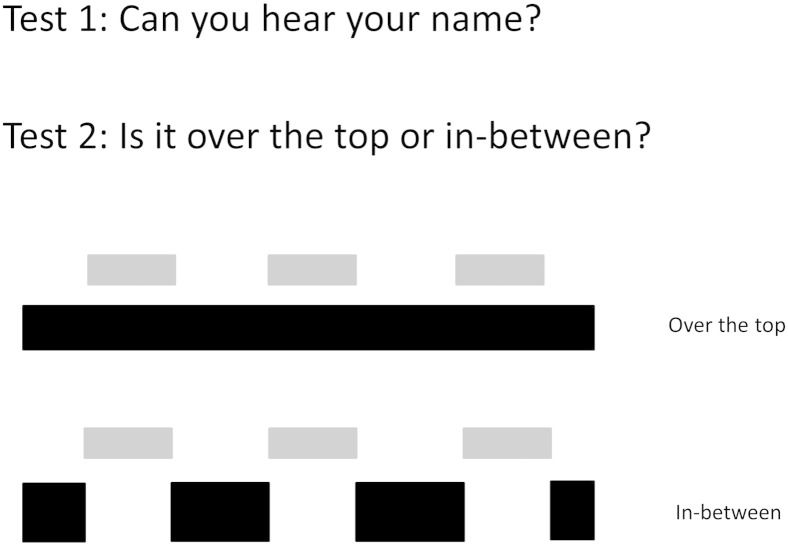
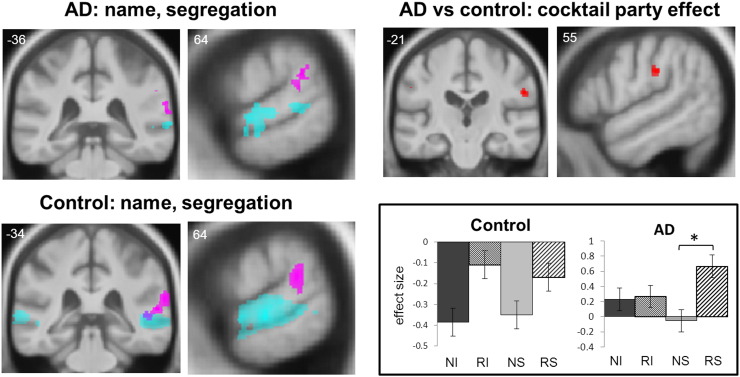
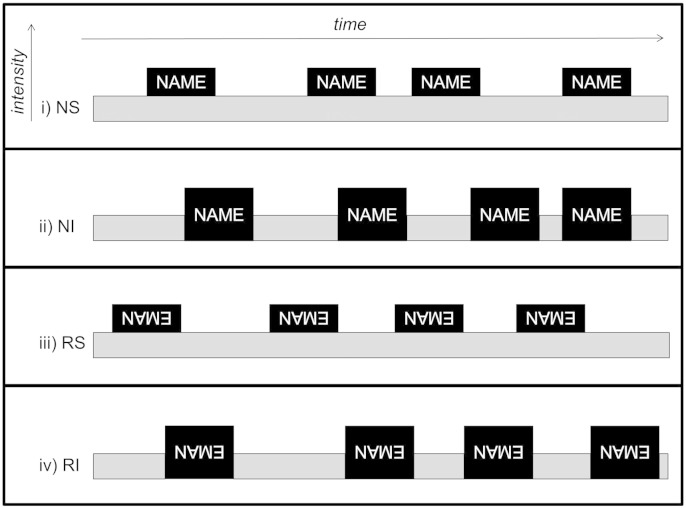
Auditory scene analysis is a demanding computational process that is performed automatically and efficiently by the healthy brain but vulnerable to the neurodegenerative pathology of Alzheimer's disease. Here we assessed the functional neuroanatomy of auditory scene analysis in Alzheimer's disease using the well-known 'cocktail party effect' as a model paradigm whereby stored templates for auditory objects (e.g., hearing one's spoken name) are used to segregate auditory 'foreground' and 'background'. Patients with typical amnestic Alzheimer's disease (n = 13) and age-matched healthy individuals (n = 17) underwent functional 3T-MRI using a sparse acquisition protocol with passive listening to auditory stimulus conditions comprising the participant's own name interleaved with or superimposed on multi-talker babble, and spectrally rotated (unrecognisable) analogues of these conditions. Name identification (conditions containing the participant's own name contrasted with spectrally rotated analogues) produced extensive bilateral activation involving superior temporal cortex in both the AD and healthy control groups, with no significant differences between groups. Auditory object segregation (conditions with interleaved name sounds contrasted with superimposed name sounds) produced activation of right posterior superior temporal cortex in both groups, again with no differences between groups. However, the cocktail party effect (interaction of own name identification with auditory object segregation processing) produced activation of right supramarginal gyrus in the AD group that was significantly enhanced compared with the healthy control group. The findings delineate an altered functional neuroanatomical profile of auditory scene analysis in Alzheimer's disease that may constitute a novel computational signature of this neurodegenerative pathology.
听觉场景分析是一个要求较高的计算过程,健康的大脑能够自动且高效地执行该过程,但易受阿尔茨海默病神经退行性病变的影响。在此,我们以著名的“鸡尾酒会效应”作为模型范式,评估阿尔茨海默病中听觉场景分析的功能神经解剖学,即利用存储的听觉对象模板(例如听到自己的名字)来分离听觉“前景”和“背景”。典型遗忘型阿尔茨海默病患者(n = 13)和年龄匹配的健康个体(n = 17)接受了3T功能磁共振成像检查,采用稀疏采集协议,被动聆听听觉刺激条件,包括参与者自己的名字穿插于或叠加在多说话者的嘈杂声中,以及这些条件的频谱旋转(无法识别)类似物。名字识别(包含参与者自己名字的条件与频谱旋转类似物对比)在阿尔茨海默病组和健康对照组中均产生了广泛的双侧激活,涉及颞上叶皮质,两组之间无显著差异。听觉对象分离(名字声音穿插条件与叠加名字声音条件对比)在两组中均激活了右侧颞上回后部,两组之间同样无差异。然而,鸡尾酒会效应(自己名字识别与听觉对象分离处理的相互作用)在阿尔茨海默病组中激活了右侧缘上回,与健康对照组相比显著增强。这些发现描绘了阿尔茨海默病中听觉场景分析功能神经解剖学特征的改变,这可能构成这种神经退行性病变的一种新的计算特征。