Brezis Noam, Bronfman Zohar Z, Usher Marius
School of Psychology, Tel-Aviv University.
1] School of Psychology, Tel-Aviv University [2] The Cohn Institute for the History and Philosophy of Science and Ideas, Tel-Aviv University.
Sci Rep. 2015 Jun 4;5:10415. doi: 10.1038/srep10415.
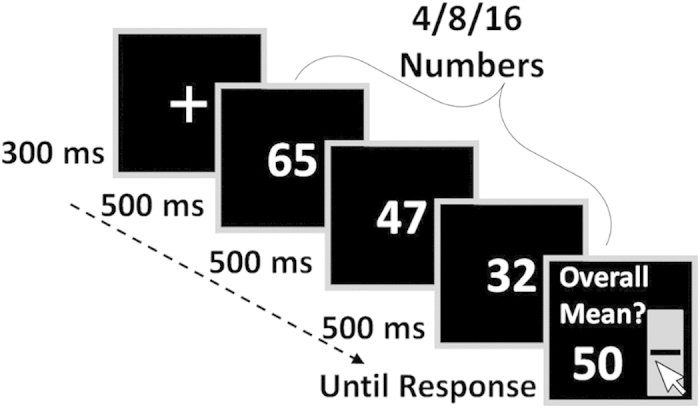
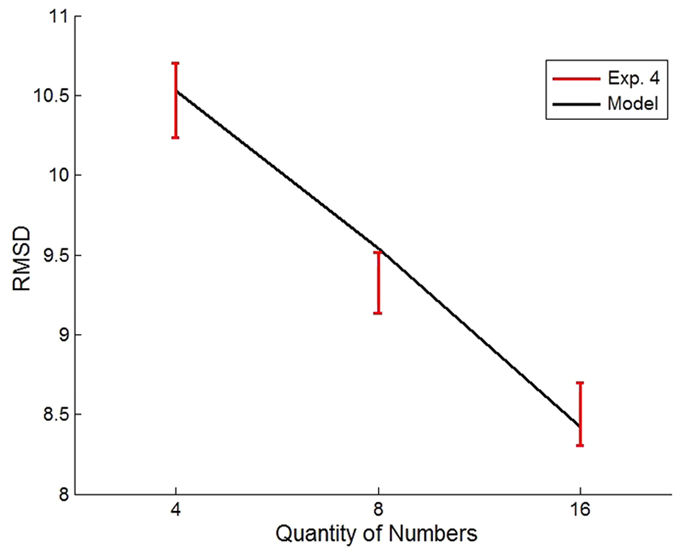
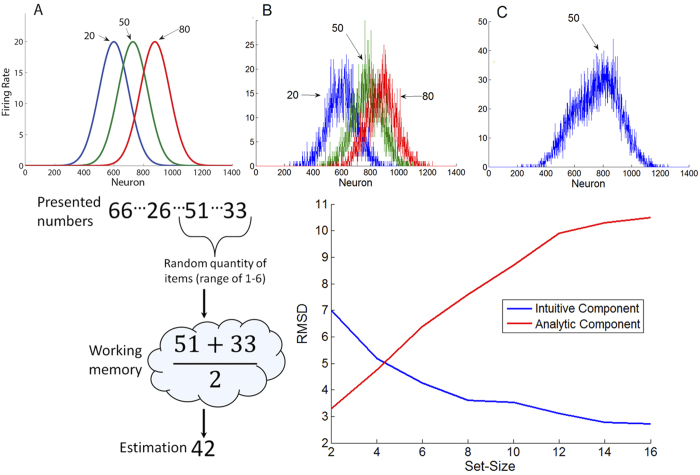
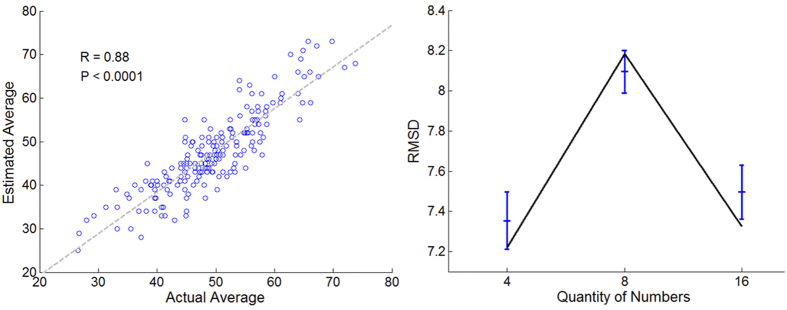
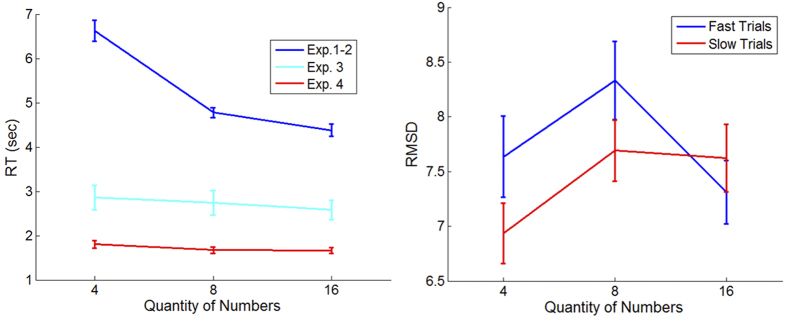
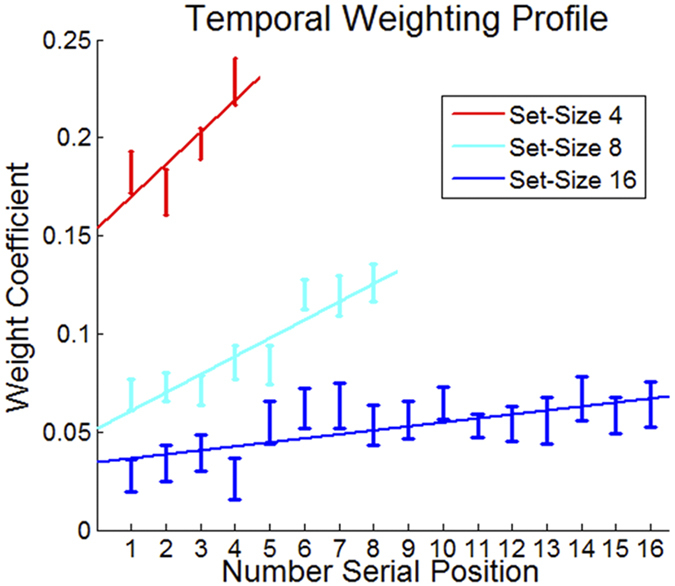
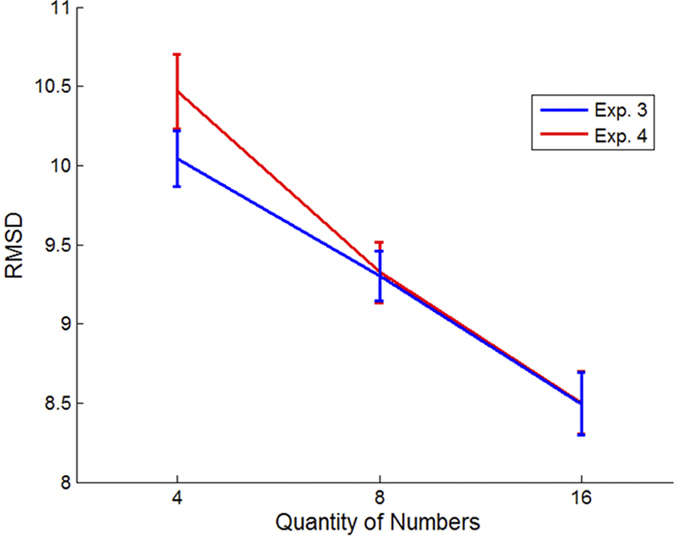
We investigated the mechanism with which humans estimate numerical averages. Participants were presented with 4, 8 or 16 (two-digit) numbers, serially and rapidly (2 numerals/second) and were instructed to convey the sequence average. As predicted by a dual, but not a single-component account, we found a non-monotonic influence of set-size on accuracy. Moreover, we observed a marked decrease in RT as set-size increases and RT-accuracy tradeoff in the 4-, but not in the 16-number condition. These results indicate that in accordance with the normative directive, participants spontaneously employ analytic/sequential thinking in the 4-number condition and intuitive/holistic thinking in the 16-number condition. When the presentation rate is extreme (10 items/sec) we find that, while performance still remains high, the estimations are now based on intuitive processing. The results are accounted for by a computational model postulating population-coding underlying intuitive-averaging and working-memory-mediated symbolic procedures underlying analytical-averaging, with flexible allocation between the two.
我们研究了人类估计数字平均值的机制。向参与者依次快速呈现4个、8个或16个(两位数)数字(每秒2个数字),并要求他们传达序列平均值。正如双成分而非单成分理论所预测的那样,我们发现集合大小对准确性有非单调影响。此外,我们观察到随着集合大小增加,反应时显著减少,并且在4个数字条件下存在反应时-准确性权衡,但在16个数字条件下不存在。这些结果表明,根据规范指令,参与者在4个数字条件下自发地采用分析/序列思维,在16个数字条件下采用直觉/整体思维。当呈现速率极高(每秒10个项目)时,我们发现,虽然表现仍然很高,但估计现在基于直觉处理。这些结果由一个计算模型解释,该模型假设在直觉平均背后存在群体编码,在分析平均背后存在工作记忆介导的符号程序,并且两者之间存在灵活分配。