Wang Runchun M, Hamilton Tara J, Tapson Jonathan C, van Schaik André
The MARCS Institute, University of Western Sydney Sydney, NSW, Australia.
Front Neurosci. 2015 May 20;9:180. doi: 10.3389/fnins.2015.00180. eCollection 2015.
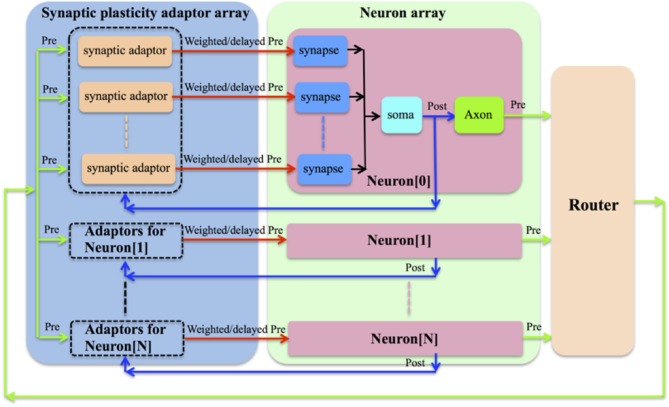
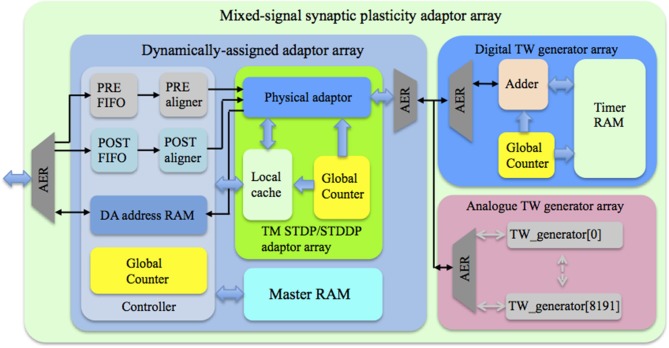
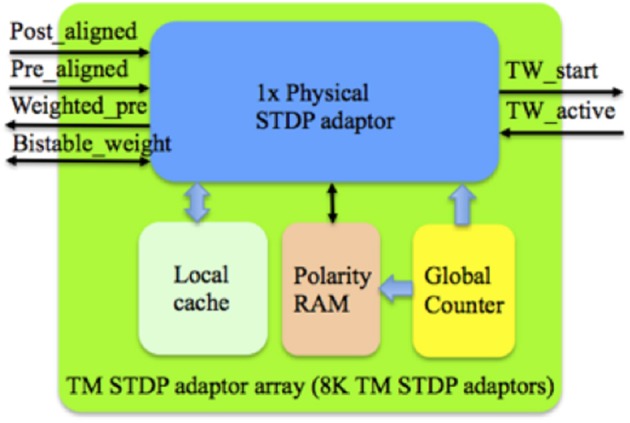
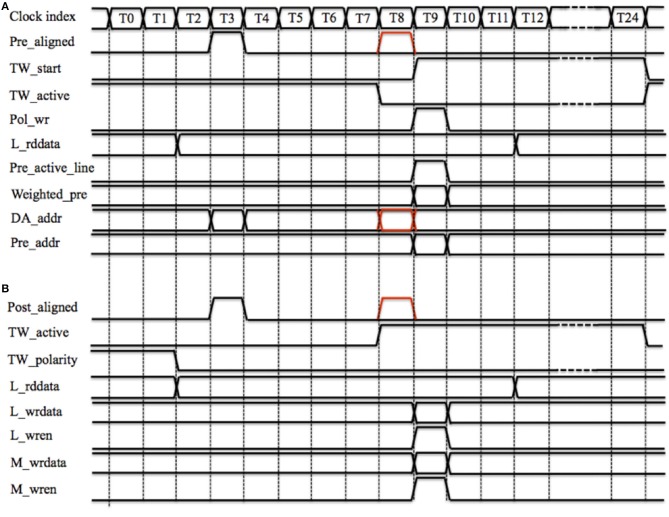
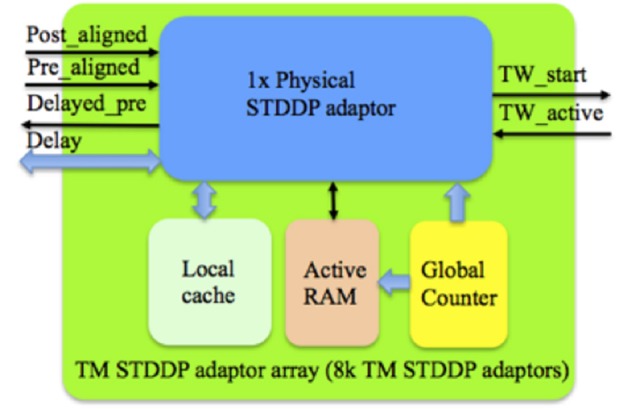
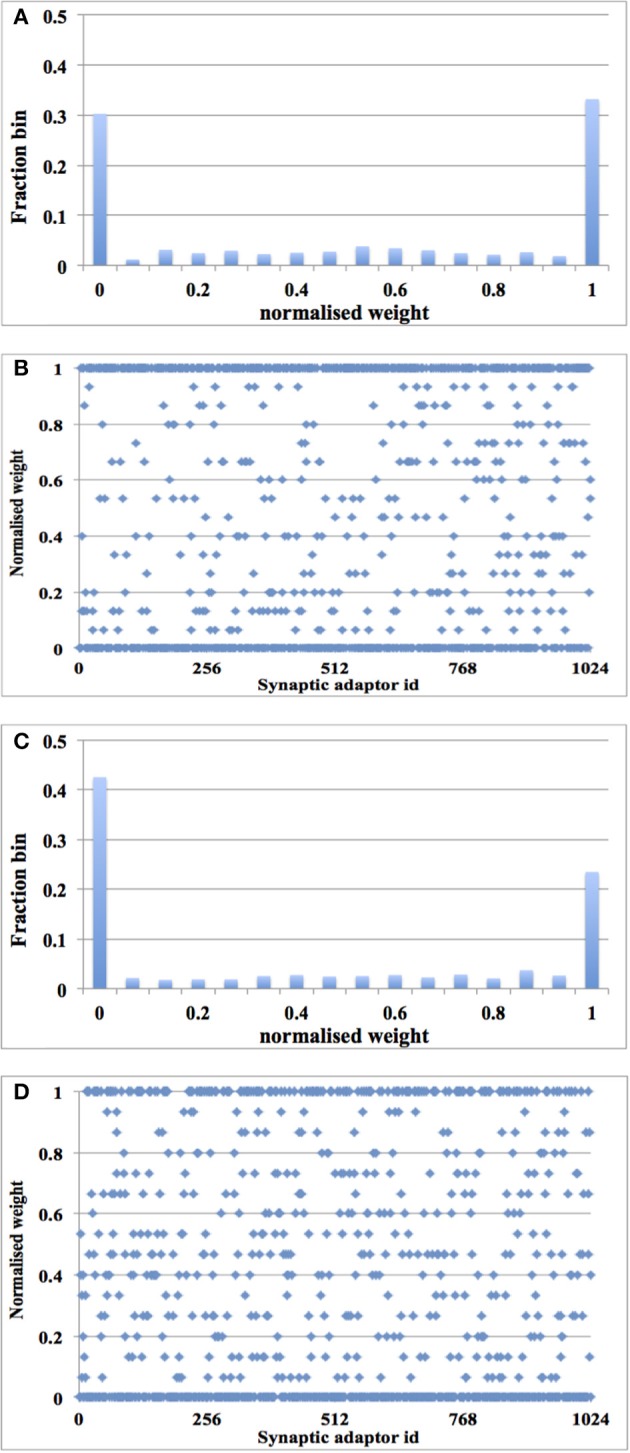
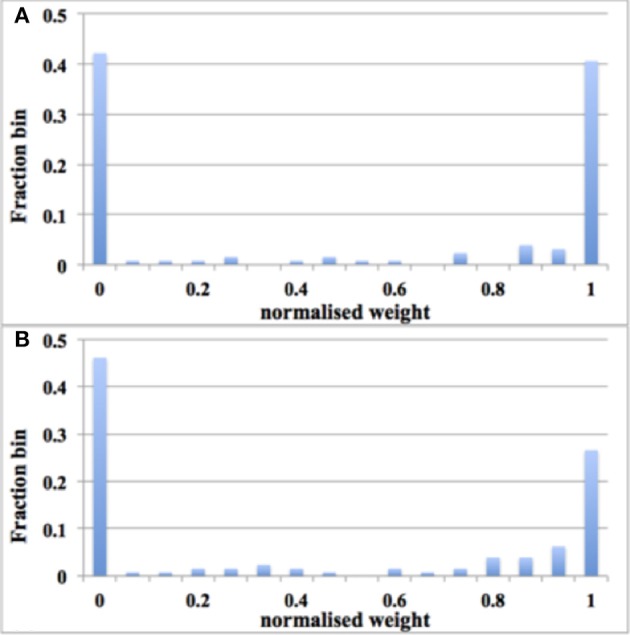
We present a neuromorphic implementation of multiple synaptic plasticity learning rules, which include both Spike Timing Dependent Plasticity (STDP) and Spike Timing Dependent Delay Plasticity (STDDP). We present a fully digital implementation as well as a mixed-signal implementation, both of which use a novel dynamic-assignment time-multiplexing approach and support up to 2(26) (64M) synaptic plasticity elements. Rather than implementing dedicated synapses for particular types of synaptic plasticity, we implemented a more generic synaptic plasticity adaptor array that is separate from the neurons in the neural network. Each adaptor performs synaptic plasticity according to the arrival times of the pre- and post-synaptic spikes assigned to it, and sends out a weighted or delayed pre-synaptic spike to the post-synaptic neuron in the neural network. This strategy provides great flexibility for building complex large-scale neural networks, as a neural network can be configured for multiple synaptic plasticity rules without changing its structure. We validate the proposed neuromorphic implementations with measurement results and illustrate that the circuits are capable of performing both STDP and STDDP. We argue that it is practical to scale the work presented here up to 2(36) (64G) synaptic adaptors on a current high-end FPGA platform.
我们展示了一种多种突触可塑性学习规则的神经形态实现,其中包括尖峰时间依赖可塑性(STDP)和尖峰时间依赖延迟可塑性(STDDP)。我们展示了一种全数字实现以及一种混合信号实现,这两种实现都使用了一种新颖的动态分配时分复用方法,并支持多达2(26)(64M)个突触可塑性元件。我们不是为特定类型的突触可塑性实现专用突触,而是实现了一种与神经网络中的神经元分离的更通用的突触可塑性适配器阵列。每个适配器根据分配给它的突触前和突触后尖峰的到达时间执行突触可塑性,并向神经网络中的突触后神经元发送加权或延迟的突触前尖峰。这种策略为构建复杂的大规模神经网络提供了极大的灵活性,因为神经网络可以在不改变其结构的情况下针对多种突触可塑性规则进行配置。我们用测量结果验证了所提出的神经形态实现,并表明这些电路能够执行STDP和STDDP。我们认为,在当前的高端FPGA平台上,将此处介绍的工作扩展到2(36)(64G)个突触适配器是可行的。