Tsui Tsz Kin Martin, Li Hong
Institute of Molecular Biophysics and Department of Chemistry and Biochemistry, Florida State University, Tallahassee, FL 32306; email:
Annu Rev Biophys. 2015;44:229-55. doi: 10.1146/annurev-biophys-060414-033939. Epub 2015 May 27.
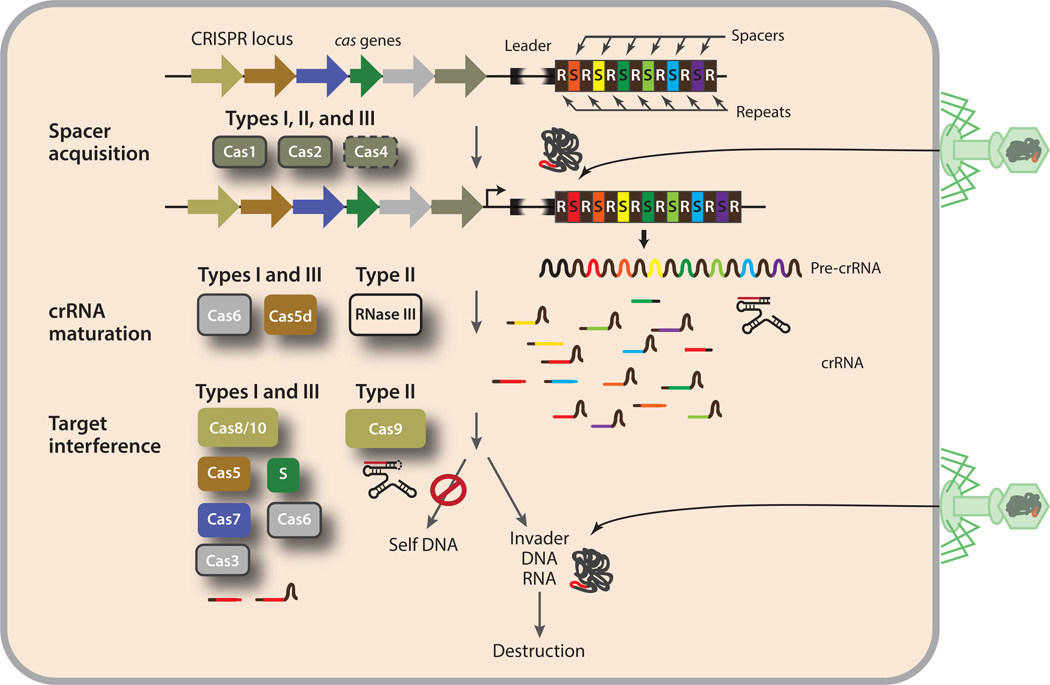
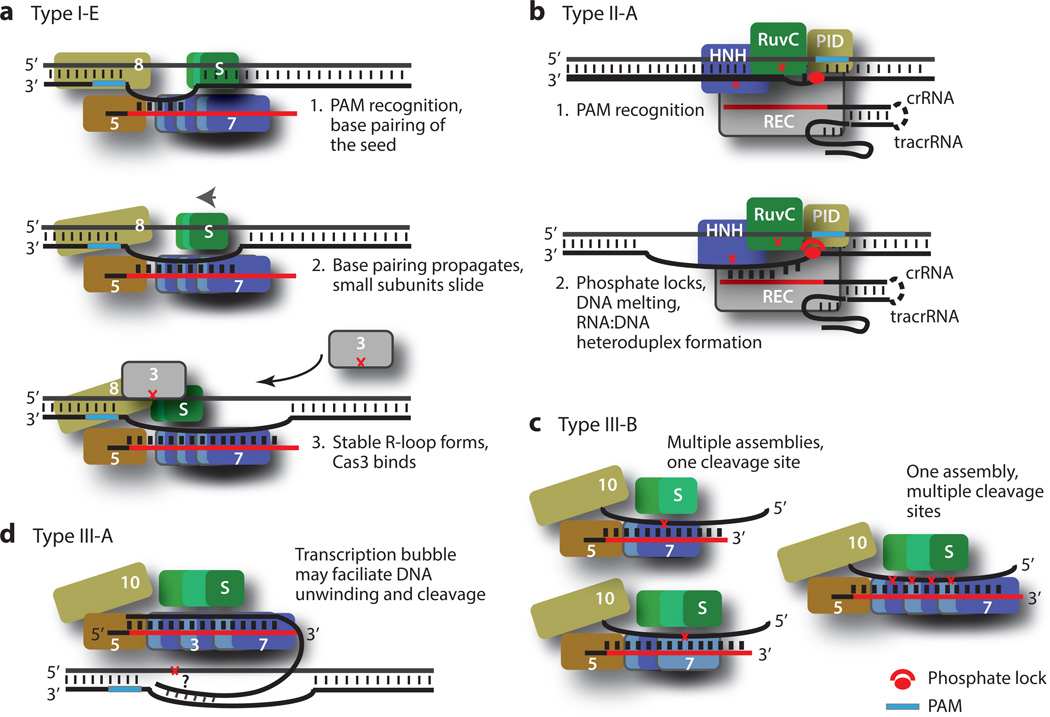
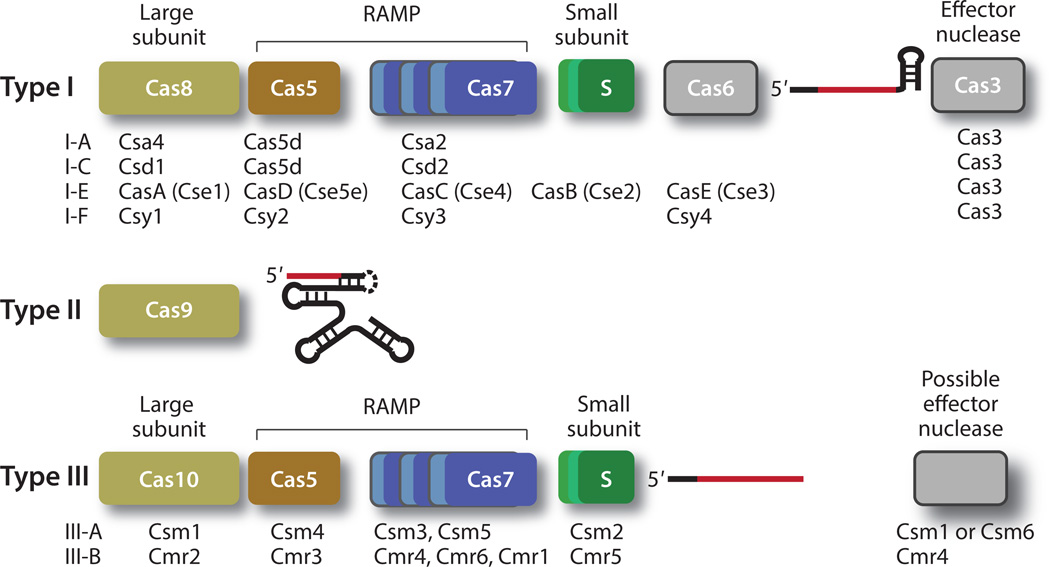
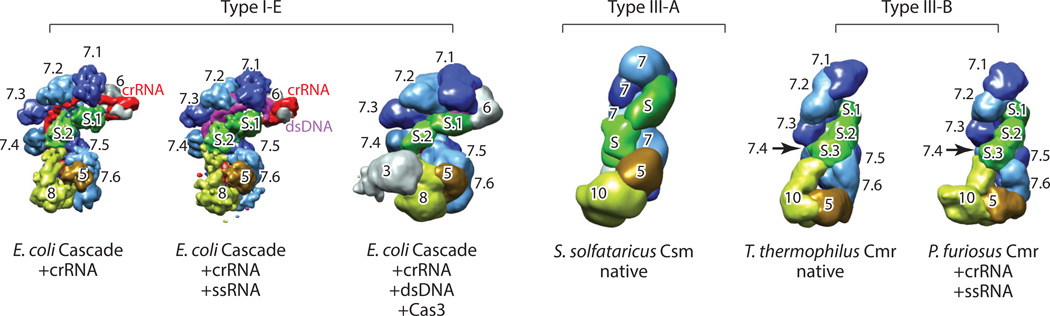
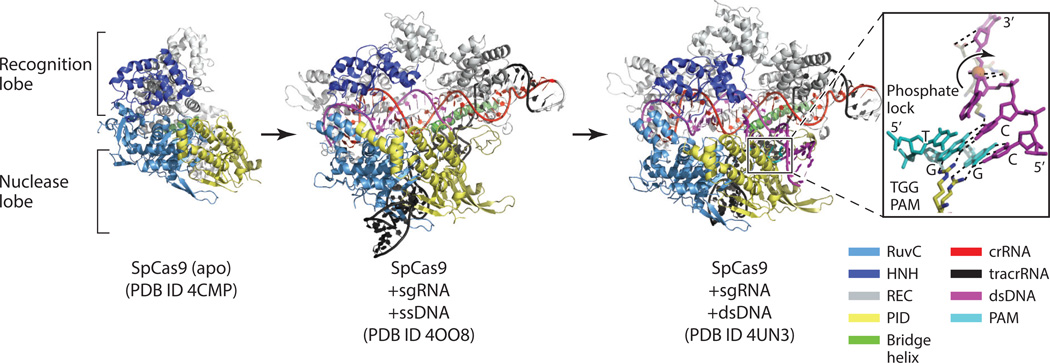
The pathway of CRISPR-Cas immunity redefines the roles of RNA in the flow of genetic information and ignites excitement for next-generation gene therapy tools. CRISPR-Cas machineries offer a fascinating set of new enzyme assemblies from which one can learn principles of molecular interactions and chemical activities. The interference step of the CRISPR-Cas immunity pathway congregates proteins, RNA, and DNA into a single molecular entity that selectively destroys invading nucleic acids. Although much remains to be discovered, a picture of how the interference process takes place is emerging. This review focuses on the current structural data for the three known types of RNA-guided nucleic acid interference mechanisms. In it, we describe key features of individual complexes and we emphasize comparisons across types and along functional stages. We aim to provide readers with a set of core principles learned from the three types of interference complexes and a deep appreciation of the diversity among them.
CRISPR-Cas免疫途径重新定义了RNA在遗传信息流动中的作用,并激发了人们对下一代基因治疗工具的兴趣。CRISPR-Cas机制提供了一组引人入胜的新型酶组装体,从中可以了解分子相互作用和化学活性的原理。CRISPR-Cas免疫途径的干扰步骤将蛋白质、RNA和DNA聚集到一个单一的分子实体中,该实体选择性地破坏入侵的核酸。尽管仍有许多有待发现,但干扰过程如何发生的图景正在浮现。本综述重点关注三种已知类型的RNA引导核酸干扰机制的当前结构数据。在此,我们描述了各个复合物的关键特征,并强调了不同类型之间以及沿功能阶段的比较。我们旨在为读者提供从三种干扰复合物中学到的一组核心原则,并深入了解它们之间的多样性。