Leone Lucia, Podda Maria Vittoria, Grassi Claudio
Institute of Human Physiology, Medical School, Università Cattolica del Sacro Cuore Rome, Italy.
Front Cell Neurosci. 2015 Jun 15;9:228. doi: 10.3389/fncel.2015.00228. eCollection 2015.
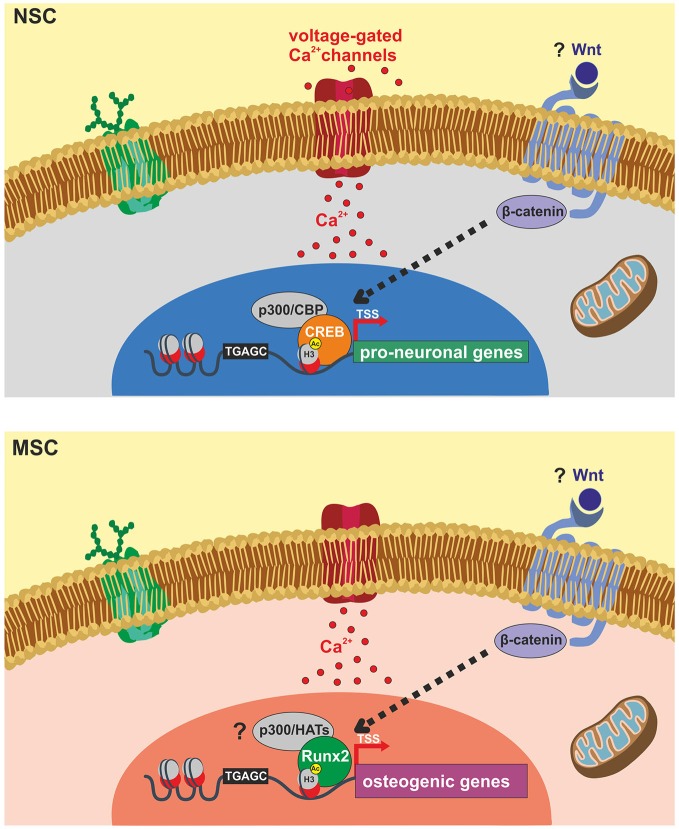
In the recent years adult neural and mesenchymal stem cells have been intensively investigated as effective resources for repair therapies. In vivo and in vitro studies have provided insights on the molecular mechanisms underlying the neurogenic and osteogenic processes in adulthood. This knowledge appears fundamental for the development of targeted strategies to manipulate stem cells. Here we review recent literature dealing with the effects of electromagnetic fields on stem cell biology that lends support to their use as a promising tool to positively influence the different steps of neurogenic and osteogenic processes. We will focus on recent studies revealing that extremely-low frequency electromagnetic fields enhance adult hippocampal neurogenesis by inducing epigenetic modifications on the regulatory sequences of genes responsible for neural stem cell proliferation and neuronal differentiation. In light of the emerging critical role played by chromatin modifications in maintaining the stemness as well as in regulating stem cell differentiation, we will also attempt to exploit epigenetic changes that can represent common targets for electromagnetic field effects on neurogenic and osteogenic processes.
近年来,成人神经干细胞和间充质干细胞作为修复治疗的有效资源受到了深入研究。体内和体外研究为成年期神经发生和成骨过程的分子机制提供了见解。这些知识对于开发操纵干细胞的靶向策略似乎至关重要。在此,我们综述了近期有关电磁场对干细胞生物学影响的文献,这些文献支持将其作为一种有前景的工具,对神经发生和成骨过程的不同阶段产生积极影响。我们将重点关注近期的研究,这些研究表明极低频电磁场通过对负责神经干细胞增殖和神经元分化的基因调控序列进行表观遗传修饰,从而增强成年海马体神经发生。鉴于染色质修饰在维持干细胞特性以及调节干细胞分化方面发挥的新关键作用,我们还将尝试探索表观遗传变化,这些变化可能是电磁场对神经发生和成骨过程产生影响的共同靶点。