Torres David J, Ricoy Ulises M, Roybal Shanae
Department of Mathematics and Physical Science, Northern New Mexico College, Espanola, NM, USA.
Department of Biology, Northern New Mexico College, Espanola, NM, USA.
PLoS One. 2015 Jul 6;10(7):e0130966. doi: 10.1371/journal.pone.0130966. eCollection 2015.
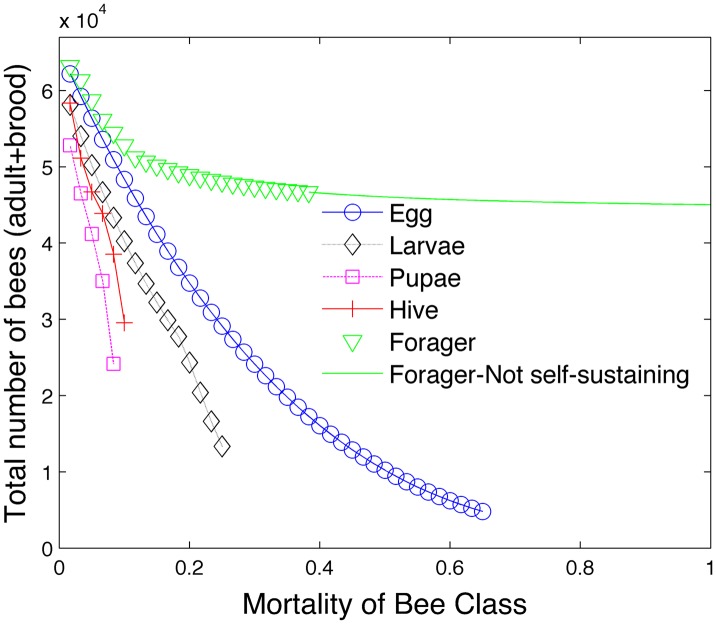
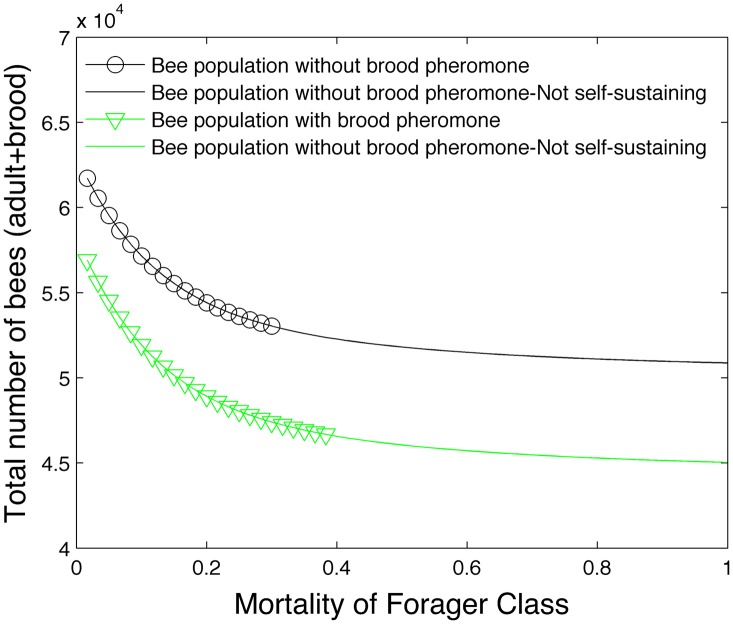
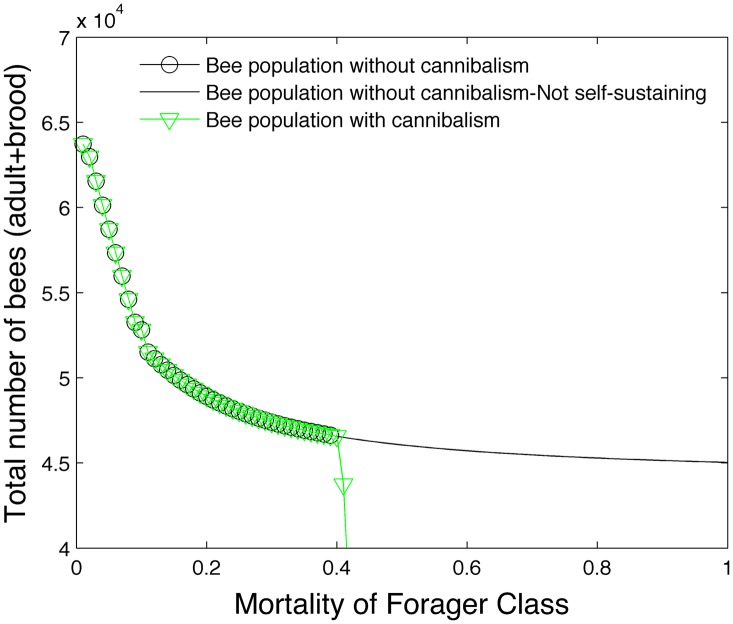
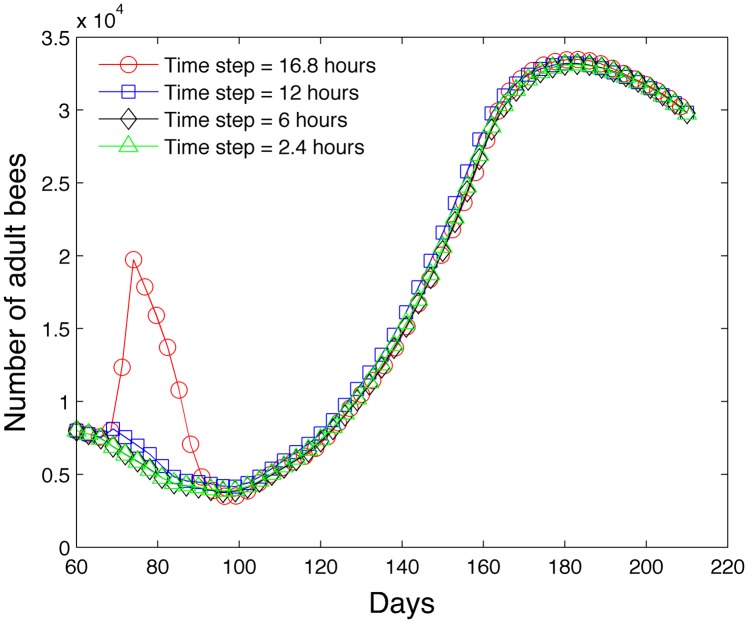
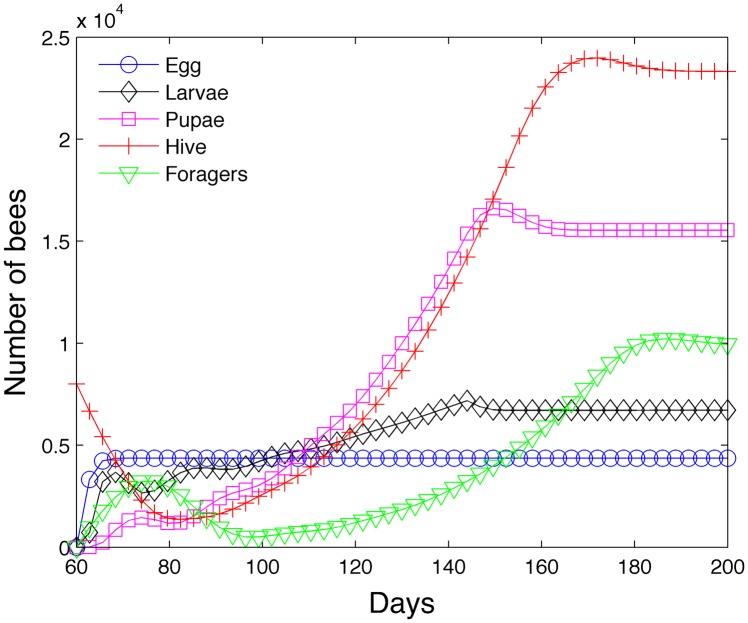
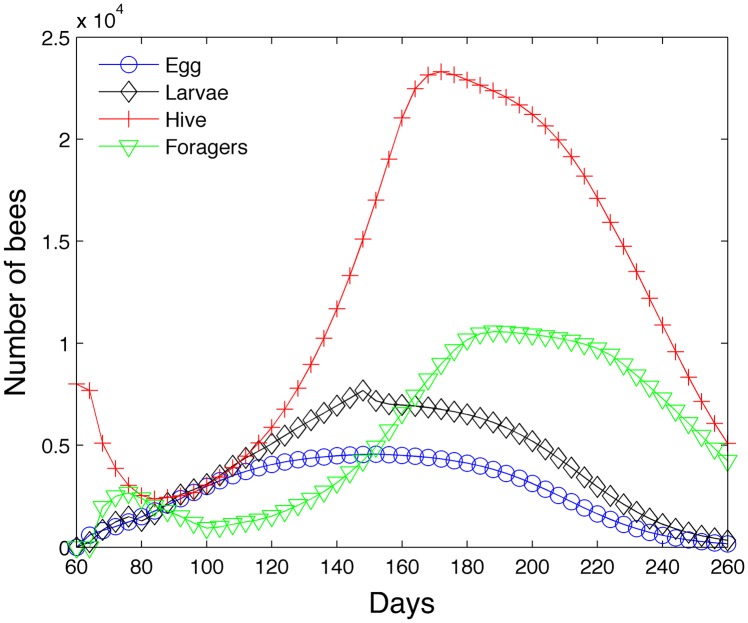
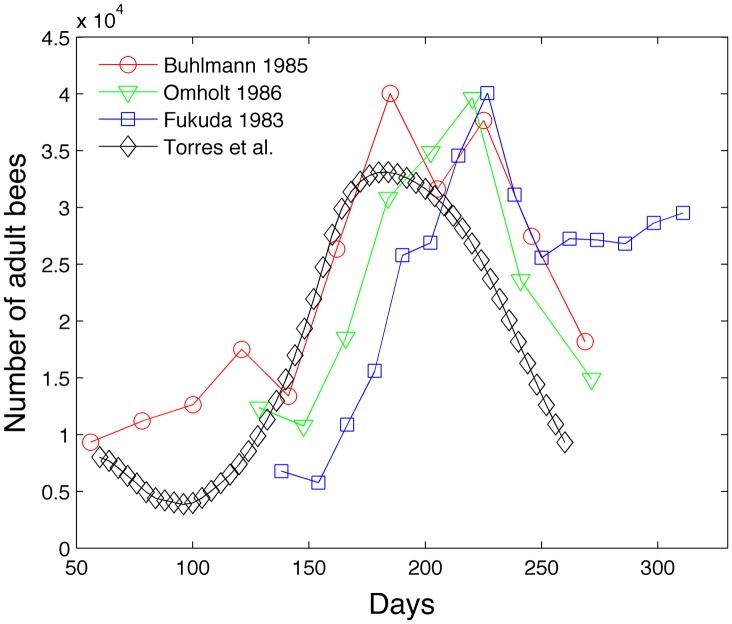
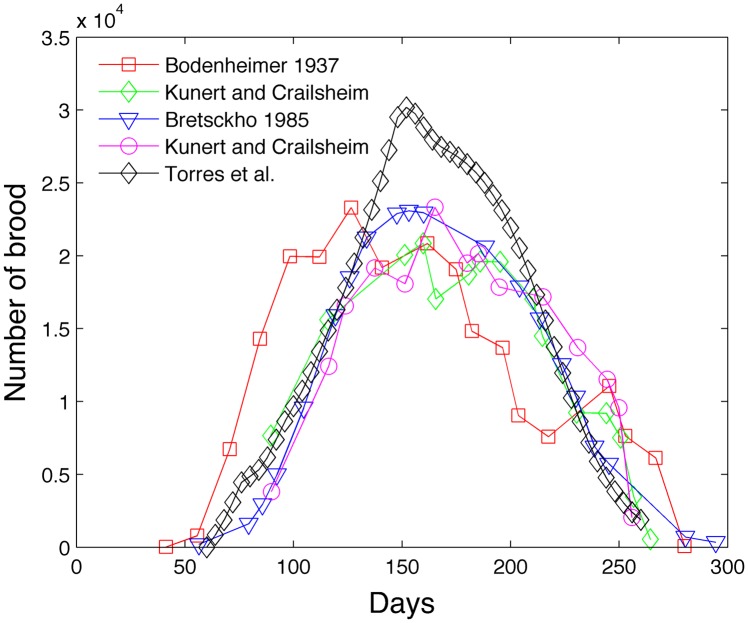
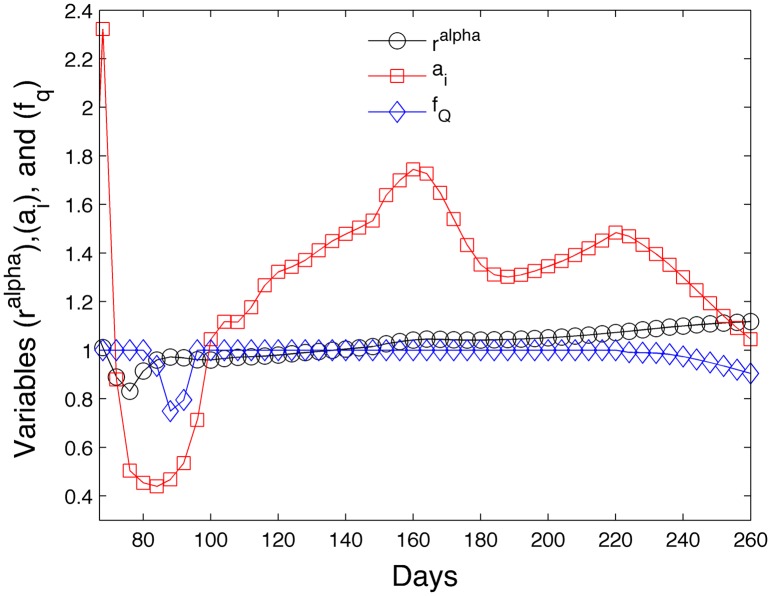
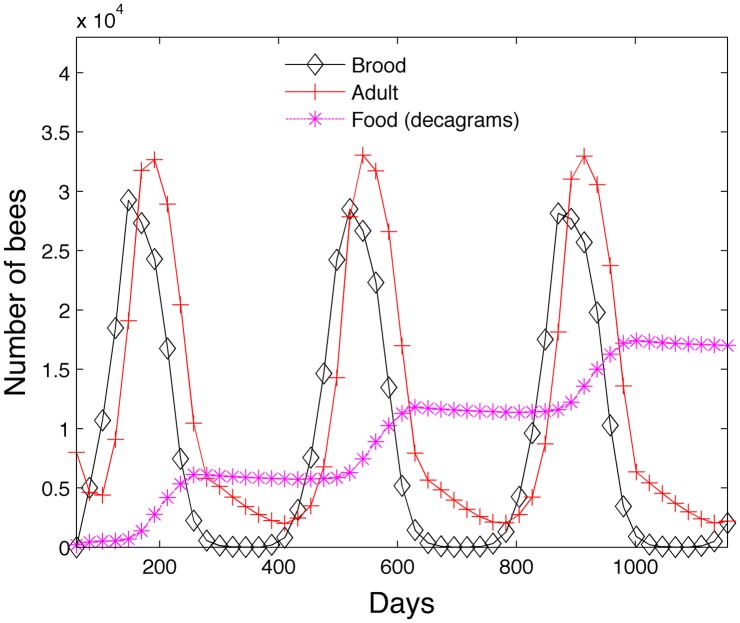
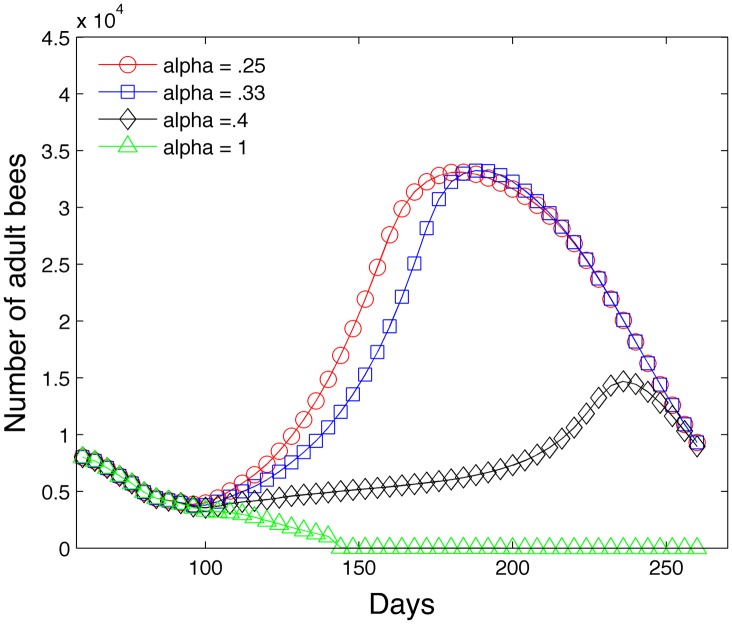
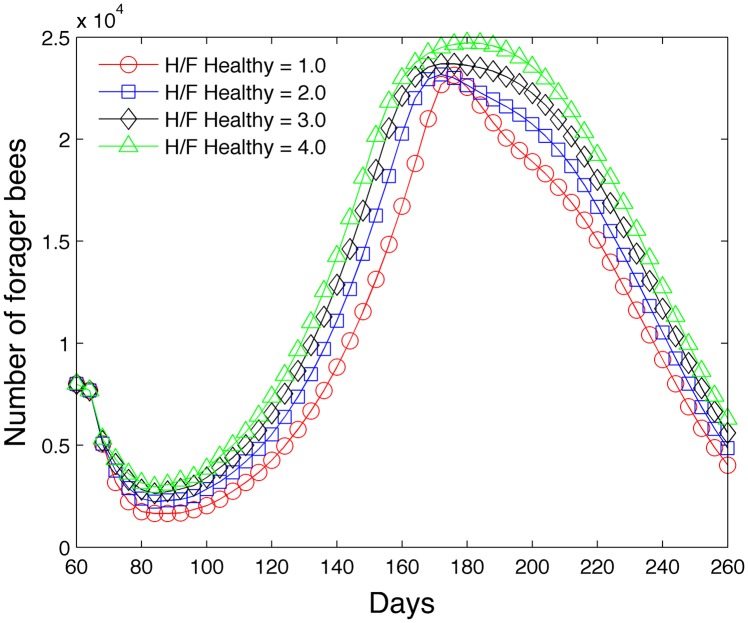
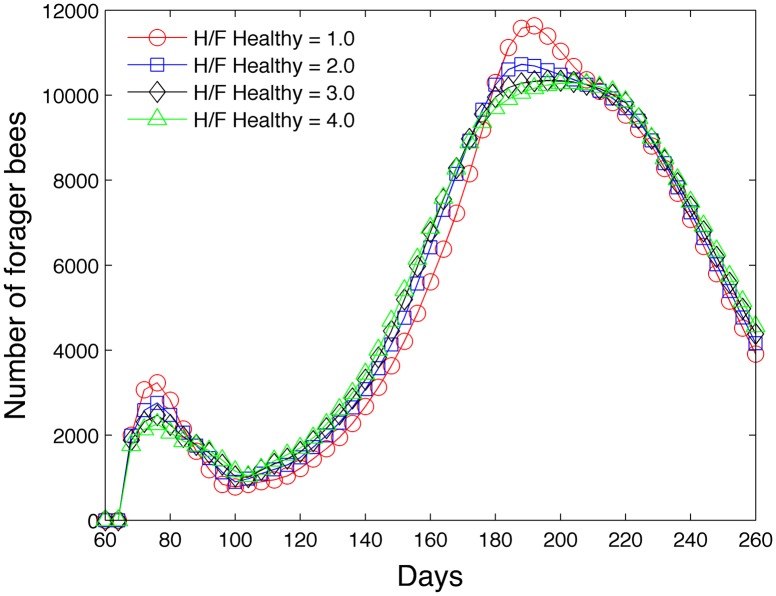
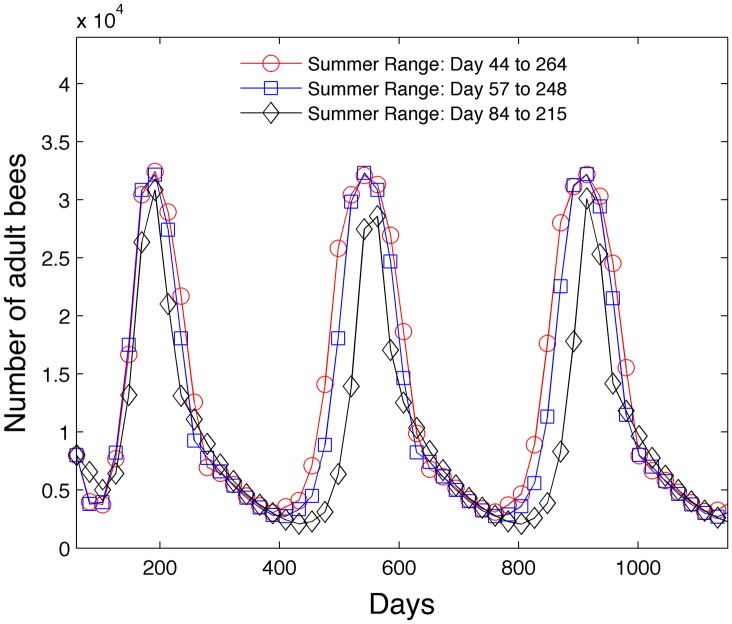
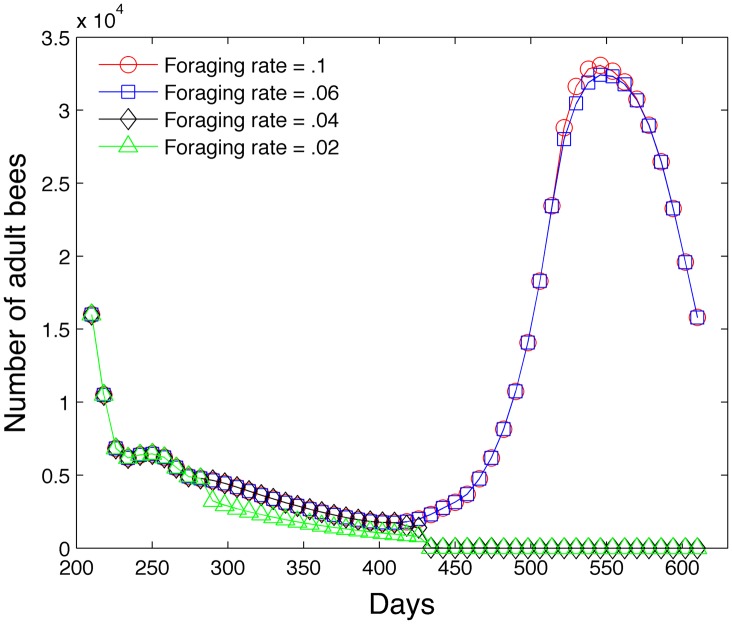
Eusocial honey bee populations (Apis mellifera) employ an age stratification organization of egg, larvae, pupae, hive bees and foraging bees. Understanding the recent decline in honey bee colonies hinges on understanding the factors that impact each of these different age castes. We first perform an analysis of steady state bee populations given mortality rates within each bee caste and find that the honey bee colony is highly susceptible to hive and pupae mortality rates. Subsequently, we study transient bee population dynamics by building upon the modeling foundation established by Schmickl and Crailsheim and Khoury et al. Our transient model based on differential equations accounts for the effects of pheromones in slowing the maturation of hive bees to foraging bees, the increased mortality of larvae in the absence of sufficient hive bees, and the effects of food scarcity. We also conduct sensitivity studies and show the effects of parameter variations on the colony population.
群居性蜜蜂种群(西方蜜蜂)采用了一种年龄分层组织,包括卵、幼虫、蛹、蜂巢蜜蜂和觅食蜜蜂。了解蜜蜂蜂群近期的减少情况取决于理解影响这些不同年龄等级的因素。我们首先根据每个蜜蜂等级的死亡率对稳态蜜蜂种群进行分析,发现蜜蜂蜂群对蜂巢和蛹的死亡率高度敏感。随后,我们在施米克尔和克莱尔斯海姆以及库里等人建立的建模基础上研究瞬态蜜蜂种群动态。我们基于微分方程的瞬态模型考虑了信息素在减缓蜂巢蜜蜂成熟为觅食蜜蜂方面的作用、在没有足够蜂巢蜜蜂时幼虫死亡率的增加以及食物短缺的影响。我们还进行了敏感性研究,并展示了参数变化对蜂群数量的影响。