• 文献检索
  • 文档翻译
  • 深度研究
  • 学术资讯
  • Suppr Zotero 插件Zotero 插件
  • 邀请有礼
  • 套餐&价格
  • 历史记录
应用&插件
Suppr Zotero 插件Zotero 插件浏览器插件Mac 客户端Windows 客户端微信小程序
定价
高级版会员购买积分包购买API积分包
服务
文献检索文档翻译深度研究API 文档MCP 服务
关于我们
关于 Suppr公司介绍联系我们用户协议隐私条款
关注我们

Suppr 超能文献

核心技术专利:CN118964589B侵权必究
粤ICP备2023148730 号-1Suppr @ 2026

文献检索

告别复杂PubMed语法,用中文像聊天一样搜索,搜遍4000万医学文献。AI智能推荐,让科研检索更轻松。

立即免费搜索

文件翻译

保留排版,准确专业,支持PDF/Word/PPT等文件格式,支持 12+语言互译。

免费翻译文档

深度研究

AI帮你快速写综述,25分钟生成高质量综述,智能提取关键信息,辅助科研写作。

立即免费体验

一种基于系统的蜜蜂多种应激源环境风险评估方法。

A systems-based approach to the environmental risk assessment of multiple stressors in honey bees.

作者信息

More Simon, Bampidis Vasileios, Benford Diane, Bragard Claude, Halldorsson Thorhallur, Hernández-Jerez Antonio, Bennekou Susanne Hougaard, Koutsoumanis Kostas, Machera Kyriaki, Naegeli Hanspeter, Nielsen Søren Saxmose, Schlatter Josef, Schrenk Dieter, Silano Vittorio, Turck Dominique, Younes Maged, Arnold Gerard, Dorne Jean-Lou, Maggiore Angelo, Pagani Stephen, Szentes Csaba, Terry Simon, Tosi Simone, Vrbos Domagoj, Zamariola Giorgia, Rortais Agnes

出版信息

EFSA J. 2021 May 20;19(5):e06607. doi: 10.2903/j.efsa.2021.6607. eCollection 2021 May.

DOI:10.2903/j.efsa.2021.6607
PMID:34025804
原文链接:https://pmc.ncbi.nlm.nih.gov/articles/PMC8135085/
Abstract

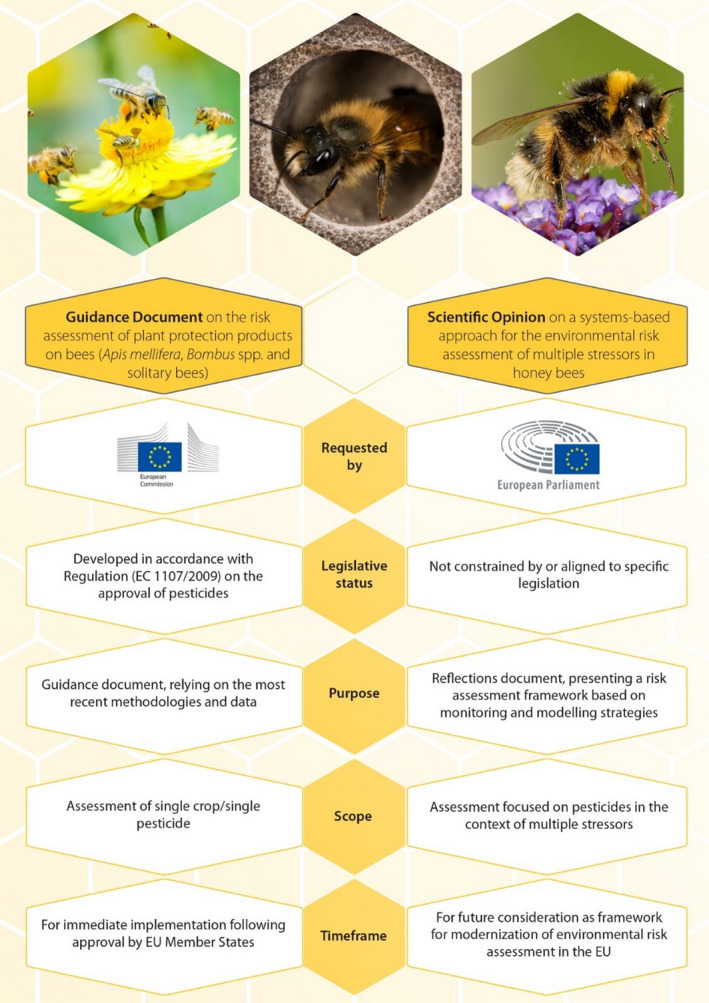
The European Parliament requested EFSA to develop a holistic risk assessment of multiple stressors in honey bees. To this end, a systems-based approach that is composed of two core components: a monitoring system and a modelling system are put forward with honey bees taken as a showcase. Key developments in the current scientific opinion (including systematic data collection from sentinel beehives and an agent-based simulation) have the potential to substantially contribute to future development of environmental risk assessments of multiple stressors at larger spatial and temporal scales. For the monitoring, sentinel hives would be placed across representative climatic zones and landscapes in the EU and connected to a platform for data storage and analysis. Data on bee health status, chemical residues and the immediate or broader landscape around the hives would be collected in a harmonised and standardised manner, and would be used to inform stakeholders, and the modelling system, ApisRAM, which simulates as accurately as possible a honey bee colony. ApisRAM would be calibrated and continuously updated with incoming monitoring data and emerging scientific knowledge from research. It will be a supportive tool for beekeeping, farming, research, risk assessment and risk management, and it will benefit the wider society. A societal outlook on the proposed approach is included and this was conducted with targeted social science research with 64 beekeepers from eight EU Member States and with members of the EU Bee Partnership. Gaps and opportunities are identified to further implement the approach. Conclusions and recommendations are made on a way forward, both for the application of the approach and its use in a broader context.

摘要

欧洲议会要求欧洲食品安全局(EFSA)对蜜蜂面临的多种压力源进行全面风险评估。为此,提出了一种基于系统的方法,该方法由两个核心部分组成:一个监测系统和一个建模系统,并以蜜蜂为范例。当前科学意见中的关键进展(包括从哨兵蜂箱进行系统的数据收集和基于主体的模拟)有可能在更大的空间和时间尺度上为未来多种压力源的环境风险评估的发展做出重大贡献。对于监测而言,将在欧盟具有代表性的气候区和景观中放置哨兵蜂箱,并将其连接到一个数据存储和分析平台。将以统一和标准化的方式收集有关蜜蜂健康状况、化学残留物以及蜂箱周围直接或更广泛景观的数据,并将这些数据提供给利益相关者以及建模系统ApisRAM,该系统尽可能准确地模拟蜜蜂群落。ApisRAM将根据传入的监测数据和新出现的研究科学知识进行校准并不断更新。它将成为养蜂、农业、研究、风险评估和风险管理的辅助工具,并将造福更广泛的社会。文中还纳入了对所提议方法的社会视角,这是通过对来自八个欧盟成员国的64名养蜂人和欧盟蜜蜂伙伴关系成员进行有针对性的社会科学研究得出的。确定了进一步实施该方法的差距和机遇。针对该方法的应用及其在更广泛背景下的使用,提出了前进方向的结论和建议。
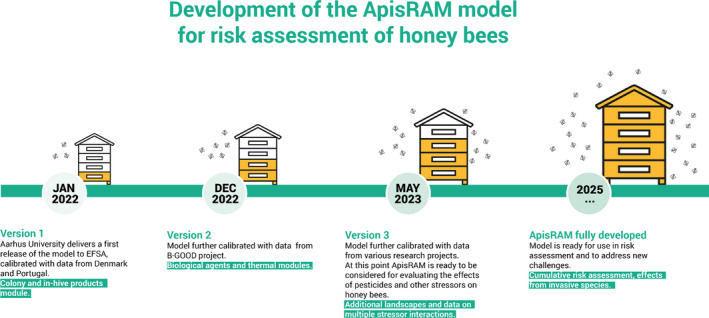
https://cdn.ncbi.nlm.nih.gov/pmc/blobs/d59b/8135085/296888ebad03/EFS2-19-e06607-g001.jpg
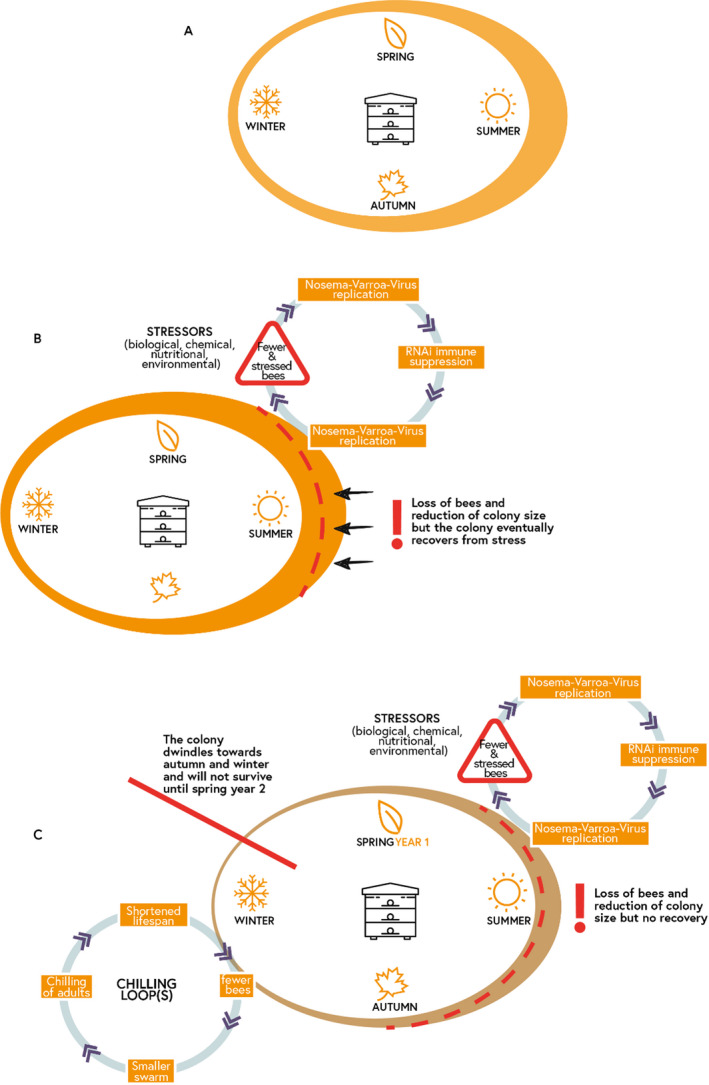
https://cdn.ncbi.nlm.nih.gov/pmc/blobs/d59b/8135085/1c3964a8f895/EFS2-19-e06607-g002.jpg
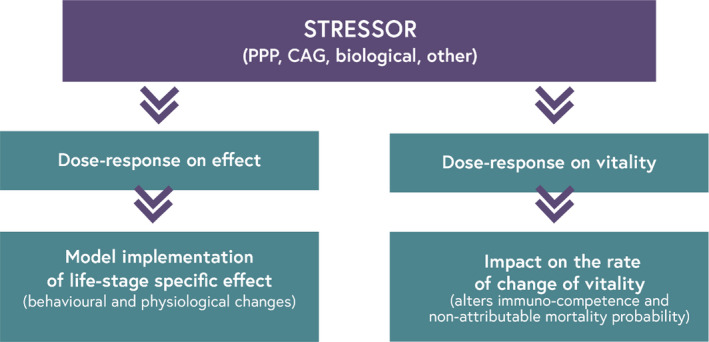
https://cdn.ncbi.nlm.nih.gov/pmc/blobs/d59b/8135085/047421ee6a50/EFS2-19-e06607-g004.jpg
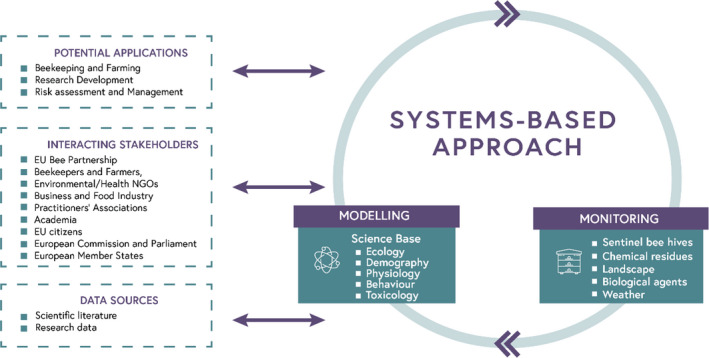
https://cdn.ncbi.nlm.nih.gov/pmc/blobs/d59b/8135085/41b3b9f499c9/EFS2-19-e06607-g003.jpg
https://cdn.ncbi.nlm.nih.gov/pmc/blobs/d59b/8135085/97edc64b7e47/EFS2-19-e06607-g005.jpg
https://cdn.ncbi.nlm.nih.gov/pmc/blobs/d59b/8135085/296888ebad03/EFS2-19-e06607-g001.jpg
https://cdn.ncbi.nlm.nih.gov/pmc/blobs/d59b/8135085/1c3964a8f895/EFS2-19-e06607-g002.jpg
https://cdn.ncbi.nlm.nih.gov/pmc/blobs/d59b/8135085/047421ee6a50/EFS2-19-e06607-g004.jpg
https://cdn.ncbi.nlm.nih.gov/pmc/blobs/d59b/8135085/41b3b9f499c9/EFS2-19-e06607-g003.jpg
https://cdn.ncbi.nlm.nih.gov/pmc/blobs/d59b/8135085/97edc64b7e47/EFS2-19-e06607-g005.jpg
https://cdn.ncbi.nlm.nih.gov/pmc/blobs/d59b/8135085/296888ebad03/EFS2-19-e06607-g001.jpg

相似文献

1
A systems-based approach to the environmental risk assessment of multiple stressors in honey bees.一种基于系统的蜜蜂多种应激源环境风险评估方法。
EFSA J. 2021 May 20;19(5):e06607. doi: 10.2903/j.efsa.2021.6607. eCollection 2021 May.
2
Risk assessment of pesticides and other stressors in bees: Principles, data gaps and perspectives from the European Food Safety Authority.风险评估农药和其他压力源对蜜蜂的影响:欧洲食品安全局的原则、数据差距和观点。
Sci Total Environ. 2017 Jun 1;587-588:524-537. doi: 10.1016/j.scitotenv.2016.09.127. Epub 2017 Mar 6.
3
Comprehensive Survey of Area-Wide Agricultural Pesticide Use in Southern United States Row Crops and Potential Impact on Honey Bee Colonies.美国南部大田作物区域农业杀虫剂使用情况综合调查及其对蜂群的潜在影响
Insects. 2019 Sep 2;10(9):280. doi: 10.3390/insects10090280.
4
Ecology and Management of African Honey Bees ( L.).非洲蜜蜂(L.)的生态学与管理
Annu Rev Entomol. 2024 Jan 25;69:439-453. doi: 10.1146/annurev-ento-020823-095359.
5
Honey bee foraging and pesticide exposure in a desert urban agroecosystem.沙漠城市农业生态系统中蜜蜂觅食与农药暴露情况
Ecotoxicol Environ Saf. 2023 Jan 1;249:114472. doi: 10.1016/j.ecoenv.2022.114472. Epub 2022 Dec 26.
6
Mapping floral resources for honey bees in New Zealand at the catchment scale.在集水区尺度上为新西兰的蜜蜂绘制花卉资源图。
Ecol Appl. 2018 Jul;28(5):1182-1196. doi: 10.1002/eap.1717. Epub 2018 May 7.
7
Impact of naled on honey bee Apis mellifera L. survival and productivity: aerial ULV application using a flat-fan nozzle system.敌百虫对意大利蜜蜂生存和生产力的影响:使用扁平扇形喷嘴系统进行超低容量空中喷洒
Arch Environ Contam Toxicol. 2003 Aug;45(2):216-20. doi: 10.1007/s00244-002-0185-8.
8
Advances and knowledge gaps on climate change impacts on honey bees and beekeeping: A systematic review.气候变化对蜜蜂和养蜂业影响的研究进展和知识缺口:系统综述。
Glob Chang Biol. 2024 Mar;30(3):e17219. doi: 10.1111/gcb.17219.
9
Bridging the Gap between Field Experiments and Machine Learning: The EC H2020 B-GOOD Project as a Case Study towards Automated Predictive Health Monitoring of Honey Bee Colonies.弥合现场实验与机器学习之间的差距:以欧盟 Horizon 2020 框架下的 B-GOOD 项目为例,探讨蜜蜂蜂群的自动预测健康监测。
Insects. 2024 Jan 22;15(1):76. doi: 10.3390/insects15010076.
10
Honey bee stressor networks are complex and dependent on crop and region.蜜蜂应激反应网络十分复杂,并依赖于作物和地区。
Curr Biol. 2024 May 6;34(9):1893-1903.e3. doi: 10.1016/j.cub.2024.03.039. Epub 2024 Apr 17.

引用本文的文献

1
Poor air quality raises mortality in honey bees, a concern for all pollinators.空气质量差会增加蜜蜂的死亡率,这是所有传粉者都关心的问题。
Commun Earth Environ. 2025;6(1):126. doi: 10.1038/s43247-025-02082-x. Epub 2025 Feb 21.
2
Level of interest among Belgian consumers of the cultural, environmental, ethical, and global benefits of sustainable beekeeping management.比利时消费者对可持续养蜂管理的文化、环境、伦理和全球效益的关注程度。
Heliyon. 2024 Dec 9;10(24):e40928. doi: 10.1016/j.heliyon.2024.e40928. eCollection 2024 Dec 30.
3
Revised guidance on the risk assessment of plant protection products on bees (, spp. and solitary bees).

本文引用的文献

1
Revised guidance on the risk assessment of plant protection products on bees (, spp. and solitary bees).关于植物保护产品对蜜蜂( 、 属及独居蜂)风险评估的修订指南
EFSA J. 2023 May 11;21(5):e07989. doi: 10.2903/j.efsa.2023.7989. eCollection 2023 May.
2
Long-term field-realistic exposure to a next-generation pesticide, flupyradifurone, impairs honey bee behaviour and survival.长期田间现实暴露于下一代杀虫剂氟吡呋喃酮会损害蜜蜂的行为和生存。
Commun Biol. 2021 Jun 28;4(1):805. doi: 10.1038/s42003-021-02336-2.
3
Authoritative subspecies diagnosis tool for European honey bees based on ancestry informative SNPs.
关于植物保护产品对蜜蜂( 、 属及独居蜂)风险评估的修订指南
EFSA J. 2023 May 11;21(5):e07989. doi: 10.2903/j.efsa.2023.7989. eCollection 2023 May.
4
The use of new approach methodologies for the environmental risk assessment of food and feed chemicals.用于食品和饲料化学品环境风险评估的新方法学的应用。
Curr Opin Environ Sci Health. 2023 Feb;31:1-8. doi: 10.1016/j.coesh.2022.100416.
5
Overview of the testing and assessment of effects of microbial pesticides on bees: strengths, challenges and perspectives.微生物农药对蜜蜂影响的测试与评估概述:优势、挑战与展望
Apidologie. 2021;52:1256-1277. doi: 10.1007/s13592-021-00900-7.
6
Risk Assessment of Combined Exposure to Multiple Chemicals at the European Food Safety Authority: Principles, Guidance Documents, Applications and Future Challenges.欧洲食品安全局对多种化学物质联合暴露风险评估:原则、指导文件、应用及未来挑战。
Toxins (Basel). 2023 Jan 4;15(1):40. doi: 10.3390/toxins15010040.
7
Harmful Effects of Pyraclostrobin on the Fat Body and Pericardial Cells of Foragers of Africanized Honey Bee.嘧菌酯对非洲化蜜蜂觅食者脂肪体和围心细胞的有害影响。
Toxics. 2022 Sep 9;10(9):530. doi: 10.3390/toxics10090530.
8
Exposure and risk assessment of acetamiprid in honey bee colonies under a real exposure scenario in Eucalyptus sp. landscapes.在桉树景观下的实际暴露场景中,对蜜蜂种群中乙酰甲胺磷的暴露和风险评估。
Sci Total Environ. 2022 Sep 20;840:156485. doi: 10.1016/j.scitotenv.2022.156485. Epub 2022 Jun 7.
9
Monitoring Study in Honeybee Colonies Stressed by the Invasive Hornet .受入侵黄蜂影响的蜂群监测研究
Vet Sci. 2022 Apr 12;9(4):183. doi: 10.3390/vetsci9040183.
10
A mechanism-based approach unveils metabolic routes potentially mediating chlorantraniliprole synergism in honey bees, Apis mellifera L., by azole fungicides.基于机制的方法揭示了唑类杀菌剂可能介导氯虫苯甲酰胺增效作用的代谢途径,该作用在蜜蜂(Apis mellifera L.)中发生。
Pest Manag Sci. 2022 Mar;78(3):965-973. doi: 10.1002/ps.6706. Epub 2021 Nov 19.
基于祖先信息单核苷酸多态性的欧洲蜜蜂权威亚种诊断工具。
BMC Genomics. 2021 Feb 3;22(1):101. doi: 10.1186/s12864-021-07379-7.
4
EFSA is working to protect bees and shape the future of environmental risk assessment.欧洲食品安全局正在努力保护蜜蜂,并塑造环境风险评估的未来。
EFSA J. 2021 Jan 5;19(1):e190101. doi: 10.2903/j.efsa.2021.e190101. eCollection 2021 Jan.
5
Simulating Honey Bee Large-Scale Colony Feeding Studies Using the BEEHAVE Model-Part II: Analysis of Overwintering Outcomes.利用 BEEHAVE 模型模拟大规模蜜蜂群体饲养研究 - 第二部分:越冬结果分析。
Environ Toxicol Chem. 2020 Nov;39(11):2286-2297. doi: 10.1002/etc.4844. Epub 2020 Sep 22.
6
Simulating Honey Bee Large-Scale Colony Feeding Studies Using the BEEHAVE Model-Part I: Model Validation.利用 BEEHAVE 模型模拟大规模蜜蜂群体饲养研究——第一部分:模型验证。
Environ Toxicol Chem. 2020 Nov;39(11):2269-2285. doi: 10.1002/etc.4839. Epub 2020 Sep 22.
7
Reporting data on pesticide residues in food and feed according to Regulation (EC) No 396/2005 (2018 data collection).根据(欧盟)第396/2005号法规(2018年数据收集)报告食品和饲料中的农药残留数据。
EFSA J. 2019 Apr 11;17(4):e05655. doi: 10.2903/j.efsa.2019.5655. eCollection 2019 Apr.
8
Guidance on harmonised methodologies for human health, animal health and ecological risk assessment of combined exposure to multiple chemicals.关于多种化学品联合暴露对人类健康、动物健康和生态风险评估的统一方法指南。
EFSA J. 2019 Mar 25;17(3):e05634. doi: 10.2903/j.efsa.2019.5634. eCollection 2019 Mar.
9
Editorial: The future of data in EFSA.社论:欧洲食品安全局数据的未来
EFSA J. 2019 Jan 17;17(1):e17011. doi: 10.2903/j.efsa.2019.e17011. eCollection 2019 Jan.
10
The prediction of swarming in honeybee colonies using vibrational spectra.利用振动频谱预测蜜蜂群体中的蜂拥现象。
Sci Rep. 2020 Jun 16;10(1):9798. doi: 10.1038/s41598-020-66115-5.