Bosma Elleke F, van de Weijer Antonius H P, van der Vlist Laurens, de Vos Willem M, van der Oost John, van Kranenburg Richard
Laboratory of Microbiology, Wageningen University, Dreijenplein 10, 6703 HB, Wageningen, The Netherlands.
Corbion, Arkelsedijk 46, 4206 AC, Gorinchem, The Netherlands.
Microb Cell Fact. 2015 Jul 7;14:99. doi: 10.1186/s12934-015-0286-5.
Microbial conversion of biomass to fuels or chemicals is an attractive alternative for fossil-based fuels and chemicals. Thermophilic microorganisms have several operational advantages as a production host over mesophilic organisms, such as low cooling costs, reduced contamination risks and a process temperature matching that of commercial hydrolytic enzymes, enabling simultaneous saccharification and fermentation at higher efficiencies and with less enzymes. However, genetic tools for biotechnologically relevant thermophiles are still in their infancy. In this study we developed a markerless gene deletion method for the thermophile Bacillus smithii and we report the first metabolic engineering of this species as a potential platform organism.
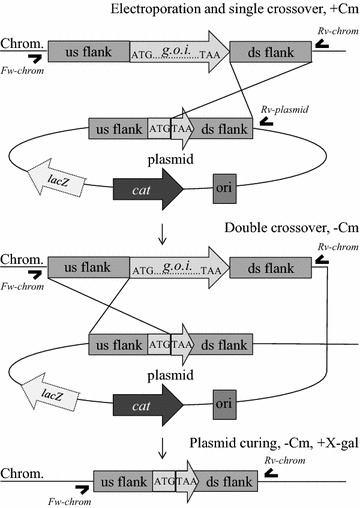
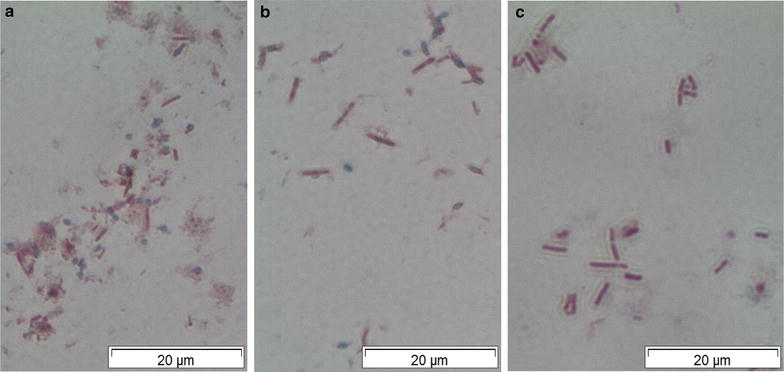
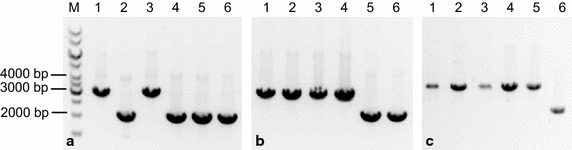
Clean deletions of the ldhL gene were made in two B. smithii strains (DSM 4216(T) and compost isolate ET 138) by homologous recombination. Whereas both wild-type strains produced mainly L-lactate, deletion of the ldhL gene blocked L-lactate production and caused impaired anaerobic growth and acid production. To facilitate the mutagenesis process, we established a counter-selection system for efficient plasmid removal based on lacZ-mediated X-gal toxicity. This counter-selection system was applied to construct a sporulation-deficient B. smithii ΔldhL ΔsigF mutant strain. Next, we demonstrated that the system can be used repetitively by creating B. smithii triple mutant strain ET 138 ΔldhL ΔsigF ΔpdhA, from which also the gene encoding the α-subunit of the E1 component of the pyruvate dehydrogenase complex is deleted. This triple mutant strain produced no acetate and is auxotrophic for acetate, indicating that pyruvate dehydrogenase is the major route from pyruvate to acetyl-CoA.
In this study, we developed a markerless gene deletion method including a counter-selection system for thermophilic B. smithii, constituting the first report of metabolic engineering in this species. The described markerless gene deletion system paves the way for more extensive metabolic engineering of B. smithii. This enables the development of this species into a platform organism and provides tools for studying its metabolism, which appears to be different from its close relatives such as B. coagulans and other bacilli.
将生物质微生物转化为燃料或化学品是化石基燃料和化学品的一种有吸引力的替代方案。嗜热微生物作为生产宿主比嗜温生物具有几个操作优势,例如冷却成本低、污染风险降低以及工艺温度与商业水解酶相匹配,能够以更高的效率和更少的酶实现同步糖化和发酵。然而,用于生物技术相关嗜热菌的遗传工具仍处于起步阶段。在本研究中,我们开发了一种用于嗜热菌史密斯芽孢杆菌的无标记基因缺失方法,并报告了该物种作为潜在平台生物的首次代谢工程改造。
通过同源重组在两株史密斯芽孢杆菌(DSM 4216(T) 和堆肥分离株ET 138)中对ldhL基因进行了无痕缺失。虽然两株野生型菌株主要产生L-乳酸,但ldhL基因的缺失阻断了L-乳酸的产生,并导致厌氧生长和产酸受损。为了促进诱变过程,我们基于lacZ介导的X-gal毒性建立了一种用于有效去除质粒的反选择系统。该反选择系统用于构建一株产孢缺陷的史密斯芽孢杆菌ΔldhLΔsigF突变株。接下来,我们证明了该系统可以通过创建史密斯芽孢杆菌三重突变株ET 138ΔldhLΔsigFΔpdhA重复使用,该菌株中丙酮酸脱氢酶复合体E1组分α亚基的编码基因也被删除。该三重突变株不产生乙酸盐,并且对乙酸盐营养缺陷,表明丙酮酸脱氢酶是丙酮酸转化为乙酰辅酶A的主要途径。
在本研究中,我们开发了一种包括用于嗜热史密斯芽孢杆菌反选择系统的无标记基因缺失方法,这是该物种代谢工程的首次报道。所描述的无标记基因缺失系统为史密斯芽孢杆菌更广泛的代谢工程改造铺平了道路。这使得该物种能够发展成为一种平台生物,并提供研究其代谢的工具,其代谢似乎与其近亲如凝结芽孢杆菌和其他芽孢杆菌不同。