Kisch Tobias, Liodaki Eirini, Kraemer Robert, Mailaender Peter, Brandenburger Matthias, Hellwig Veronika, Stang Felix H
From the Department of Plastic Surgery and Hand Surgery (TK, EL, RK, PM, FHS), University Hospital Schleswig-Holstein, Campus Lübeck, University of Lübeck; Fraunhofer Research Institution for Marine Biotechnology EMB (MB); and Analytical Chemistry and Instrumental Analysis (VH), University of Applied Sciences, Lübeck, Germany.
Medicine (Baltimore). 2015 Jul;94(27):e1104. doi: 10.1097/MD.0000000000001104.
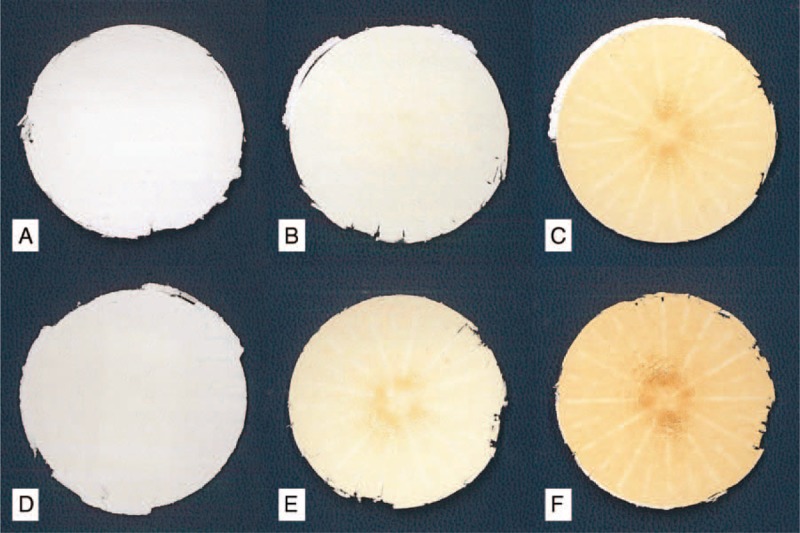
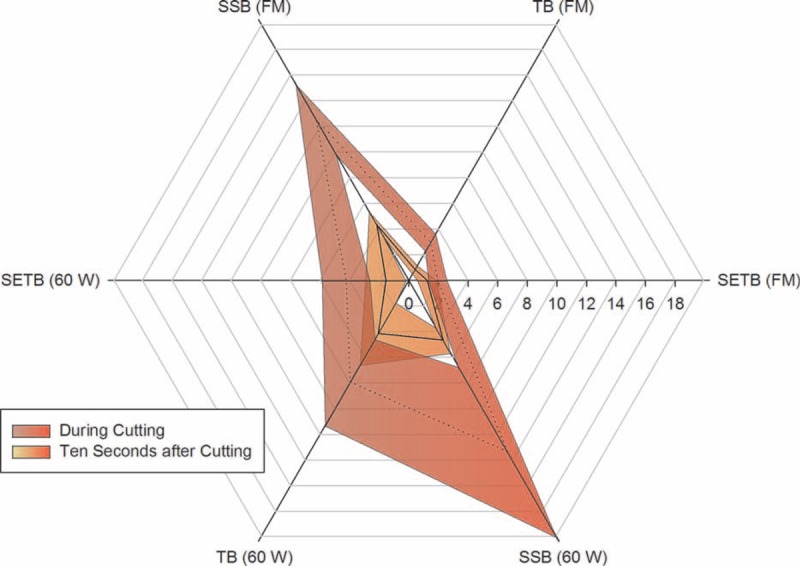
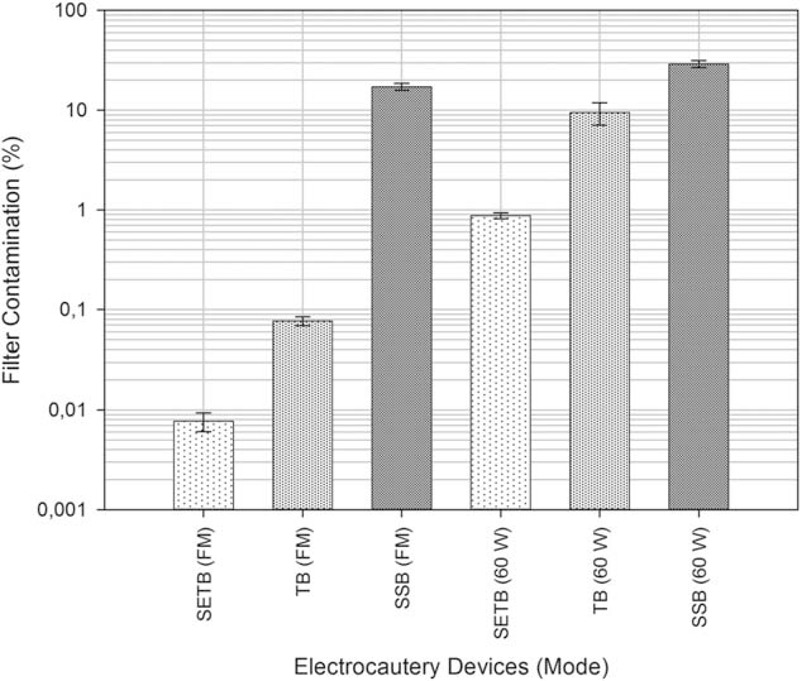
Monopolar electrocautery is a fast and elegant cutting option. However, as it creates surgical smoke containing polycyclic aromatic hydrocarbons (PAHs), it may be hazardous to the health of the surgical team. Although new technologies, such as feedback mode (FM) and Teflon-coated blades (TBs), reduce tissue damage, their impact on surgical smoke creation has not yet been elucidated. Therefore, we analyzed the plume at its source.The aim of this study was to evaluate if electrocautery FM and TBs create less surgical smoke.Porcine tissue containing skin was cut in a standardized manner using sharp-edged Teflon-coated blades (SETBs), normal-shaped TBs, or stainless steel blades (SSBs). Experiments were performed using FM and pure-cut mode. Surgical smoke was sucked through filters or adsorption tubes. Subsequently, filters were scanned and analyzed using a spectrophotometer. A high-performance liquid chromatography (HPLC-UV) was performed to detect benzo[a]pyrene (BaP) and phenanthrene as 2 of the most critical PAHs. Temperature changes at the cutting site were measured by an infrared thermometer.In FM, more surgical smoke was created using SSB compared with TBs (P < 0.001). Furthermore, differences between FM and pure-cut mode were found for SSB and TB (P < 0.001), but not for SETB (P = 0.911). Photometric analysis revealed differences in the peak heights of the PAH spectrum. In HLPC-UV, the amount of BaP and phenanthrene detected was lower for TB compared with SSB. Tissue temperature variations increased when SSB was used in FM and pure-cut mode. Furthermore, different modes revealed higher temperature variations with the use of SETB (P = 0.004) and TB (P = 0.005) during cutting, but not SSB (P = 0.789).We found that the use of both TBs and FM was associated with reduced amounts of surgical smoke created during cutting. Thus, the surgical team may benefit from the adoption of such new technologies, which could contribute to the primary prevention of smoke-related diseases.
单极电灼术是一种快速且有效的切割方法。然而,由于其会产生含有多环芳烃(PAHs)的手术烟雾,可能对手术团队的健康有害。尽管诸如反馈模式(FM)和涂有特氟龙的刀片(TBs)等新技术可减少组织损伤,但它们对手术烟雾产生的影响尚未阐明。因此,我们从源头分析了烟雾。本研究的目的是评估电灼术的FM和TBs是否会产生较少的手术烟雾。使用锋利边缘的涂有特氟龙的刀片(SETBs)、普通形状的TBs或不锈钢刀片(SSBs)以标准化方式切割含皮肤的猪组织。实验采用FM和纯切割模式进行。手术烟雾通过过滤器或吸附管抽吸。随后,使用分光光度计对过滤器进行扫描和分析。进行高效液相色谱(HPLC - UV)以检测苯并[a]芘(BaP)和菲这两种最关键的PAHs。通过红外温度计测量切割部位的温度变化。在FM模式下,与TBs相比,使用SSB产生的手术烟雾更多(P < 0.001)。此外,在SSB和TB上发现FM与纯切割模式之间存在差异(P < 0.001),但在SETB上未发现差异(P = 0.911)。光度分析揭示了PAH光谱峰高的差异。在HLPC - UV中,与SSB相比,TB检测到的BaP和菲的量较低。当在FM和纯切割模式下使用SSB时,组织温度变化增加。此外,不同模式显示在切割过程中使用SETB(P = 0.004)和TB(P = 0.005)时温度变化更大,但使用SSB时未发现(P = 0.789)。我们发现使用TBs和FM均与切割过程中产生的手术烟雾量减少有关。因此,手术团队可能会从采用此类新技术中受益,这有助于对与烟雾相关疾病的一级预防。