van Uitert Miranda, Moerland Perry D, Enquobahrie Daniel A, Laivuori Hannele, van der Post Joris A M, Ris-Stalpers Carrie, Afink Gijs B
Reproductive Biology Laboratory, Academic Medical Center, Amsterdam, the Netherlands.
Bioinformatics Laboratory, Department of Clinical Epidemiology, Biostatistics and Bioinformatics, Academic Medical Center, Amsterdam, Amsterdam, the Netherlands.
PLoS One. 2015 Jul 14;10(7):e0132468. doi: 10.1371/journal.pone.0132468. eCollection 2015.
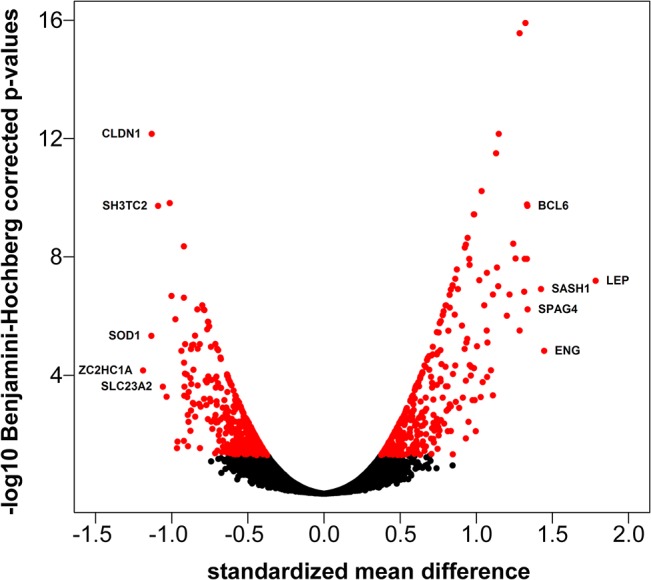
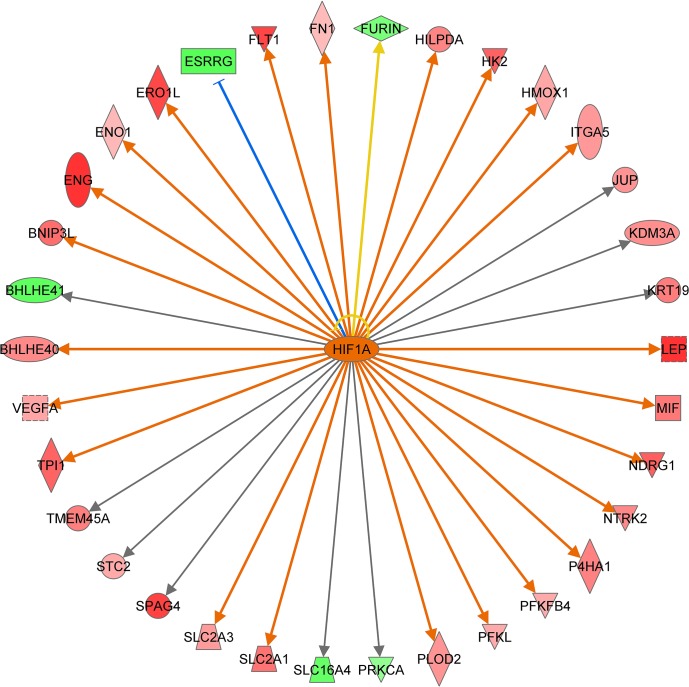
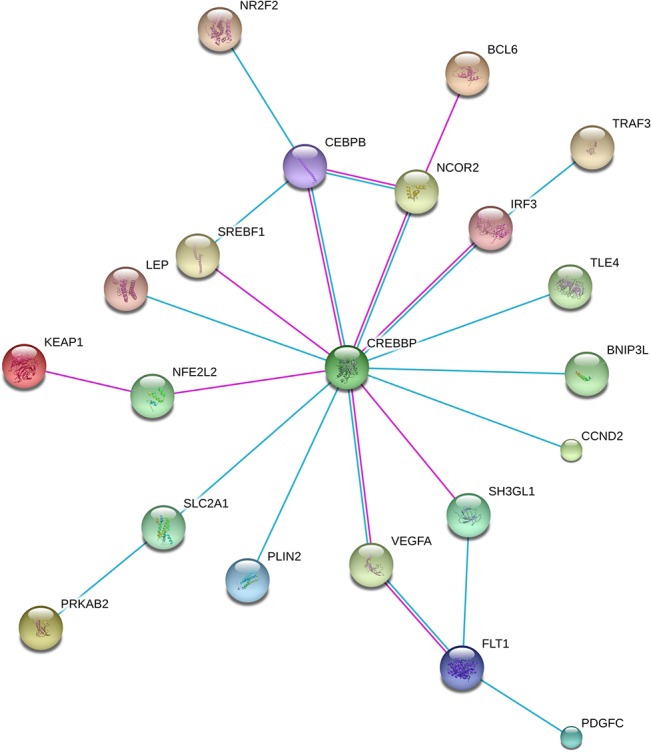
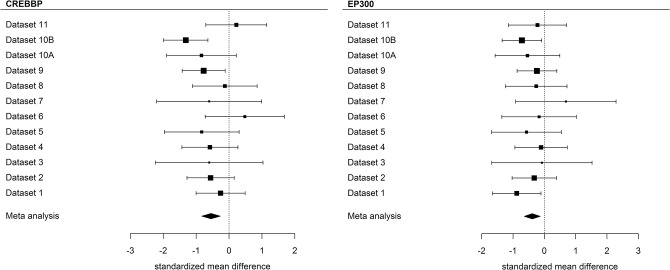
Studies using the placental transcriptome to identify key molecules relevant for preeclampsia are hampered by a relatively small sample size. In addition, they use a variety of bioinformatics and statistical methods, making comparison of findings challenging. To generate a more robust preeclampsia gene expression signature, we performed a meta-analysis on the original data of 11 placenta RNA microarray experiments, representing 139 normotensive and 116 preeclamptic pregnancies. Microarray data were pre-processed and analyzed using standardized bioinformatics and statistical procedures and the effect sizes were combined using an inverse-variance random-effects model. Interactions between genes in the resulting gene expression signature were identified by pathway analysis (Ingenuity Pathway Analysis, Gene Set Enrichment Analysis, Graphite) and protein-protein associations (STRING). This approach has resulted in a comprehensive list of differentially expressed genes that led to a 388-gene meta-signature of preeclamptic placenta. Pathway analysis highlights the involvement of the previously identified hypoxia/HIF1A pathway in the establishment of the preeclamptic gene expression profile, while analysis of protein interaction networks indicates CREBBP/EP300 as a novel element central to the preeclamptic placental transcriptome. In addition, there is an apparent high incidence of preeclampsia in women carrying a child with a mutation in CREBBP/EP300 (Rubinstein-Taybi Syndrome). The 388-gene preeclampsia meta-signature offers a vital starting point for further studies into the relevance of these genes (in particular CREBBP/EP300) and their concomitant pathways as biomarkers or functional molecules in preeclampsia. This will result in a better understanding of the molecular basis of this disease and opens up the opportunity to develop rational therapies targeting the placental dysfunction causal to preeclampsia.
利用胎盘转录组来识别与先兆子痫相关的关键分子的研究受到样本量相对较小的阻碍。此外,这些研究使用了各种生物信息学和统计方法,使得研究结果的比较具有挑战性。为了生成一个更可靠的先兆子痫基因表达特征,我们对11个胎盘RNA微阵列实验的原始数据进行了荟萃分析,这些实验代表了139例血压正常和116例先兆子痫孕妇的情况。微阵列数据使用标准化的生物信息学和统计程序进行预处理和分析,并使用逆方差随机效应模型合并效应大小。通过通路分析(Ingenuity通路分析、基因集富集分析、Graphite)和蛋白质-蛋白质关联(STRING)来识别所得基因表达特征中基因之间的相互作用。这种方法产生了一份差异表达基因的综合列表,从而得出了先兆子痫胎盘的388个基因的荟萃特征。通路分析突出了先前确定的缺氧/HIF1A通路在先兆子痫基因表达谱建立中的作用,而蛋白质相互作用网络分析表明CREBBP/EP300是先兆子痫胎盘转录组的一个新的核心元素。此外,携带CREBBP/EP300突变(鲁宾斯坦-泰比综合征)患儿的女性中先兆子痫的发病率明显较高。388个基因的先兆子痫荟萃特征为进一步研究这些基因(特别是CREBBP/EP300)及其相关通路作为先兆子痫生物标志物或功能分子的相关性提供了重要的起点。这将有助于更好地理解这种疾病的分子基础,并为开发针对导致先兆子痫的胎盘功能障碍的合理疗法提供机会。