Moore John H, Pinheiro Caio C D, Zaenker Edna I, Bolick David T, Kolling Glynis L, van Opstal Edward, Noronha Francisco J D, De Medeiros Pedro H Q S, Rodriguez Raphael S, Lima Aldo A, Guerrant Richard L, Warren Cirle A
Division of Infectious Diseases and International Health, University of Virginia, Charlottesville, Virginia, United States of America.
Biomedicine Institute, Federal University of Ceará, Fortaleza, Brazil.
PLoS One. 2015 Jul 16;10(7):e0131829. doi: 10.1371/journal.pone.0131829. eCollection 2015.
Clostridium difficile is a major identifiable and treatable cause of antibiotic-associated diarrhea. Poor nutritional status contributes to mortality through weakened host defenses against various pathogens. The primary goal of this study was to assess the contribution of a reduced protein diet to the outcomes of C. difficile infection in a murine model.
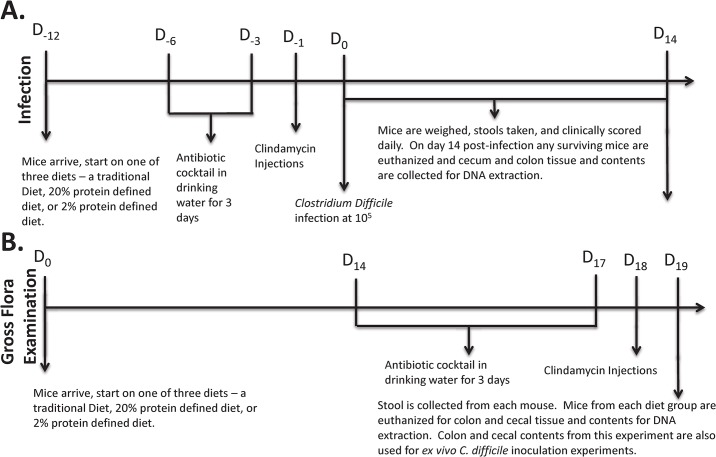
C57BL/6 mice were fed a traditional house chow or a defined diet with either 20% protein or 2% protein and infected with C. difficile strain VPI10463. Animals were monitored for disease severity, clostridial shedding and fecal toxin levels. Select intestinal microbiota were measured in stool and C. difficile growth and toxin production were quantified ex vivo in intestinal contents from untreated or antibiotic-treated mice fed with the different diets.
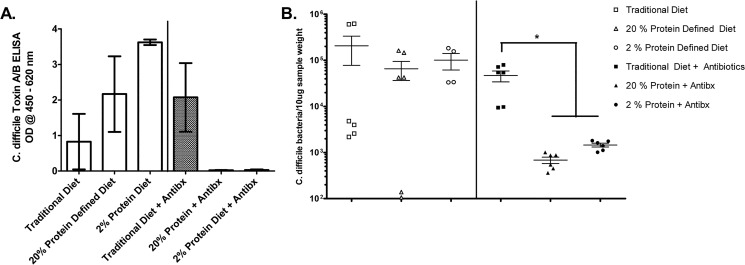
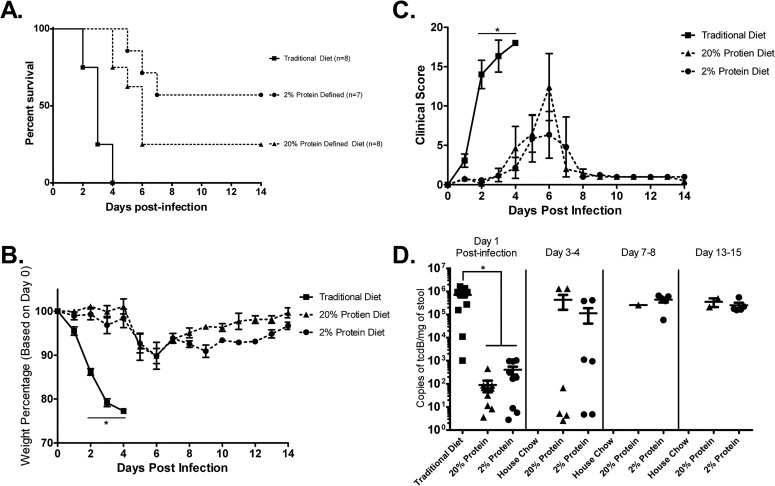
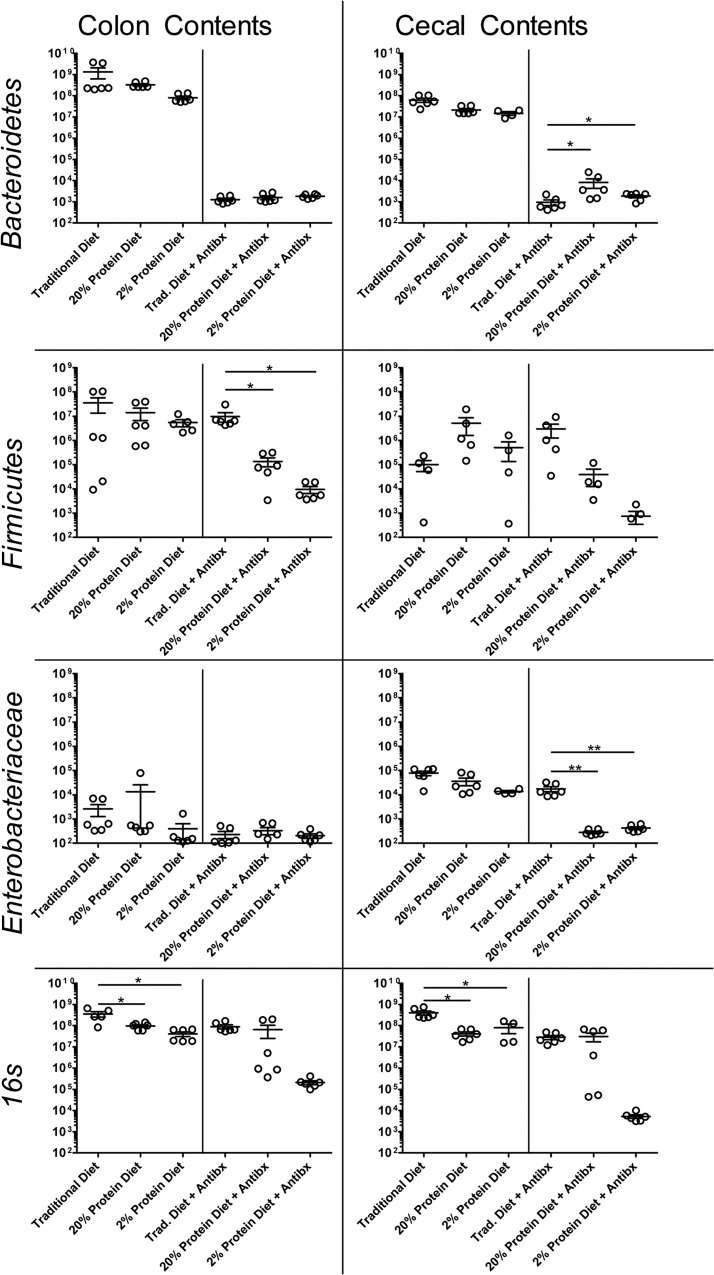
C. difficile infected mice fed with defined diets, particularly (and unexpectedly) with protein deficient diet, had increased survival, decreased weight loss, and decreased overall disease severity. C. difficile shedding and toxin in the stool of the traditional diet group was increased compared with either defined diet 1 day post infection. Mice fed with traditional diet had an increased intestinal Firmicutes to Bacteroidetes ratio following antibiotic exposure compared with either a 2% or 20% protein defined nutrient diet. Ex vivo inoculation of cecal contents from antibiotic-treated mice showed decreased toxin production and C. difficile growth in both defined diets compared with a traditional diet.
Low protein diets, and defined nutrient diets in general, were found to be protective against CDI in mice. Associated diet-induced alterations in intestinal microbiota may influence colonization resistance and clostridial toxin production in a defined nutrient diet compared to a traditional diet, leading to increased survival. However, mechanisms which led to survival differences between 2% and 20% protein defined nutrient diets need to be further elucidated.
艰难梭菌是抗生素相关性腹泻的主要可识别和可治疗病因。营养状况不佳会通过削弱宿主对各种病原体的防御能力导致死亡。本研究的主要目的是评估低蛋白饮食对小鼠模型中艰难梭菌感染结局的影响。
给C57BL/6小鼠喂食传统鼠粮或蛋白质含量为20%或2%的特定饮食,然后用艰难梭菌菌株VPI10463感染。监测动物的疾病严重程度、梭菌排出情况和粪便毒素水平。测定粪便中的特定肠道微生物群,并在体外对喂食不同饮食的未治疗或抗生素治疗小鼠的肠道内容物中的艰难梭菌生长和毒素产生进行定量分析。
喂食特定饮食的艰难梭菌感染小鼠,尤其是(出乎意料地)喂食蛋白质缺乏饮食的小鼠,存活率提高、体重减轻减少且总体疾病严重程度降低。与感染后1天的任何一种特定饮食相比,传统饮食组小鼠粪便中的艰难梭菌排出量和毒素增加。与2%或20%蛋白质的特定营养饮食相比,喂食传统饮食的小鼠在接触抗生素后肠道厚壁菌与拟杆菌的比例增加。与传统饮食相比,体外接种抗生素治疗小鼠的盲肠内容物显示,两种特定饮食中的毒素产生和艰难梭菌生长均减少。
发现低蛋白饮食以及一般的特定营养饮食对小鼠的艰难梭菌感染具有保护作用。与传统饮食相比,相关饮食诱导的肠道微生物群改变可能会影响特定营养饮食中的定植抗性和梭菌毒素产生,从而提高存活率。然而,导致2%和20%蛋白质特定营养饮食之间存活差异的机制需要进一步阐明。